12 Ways to Get More Out of Your Next Firearms Training Class
The most expensive class I ever took was a two day carbine course at Sig Sauer Academy in New Hampshire. Plane ticket, hotel, rental car, and I had to buy ammo once I got there because flying with a case of 5.56 is nobody's idea of a good time. By the time I walked onto that range, I was into it for a lot more than the tuition line item.
So I understand how important it is to most of us to get a high return on the investment we put into a gun class or training event.
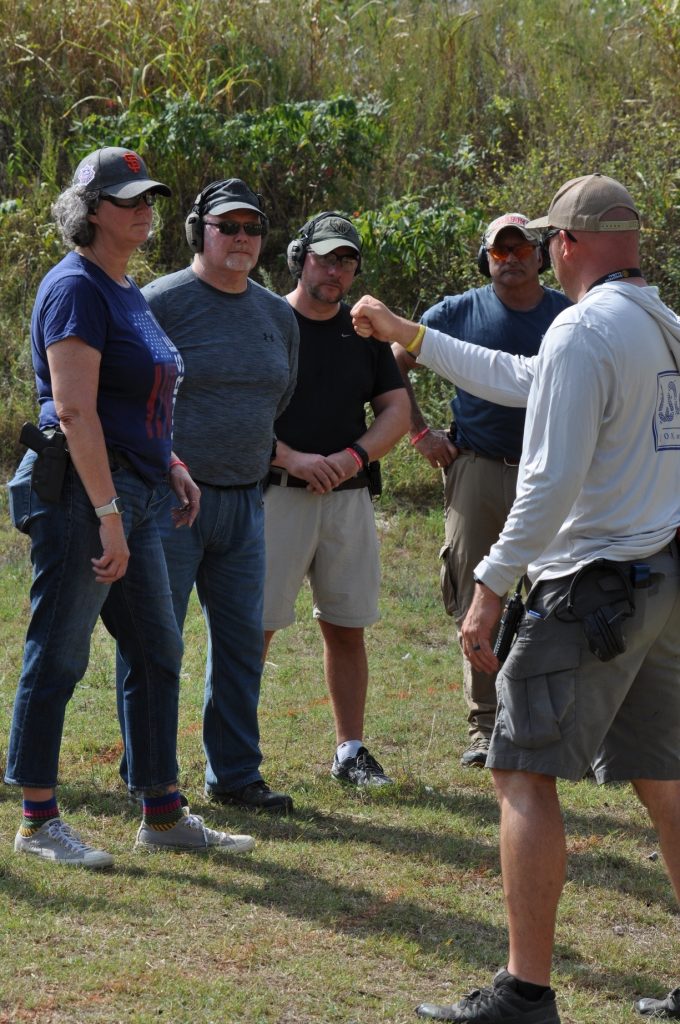
However, I often see people who set themselves up for failure. They show up with gear they bought three days ago and have never used. They stand in the back of the line texting while another student gets exactly the coaching they need. They drive home Sunday afternoon and never think about it again until the next class.
You paid for a seat. Whether you actually collect what you paid for is almost entirely up to you.
Here are twelve things you can do before, during, and after your next class to make sure you do.
Before the class
1. Show up with gear that already works
The single most common way I see a training day go sideways has nothing to do with shooting ability. It's gear.
The belt is too soft, so the holster rides and rolls. The holster screws back out over the course of the morning until the thing comes apart in someone's hand. There's no mag pouch. There's one spare magazine, and it's the magazine that “always jams.” Now instead of running reps on the skill you paid to learn, you're running reps on clearing double feeds caused by your own equipment.
Here's the trap. A huge percentage of students are running brand new gear on day one. They read the equipment list, they bought what the equipment list said, and the first time that holster ever sees a draw stroke is in front of an instructor and eleven strangers. I get it, especially in a beginner level class where many of the students are inherently starting from zero. However, that's a bad time to find out it doesn't work.

Two ways out of that trap.
First, vet the gear before you buy it. Reviews, videos, whatever you've got. Then, and this is the part almost nobody does, email the instructor. “I signed up for your class in August. Your list says I need a belt, a holster, and two spare mags. I'm looking at these. Are they going to hold up?” That's a two minute email and I can count on one hand the number of times a student has sent me one. Instructors are not annoyed by that email. We love that email. It tells us you're serious.
Second, ask about borrowing or renting. If you're taking a low light class and you don't know what weapon light you want yet, ask whether you can try a couple at the class. You might leave the range with total clarity on what to buy instead of guessing and eating the cost twice.
I bring three complete loadouts to every big class I teach. Gun, holster, mags, mag pouches. If your gear goes down, I've got you. Not every instructor can do that, which is exactly why you ask in advance instead of hoping.
One caveat from experience. I had a left handed student show up with a holster that was flatly unusable and a pistol that had just hit the market. I had no left handed holster for that gun. Nobody did. He spent the class running a loaner pistol instead of the gun he'd just bought. Call ahead.
2. Bring more magazines than they told you to
This one is small, it costs you almost nothing, and it will change your entire day.
Whatever number the instructor asks for, double it. He says three spares, bring six. He says five, bring ten. Especially if you're running lower capacity magazines.

Watch what happens on a range when the mag count is tight. The group runs a drill. Most students finish and stand there watching the rest of the line, picking up little things, hearing corrections. But one guy is dry. So he's jogging back to the table to load mags while everyone else is learning.
He paid the same tuition. He's getting less class.
Loading magazines is the one thing you can absolutely do at home the night before. Do it at home the night before.
3. Learn what you can about the instructor and the curriculum
You signed up for “Pistol 2.” You read a four sentence course description. You have no idea what's actually going to happen.
Go dig. Watch the instructor's videos. Look at the drills they run. Find out what they believe about the stuff they care about, because every instructor has a few hills they'll die on. Perhaps they have strong feelings about how they rack a slide, how they clear a double feed or how they think about grip pressure.
You're not doing this so you can arrive already knowing the material. You're doing this so you arrive with accurate expectations, which means you'll pick things up faster once you're there.

There's a safety and physical fitness piece here too. we've seen a number of students basically cook themselves on day one of a hot, high volume class and simply not come back for day two. That's a full class of value, gone. If you're carrying an injury, a limitation, or a question about whether you can physically do what's being asked, call the instructor. I've had amputees in class. Good instructors adapt. But we can only adapt to what we know about.
And a little bonus note here to sneak in real quick… hydrate well. Hydrate well for the few days before the class and hydrate really well the morning before the class. Come in hydrated and you'll avoid the #1 thing that tends to take people out of the game before the day ends.
4. Knock the rust off before you get there
I had a student show up to a level two course who had taken my level one course twelve months earlier. About twenty minutes into the first block I had a very clear thought: this guy has forgotten everything.
He hadn't, really. He just hadn't practiced. Not once, as far as I could tell, in a year.
He caught up. It was fine. But he spent the first several hours of a class he paid real money for climbing back to where he already had been, instead of learning something new.

Here's the standard, and I want to be precise about it, because people get this backwards. You are not expected to already know the material you're about to be taught. If you're bad at drawing, that is not a reason to skip a class. That's a reason to take the class.
What you should do is show up sharp at whatever level you're actually at. Dry fire the week before. Get to the range once. If you can see the curriculum, drill the specific things you know are coming.
Because if your draw stroke is sloppy, every single skill built on top of that draw stroke is compromised. The instructor teaches movement, and you're not learning movement, you're still fighting your grip. The foundational thing eats the whole day.
5. Go in with an open mind, for real
Everybody nods at this one. Almost nobody does it.
If you've trained with more than one instructor, you already know they teach the same fundamentals differently. Not the advanced stuff. The basics. Malfunction clearance, grip, stance, most of it.
The big, established, well run schools with long track records, and they will teach you some very basic things in very different ways.
That doesn't make any of them wrong. Collecting those perspectives is a big part of why you take classes at all. You get to try the thing three ways and figure out which one actually works in your hands.

What kills learning is showing up to correct the instructor. “Well, so and so teaches it this way.” Some instructors will take that gracefully. Some will take offense, and once that wall is up, the communication for the rest of the class runs through it.
You paid this person to find out how they do it. So find out how they do it. Run it their way for the duration of the class. If you hate it, go back to your old way on Monday. Nobody is going to come to your house and check.
During the class
6. Watch every other student, every single rep
This is my soapbox and I'm not sorry.
Any time a drill requires us to run students one at a time, the line forms up. And the back half of that line checks out. They're on their phones. They're talking about a news story. They are physically present and mentally somewhere else.
Meanwhile, up at the barricade, there's a student doing the drill and an instructor giving him individual coaching. That coaching is free. It's happening ten feet from you. And there is a very good chance it's the exact correction you needed, because if he's making that mistake, you probably are too.
Let me tell you my dirty secret as a student. I try to never go first. Ever. Part of that is probably vanity, but mostly it's math. If I go last in a line of twelve, I get to watch eleven people attempt the drill, hear eleven rounds of instructor feedback, and see what works and what blows up before I ever step up. I take notes. I listen. And then I run the best rep I'm capable of running.

There's a group benefit here too. When people aren't paying attention, the instructor has to explain the same drill four times, and the whole class slows down. Every student on that line paid to be there. Paying attention isn't just good for you.
7. Mentally rehearse before it's your turn
Standing in that line, watching, is step one. Step two is running the drill in your head.
Complex drills throw people. You get a box drill where you advance, turn, sprint, engage, back up, move laterally, engage again, and somewhere in there you're going to need a reload. The instructor explains it. Everybody nods. Half the line then runs a completely different drill.
Sometimes the instructor creates that level of complexity on purpose and expects many people to get stuck or not be able to fully execute as intended. However, often its just a frustrating biproduct of people not paying attention.
So while you're waiting, put yourself in the shoes of whoever is running it. See it from the inside. “Buzzer goes, I draw, I'm moving left, two rounds here, two rounds here, I'm probably dry right about there so my reload happens on the move to cover.” Rehearse it until it's boring.
And if you don't understand the drill, ask. Ask twice. Ask three times if that's what it takes. Nobody in that class is going to care that you asked a clarifying question and in fact there is probably at least one other student with the same question and less courage to ask it.
8. Take notes and get video
I'm not a note taker by nature. I stole this one from a student and I've never gone back.
Get a three by five spiral notepad and a pen. Keep it in your back pocket. When a drill ends, whip it out and write.
What you're writing down is not the whole curriculum. It's the phrase that clicked. You know the moment. The instructor has explained grip four different ways and then he says it one specific way and suddenly your hands understand. Write down that exact phrasing. Two months from now, when your follow up shots go to pieces at the range, that scribbled sentence is the instructor in your pocket.

Also write down drills you want to run again and things you know you need to work on.
If you'd rather type into your phone, that's fine, but tell the instructor first. Otherwise all he sees is a guy on his phone while he's talking. I once got irritated at a student in an instructor certification class who was heads down on his phone constantly, right up until he explained he was taking notes. Fair enough. Just say so up front.
Video is the other half of this. Ask the instructor, or a student next to you, to film you running a drill. You will see things you cannot feel. Your hands, your feet, where your gun actually is during the draw. Some students pair up and spend the whole day trading phones back and forth. It works. And no, it isn't just so you can post it. It's the cheapest diagnostic tool on the range.
After the class
9. Ask for individual feedback
What percentage of students ever ask the instructor for personal feedback. I would estimate maybe ten to twenty percent ask a question or two right after class ends but rarely are those questions intended to solicit feedback on their shooting capabilities. The number who follow up later, days or weeks out, rounds to about zero.
Think about that. You just paid an experienced instructor to watch you shoot for 4-16+ hours. They has formed a very specific opinion about the one thing that would help you most. And you're going to drive home without asking them what it is.

Now, yes I think a really good instructor is going to offer that personalized feedback without you asking for it. During the class they are going to identify your personal goals and coach you toward that throughout; but often there might be some other observations that time doesn't allow for or that aren't strictly relevant to the curriculum that they could share if you take the time to ask.
I've had exactly two students in my career take this seriously enough to really dig in, and in both cases they asked me to dinner after the class. Which, sure, that's one way to do it. I like free food. But you don't need to buy anybody dinner. You just need to walk up to the instructor while everyone else is loading their trucks and ask.
10. Debrief while it's still fresh
That night, or the next morning at the latest, sit down and write.
Two things go on the page. First, your own insights. What clicked. What frustrated you. What the instructor told you and what you want to remember from it. On a multi day class, do this every single night, not just at the end.
Second, reconstruct the curriculum as best you can. First we did this drill, then he talked about that, then we shot this exercise, and my time was such and such. I'm not trying to steal anyone's course. I'm trying to give myself something to work from the next time I'm standing on a range alone with a hundred rounds and no plan.
The debrief also generates your questions. It's how you figure out what to go ask the instructor. And a specific ask like “what were we actually building with that third drill on Saturday, and what were my times” gets you a far more useful answer than “hey, can you send me the list of drills.” One of those is a conversation. The other is a link to a webpage.
While you've got their attention, give feedback back. What landed for you, what didn't, what would have made the class run smoother. Instructors improve on student feedback, and the next class gets better because you spoke up.
11. Build the practice plan before the motivation wears off
We've talked on the podcast about the three legged stool: training, practice, and learning. Training is formal instruction you pay for. Learning is picking up information on your own, like listening to a podcast on your commute. Practice is the reps. It's where the skill actually gets built.
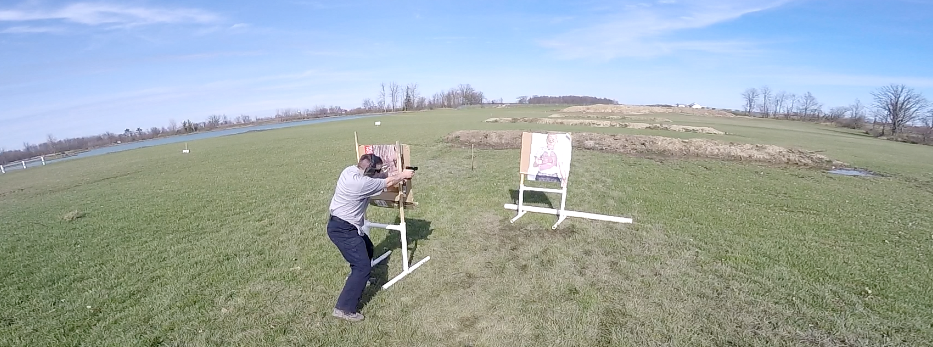
A class is training. If it doesn't turn into practice, it evaporates.
So before you unpack the range bag, decide what you're working on. Not “get better.” Specifically. My grip breaks down under speed. My target transitions are slow. My follow up shots are wild. My groups open up past fifteen yards.
Then build the routine. These are the two drills I'll shoot at the start and the end of every range session so I can actually measure whether I'm improving. These are the dry fire reps I'll run at home. This is what I'm doing between now and the next class.
Vague intentions die in about nine days. Written plans don't.
12. Pick your next class before you leave the parking lot
More important perhaps than what class you take next is that you are signed up for another class. When you finish your big debrief and consider your plan for practice also identify the next class you want to take.
And taking a similar level class from a different instructor is not a step backward. Instructors teach differently, and the second guy is going to say something about grip or movement that the first guy never said, and it's going to unlock something. That's the whole point.
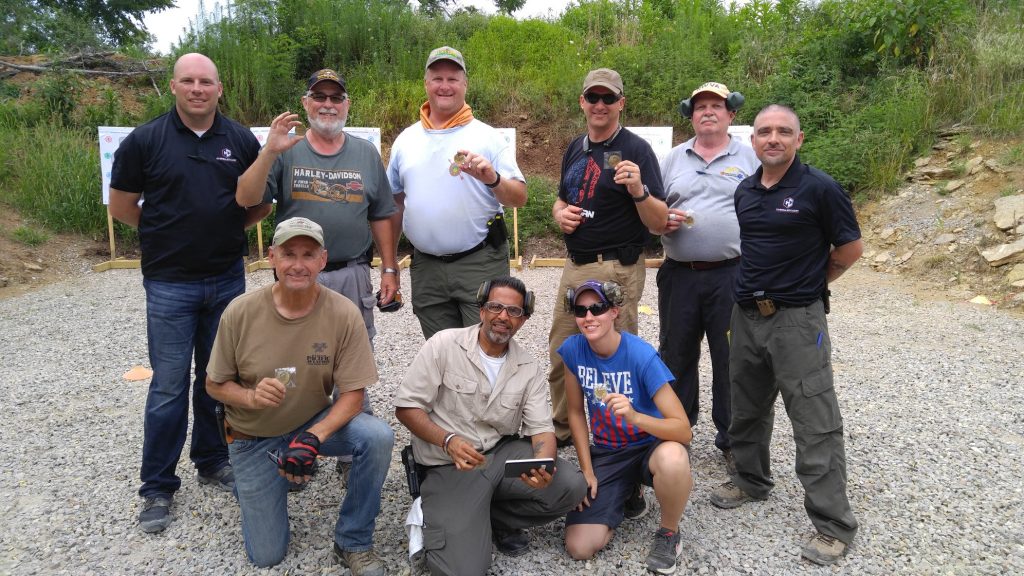
And there is nothing wrong with repeating the exact class you just finished. We've had students run our entire three day curriculum two summers in a row. They want the fundamentals hammered again. They're not being lazy. They're being smart.
Here's my test. If I ask you right now what the next class you're taking is, and you say “I'm deciding between one in August and one in October, I haven't put money down yet,” great. You're in the game.
If you say “I don't know,” you have a problem to solve.
The best class to take is the next one.
What it comes down to
None of this is complicated. Most of it is free.
Send the email before you buy the holster. Load your mags at home. Watch every rep. Ask the guy what you should work on. Write it down. Book the next one.
You already decided the training was worth your money. These twelve things are how you actually go collect it.
And if you are looking for your next training right now please let me personally recommend The Guardian Conference which is a conference style live training event that will expose you to the top instructors in the country and allow you to take a lot of classes on different topics so you can more readily identify what you enjoy and what you need to work on next!