Are New Hunting Rifles Really Better Than the Old Ones?
If you browse the new hunting rifles at your local shop, there’s a good chance that most of them have features that are highly influenced by precision target rifles. A lot of people find these ergonomic elements and functional details appealing, but they also draw the side eye from hunters who prefer the traditionally-styled hunting rifles that dominated the 20th century — like the Winchester Model 70.
But is the skepticism based on how well new rifles actually perform? Or is it simply a sentimental attachment to times gone by? It’s something we had to test. We put two classic hunting rifles against two modern target-styled hunting rifles to compare their performance.
Why Older Rifles Are Better
You’ll hear many hunters, usually those who grew up in the heyday of the 20th century hunting rifles, lament about plastic stocks and 3D-printed parts, while praising the conventionally machined action of their favorite heirloom. Still, they have some solid arguments in favor of these guns as hunting tools for the everyman. Many of the traits we see in traditional hunting and sporting rifles evolved as improvements to bulkier military platforms. Sporterized Springfields and Mausers eliminated some of the bulk, slicked up the ergonomics, and optimized these service rifles for hunting.
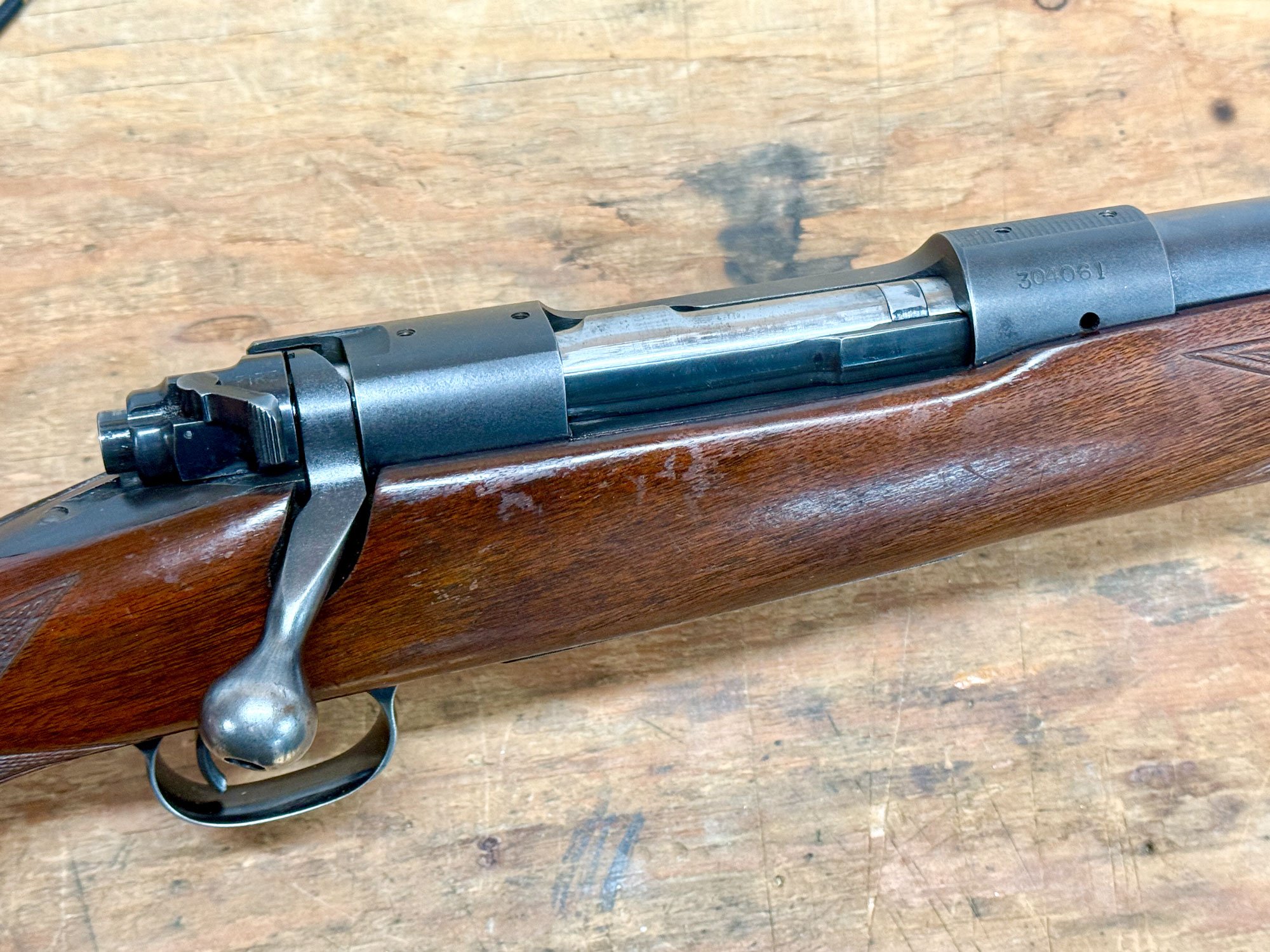
Characteristics common to this style of rifle are a slender fore-end, a grip designed to be held with the thumb wrapped around, and a more nimble stock that allows quick handling and pointing. Some old rifles were certainly built with more hands-on care and are more appropriate tools to be passed on for generations. But there were plenty of junky old guns, too.
When we set aside the nostalgia and retrospective idealism, older rifles are credited with being easier to handle and shoot quickly in an average hunting scenario. They come from a time when still hunting and drive hunting were more common and offhand shots were taken at moving game. To many, the traditional-style hunting rifle is the optimal tool for the true rifleman — who can jump shoot a deer offhand as well as he can sling up and fire from the prone position. They’ll decry modern target-influenced hunting rifles as impediments and tell you that all the bells and whistles will get in your way.
What’s to Like About New Rifles
There are plenty of things to appreciate about new rifles. Modern manufacturing is more precise than it’s ever been, and hunters have never had so many good options. Even the lowest tier of factory hunting rifles offers accuracy that’s as good, or better than, most traditional options, and hunters can choose from production guns, custom rifles, or even assemble their own with just a barrel vise and action wrench.
More notably, many new production and custom hunting rifles incorporate features that have their roots in precision rifle competition. Options like fatter vertical grips, adjustable comb and length of pull, wider fore-ends, threaded muzzles, and better accessory compatibility come standard.
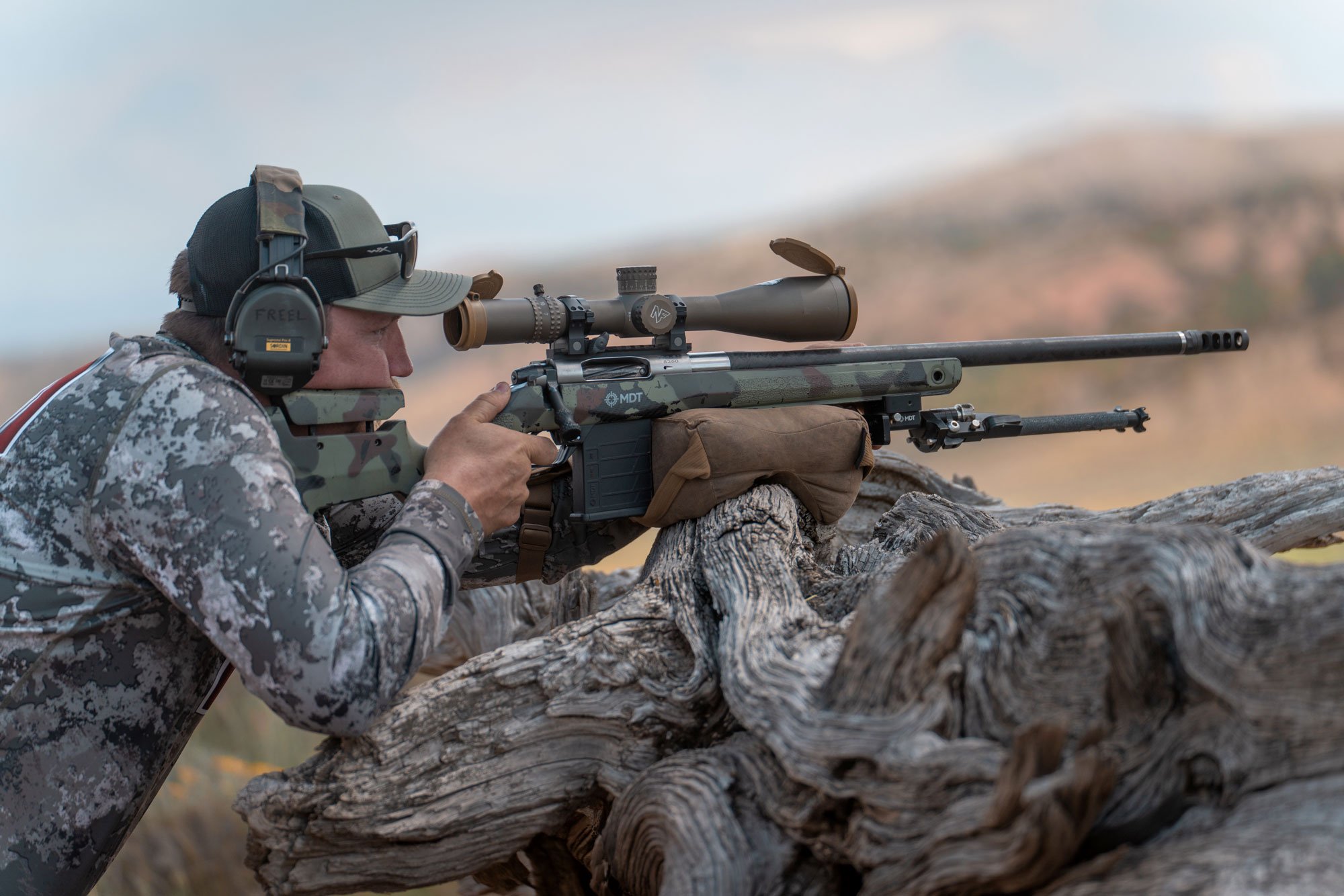
Serious shooters have recognized that many of these traits make a rifle easier to shoot accurately in a variety of positions and situations. That’s why they are so prevalent in precision rifle disciplines. They’ve gradually been distilled into practical variations on the rifles we hunt with. That’s because the advantages they give a rifle translate to hunting too. For example, a larger grip that fits the hand better, and is designed to have the thumb rest atop or along the side of the grip — as opposed to wrapped around it — sets you up for better and more consistent trigger pulls.
Compatibility with, or inclusion of, ARCA rails allows for the easier use of bipods and tripods, which have also been optimized for speed and stability. This is a radically different system than what hunters would use even a few decades ago. But it ultimately facilitates better, more accurate shooting.
A Note on Accuracy
While on average, hunting rifles are more accurate than they’ve ever been (except for the 1942 M70 you have in the closet, no doubt) I don’t think that raw precision is the deciding factor in whether older or newer rifles are really better. To be realistic, most hunters aren’t shooting farther than 300 yards, and older rifles usually deliver plenty of precision to tackle normal hunting shots. I do pay attention to accuracy, but in this context, I want to see if the ergonomics and handling characteristics of newer rifles truly put them at a disadvantage in fast and offhand shooting situations— and whether older rifles can hang at longer distances.
The Test
For this exercise, I selected four rifles — two old and two new. I chose them because they’re good representations of the features for each category outlined above.
Old Rifles
- 1953 Winchester Model 70, chambered in .220 Swift
- 1951 Remington Model 721, chambered in .300 H&H Mag.
New Rifles
- Custom Zermatt Origin, Chambered in 22 ARC
- Custom Springfield 2020, Chambered in 300 PRC
The Drills
I ran each rifle through four different drills to compare their handling characteristics and shootability in a variety of shooting scenarios.
- Snap shooting: In this drill, I staggered three clay pigeons between 45 yards and 75 yards. The goal was to shoot all three as quickly as possible
- Offhand challenge: This drill required hitting a single target at about 225 yards. I fired each rifle three times from an offhand position.
- Use what you’ve got: In this stage, I fired three shots with each rifle at the same target from approximately 275 yards. I took one shot prone, one sitting, and one while resting on a barricade. Each rifle was used with the accessories that I would use in practice. This was to see if the supposed efficiency of a more simple system is actually faster while maintaining sufficient accuracy.
- Positional barricade: For the last drill, I fired three shots from each rifle from three positions on a barricade (standing, kneeling, prone). I fired each rifle using the same shooting bag for support.
Results
For the full test and results, you can see the video above, but I’ll break down the basics here.
Old Rifles
- Did not seem to offer any speed advantage while snap shooting
- Heavier triggers really hurt the old rifles in the farther offhand challenge
- The old guns did okay using just the sling, but were not as fast as old rifle fans would suggest. Efficiency can be an advantage, but you’ve got to practice and maintain the skills necessary to drive those rifles effectively
- Old rifles can still hold their own, especially when used in conjunction with modern gear like a shooting bag, tripod, and modern techniques for recoil management and positional shooting accuracy
New Rifles
- Target ergonomics don’t seem to slow down newer guns when it comes to fast pointing
- Better triggers and balance helped the new rifles dominate the offhand shooting
- Gear like tripods and bipods can make you faster and more accurate than just using a traditional rifle, but if you don’t practice and use them smoothly, they can cost you time — as did my first run with my 22 ARC
- When using the same rests from the same positions, the newer rifles do have an edge in shootability, but you still have to practice
Read Next: The Best Wood-Stocked Deer Rifles
Takeaways
The biggest takeaways from this are that if you prefer a traditional-styled hunting rifle, there’s nothing wrong with that. In fact, you can greatly improve your precision and effectiveness by adopting some modern tools and techniques. A small shooting bag and a good tripod are incredible tools that can help you. Whether you’re shooting modern or traditional guns, practicing with your system is incredibly important. Fans of old rifles point out that all these gadgets and gizmos can slow you down and cost you opportunity — and they can if you haven’t practiced. But in reality, if you can operate your gear smoothly and quickly, you’ll likely be faster and more accurate than with a traditional option and no support system.
The post Are New Hunting Rifles Really Better Than the Old Ones? appeared first on Outdoor Life.