California’s New Glock Ban Returns to Judge Who Blocked Handgun Roster
A coalition of gun-rights organizations, California firearm owners, and licensed dealers is asking the federal judge who previously blocked major portions of California’s Handgun Roster to stop the state’s new ban on Glock and Glock-style pistols.
The plaintiffs in Renna v. Bonta filed a motion for preliminary injunction on August 4, asking U.S. District Judge Dana Sabraw to enjoin California Penal Code § 27595(a). The plaintiffs include the Firearms Policy Coalition, Second Amendment Foundation, Citizens Committee for the Right to Keep and Bear Arms, National Rifle Association, San Diego County Gun Owners PAC, individual California gun owners, and firearm dealers.
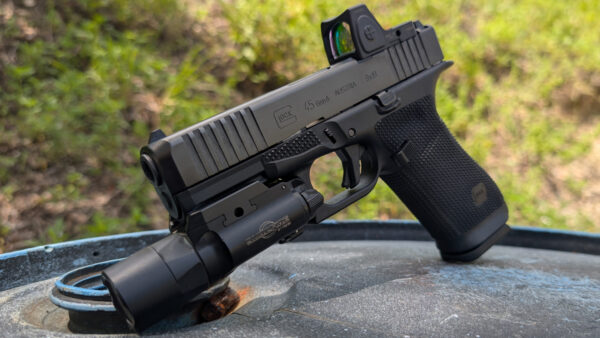
The challenged law prohibits licensed dealers from selling, offering for sale, transferring, or delivering what California calls a “semiautomatic machinegun-convertible pistol.” According to the filing, that definition effectively covers every factory-stock Glock semiautomatic pistol and many Glock-pattern handguns, including the Palmetto State Armory Dagger, Ruger RXM, and several Shadow Systems models.
Those are not obscure or unusually dangerous weapons. They are ordinary semiautomatic handguns commonly selected by Americans for lawful purposes, particularly personal and home defense.
The plaintiffs are asking the judge to block enforcement of the law while the case proceeds. A hearing on the preliminary-injunction motion is scheduled for September 4.
Live Inventory Price Checker
|
GLOCK 48 MOS Optic Ready 9mm Pistol with Aimpoint COA - 4.17" - 2x 10rd Mags | Primary Arms | $ 834.00 |
|
|
GLOCK 43X MOS Optic Ready 9mm Pistol with Aimpoint COA - 3.41" - 2x 10rd Mags | Primary Arms | $ 834.00 |
|
|
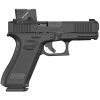
GLOCK Blue Label G45 MOS Gen 5 Optic Ready 9mm Pistol with Aimpoint COA - 4.02" - 2x 17rd Mags | Primary Arms | $ 893.00 |
|
|
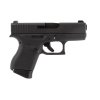
GLOCK Blue Label G43 9mm Pistol - 3.39" - 2x 6rd Mags | Primary Arms | $ 411.00 |
|
California’s Handgun Roster Workaround Returns to Renna
The Renna lawsuit originally challenged California’s Unsafe Handgun Act and its government-controlled Handgun Roster. California generally prohibits licensed dealers from selling a handgun model unless the Department of Justice has approved that exact model for placement on the Roster.
The system excluded newer handguns while permitting some older models to remain available through grandfathering. That is why Californians could purchase certain Gen 3 Glock pistols but not newer Gen 4 and Gen 5 versions sold throughout most of the country.
In April 2023, Judge Sabraw preliminarily enjoined the Roster’s loaded-chamber-indicator, magazine-disconnect, and microstamping requirements. He found that the plaintiffs were likely to succeed in showing that those mandates violated the Second Amendment by preventing Californians from commercially acquiring modern semiautomatic handguns in common use.
The court specifically discussed the Glock 43 and Glock 17 Gen 5 among the commonly owned pistols restricted by the Roster. That preliminary-injunction ruling remains under review by the Ninth Circuit.
Rather than accept the constitutional limits exposed in Renna, California enacted Assembly Bill 1127. The law took effect July 1, 2026, and created a separate prohibition aimed at both newer Glocks already blocked by the Roster and older Gen 3 models that remained available because they had been grandfathered.
The August 4 motion therefore places California’s attempted workaround before the same judge who previously found that major parts of the state’s handgun-control system were likely unconstitutional. As the plaintiffs state in the filing, “There is no Glock exception to the Second Amendment.”
The Filing Is Separate From the DOJ Lawsuit
The new Renna motion is separate from the Justice Department’s lawsuit challenging California’s Glock ban and portions of the Handgun Roster.
DOJ sued California on July 1 and sought a temporary restraining order against AB 1127. A judge denied that emergency request without finally resolving whether the law survives the Supreme Court’s Second Amendment test.
The Renna plaintiffs are now seeking a preliminary injunction in a different federal court and before a judge already familiar with California’s Roster restrictions. Their motion is also supported by declarations from Californians who want to purchase covered pistols for lawful purposes, including self-defense, and from firearm dealers forced to stop selling a major category of popular handguns.
The dealer plaintiffs told the court that Glock and Glock-style pistols represented a substantial part of their lawful business. They stopped selling or transferring the covered firearms because they face fines, criminal exposure, and possible suspension or revocation of their licenses if they violate the law.
That makes this more than a theoretical dispute over firearm design. Californians are currently being denied access to common defensive handguns, and licensed dealers are being threatened with punishment for selling them.
California Blames the Handgun for an Illegal Modification
California’s justification for the ban is that criminals can install devices commonly called Glock switches that cause some pistols to fire automatically. Those conversion devices are already illegal under state and federal law. California classifies pistol converters as machine guns and prohibits them. Federal law likewise treats the devices as machine guns, with unlawful possession, manufacture, or transfer carrying serious felony penalties.
AB 1127 does not close an overlooked loophole. It bans the original, unmodified handgun because someone might later attach a separate device that lawmakers have already prohibited. That is not a focused response to criminal conduct. It imposes the consequences of illegal modifications on peaceable people who have committed no crime.
Many lawful firearms can be illegally altered. That does not give the government authority to prohibit everyone else from acquiring the unaltered firearm. California could prosecute criminals who possess illegal switches or illegally convert pistols without banning millions of ordinary handguns.
The cruciform trigger bar targeted by the law is also not a machine-gun conversion device. It has been integral to Glock’s design since the early 1980s and serves legitimate functions, including helping prevent the handgun from firing if dropped.
California took a common mechanical feature found in millions of defensive pistols, attached the politically useful label “machinegun-convertible” to it, and used that label to shut down lawful commercial sales.
FPC President Brandon Combs provided the following statement regarding the filing:
“California is the unmistakable leader in innovating new and creative ways to impose tyranny. Rather than protect the rights of peaceable people, Gavin Newsom and his anti-rights regime are working to put people in cages and ban some of the most popular handguns in America. FPC and our Grassroots Army will defeat this latest attack on the right to keep and bear arms and continue to Fight Forward until every unconstitutional and immoral gun control law is eliminated.”
The Right to Keep Arms Includes the Right to Acquire Them
The constitutional analysis begins with the Second Amendment’s text. Glock pistols are bearable arms. Californians seeking to purchase them are among “the people.” A law that prevents them from acquiring those arms burdens their right to keep and bear them.
A right to possess a firearm would mean little if the government could prohibit every practical method of obtaining it. The Ninth Circuit has itself recognized that unless firearm acquisition receives some Second Amendment protection, the right to keep and bear arms becomes meaningless.
Because the text covers the plaintiffs’ proposed conduct, California bears the burden of demonstrating that its ban is consistent with the Nation’s historical tradition of firearm regulation. The state cannot satisfy that burden through policy arguments, crime statistics, or a court’s judgment that Californians do not need a particular handgun.
Under District of Columbia v. Heller, arms in common use for lawful purposes cannot be banned. Handguns are the quintessential self-defense weapons, and semiautomatic pistols make up the overwhelming majority of the modern handgun market.
Glocks are among the most popular handguns in the United States. The motion points to hundreds of thousands of pistols manufactured domestically, substantial imports, widespread civilian ownership, and extensive use by law-enforcement agencies.
California cannot transform one of America’s most commonly owned handgun designs into a “dangerous and unusual” weapon simply by giving it an inflammatory name in the Penal Code.
California’s Model Is Spreading
California’s theory is already being copied elsewhere. Maryland enacted a similar restriction targeting Glock and Glock-style pistols with cruciform trigger bars, and gun-rights groups have moved for a preliminary injunction before that law takes effect.
The Renna motion also states that Connecticut, Massachusetts, and New York have taken legislative or regulatory action mimicking California’s restriction. The filing does not explain the details of each state’s measure, so they should not all be described as identical. The broader pattern, however, is clear.
States that cannot openly prohibit handguns increasingly rely on approved-product lists, mechanical design mandates, and model-specific definitions to narrow the lawful handgun market one restriction at a time.
California may prosecute people who possess illegal machine-gun conversion devices. It may prosecute criminals who illegally modify firearms. What it cannot do is use those crimes as a pretext to ban unmodified handguns owned by millions of peaceable Americans.
Judge Sabraw has already found that California’s government-approved handgun market likely conflicts with the Second Amendment. The state has now returned with a new law aimed at many of the same pistols.
The statutory name changed. The constitutional defect did not.
About Duncan Johnson:
Duncan Johnson is a lifelong firearms enthusiast and unwavering defender of the Second Amendment—where “shall not be infringed” means exactly what it says. A graduate of George Mason University, he enjoys competing in local USPSA and multi-gun competitions whenever he’s not covering the latest in gun rights and firearm policy. Duncan is a regular contributor to AmmoLand News and serves as part of the editorial team responsible for AmmoLand’s daily gun-rights reporting and industry coverage.