Combat Index: Dots, Irons or Point Shooting?
The world of defensive-style shooting has long been filled with controversy and differences of opinion. One point we might all agree on is that the road to success involves putting decisive hits on an adversary in the shortest possible time. But how we achieve this has been open to debate for years.
I got interested in shooting handguns some time during the Age of Aquarius, and quickly found out that a great deal of commitment was required in order to be at the top of the game. When I began my career as a law enforcement officer, a significant part of my training included a comprehensive indoctrination into the combative aspects of running a gun.
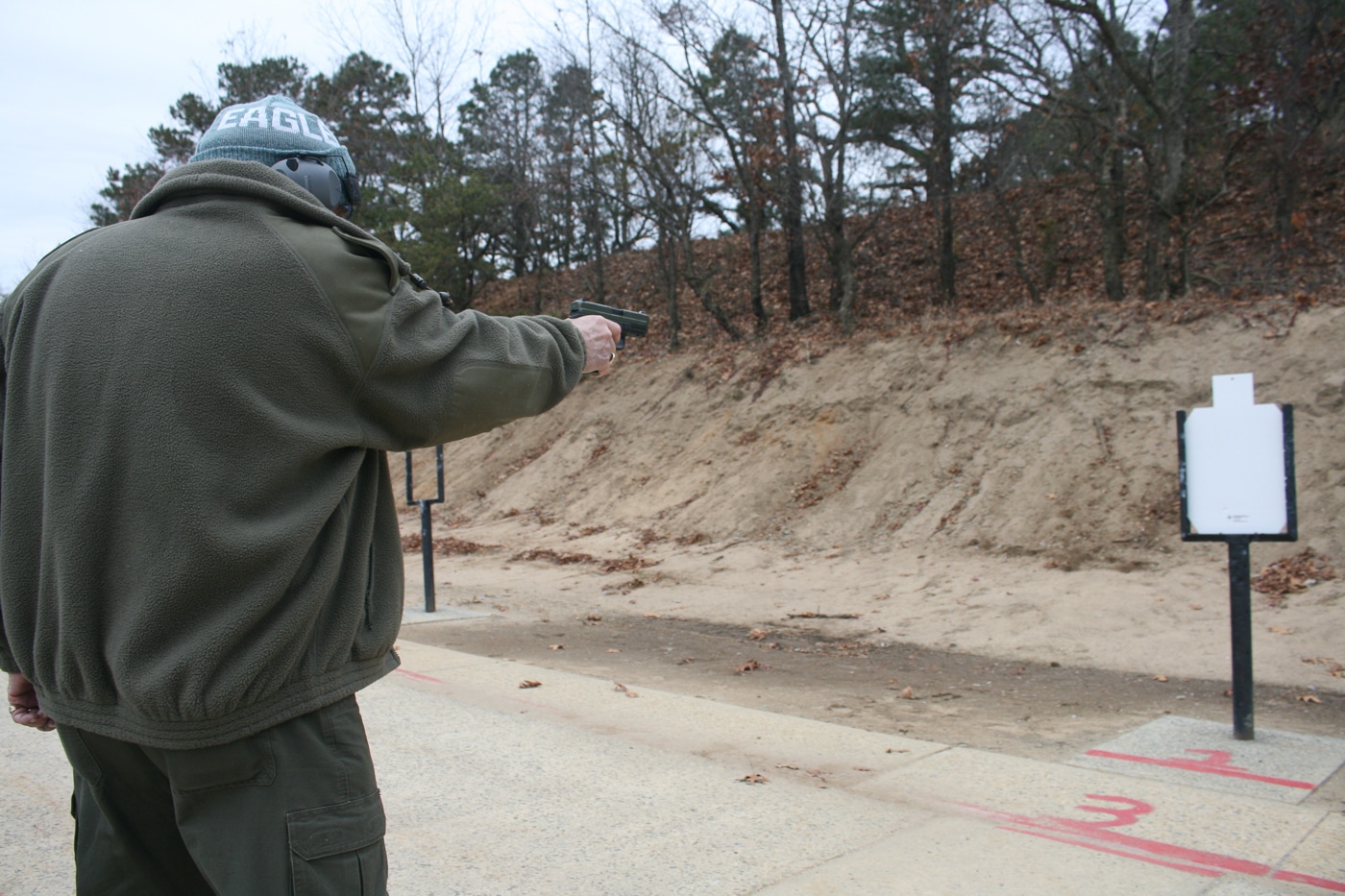
This was very different than the informal target shooting I had previously been exposed to. I’ll confess to being a less than stellar performer at first, but after some solid instruction and practice, I felt pretty good about my abilities to run a handgun. No doubt, peer pressure weighed into the equation as most of the officers in my outfit could shoot very well and as the new guy, I certainly didn’t want to be the weak link.
Like many outfits back in the day, our training doctrine had not evolved much since the 1930s. There was a heavy emphasis on deep crouch, point shooting and only using the sights at extended distance. Our ballistic yardstick to measure performance was a Tactical Revolver Course where 36 of the 60 rounds were fired from 25 and 50 yards. Once you got to the 7 and 15 yard lines, we all felt the drill was a piece of cake. While my marksmanship potential improved dramatically, I began to wonder about the relevancy of the training we were receiving and thought there was much more to the picture.

Of course, I had been reading about the new action shooting disciplines such as IPSC which were a world different from the PPC-style shooting widely used by the police. I also began to look at the writings of Colonel Jeff Cooper a little more closely, as his philosophy on running a handgun was very different from what I had been exposed to. This all came to a head when I was selected to attend a firearms instructor course conducted by the FBI.
Quite frankly, this program was very different than I anticipated. The FBI had recently incorporated many of the elements of Cooper’s Modern Technique into their training doctrine, including the Weaver Stance and using the sights. This was a huge deviation from what our other staff instructors experienced when they attended the program a few years before. I was very pleased to see some improvement in my own shooting, but now I had the dubious task of going back to my job and telling the more experienced instructors they were doing it all wrong.
Getting on Target
Index is one of those words in the English language with multiple meanings. It can be defined as, “a pointer or an instrument showing a quality or position on a scale”. Another definition might be, “something that leads to a particular fact or conclusion”.

For years I have used the term index to describe sight alignment/sight picture and exactly how you line up the muzzle of your gun with what you want to shoot. The sights on top of your pistol do indeed give you some positive feedback that you have placed the muzzle of your gun on target. To make a hit, hold the gun as still as possible and bring the trigger to the rear without disturbing the line from the muzzle to the target. It sounds very simple, right?
I wish! Over the years I have listened to all sorts of spirited debate on this topic, including several episodes that came down to name calling and being just short of blows being exchanged.
On one side, we have the proponents of point shooting as originally promoted by Fairburn and Sykes, versus those who prefer a sighted index whenever possible. The point shooting advocates argue that in a typical gun fight there is no time to use the sights, while the dissenters who favor using the sights point out that in fast-breaking mortal combat there simply isn’t enough time to miss.
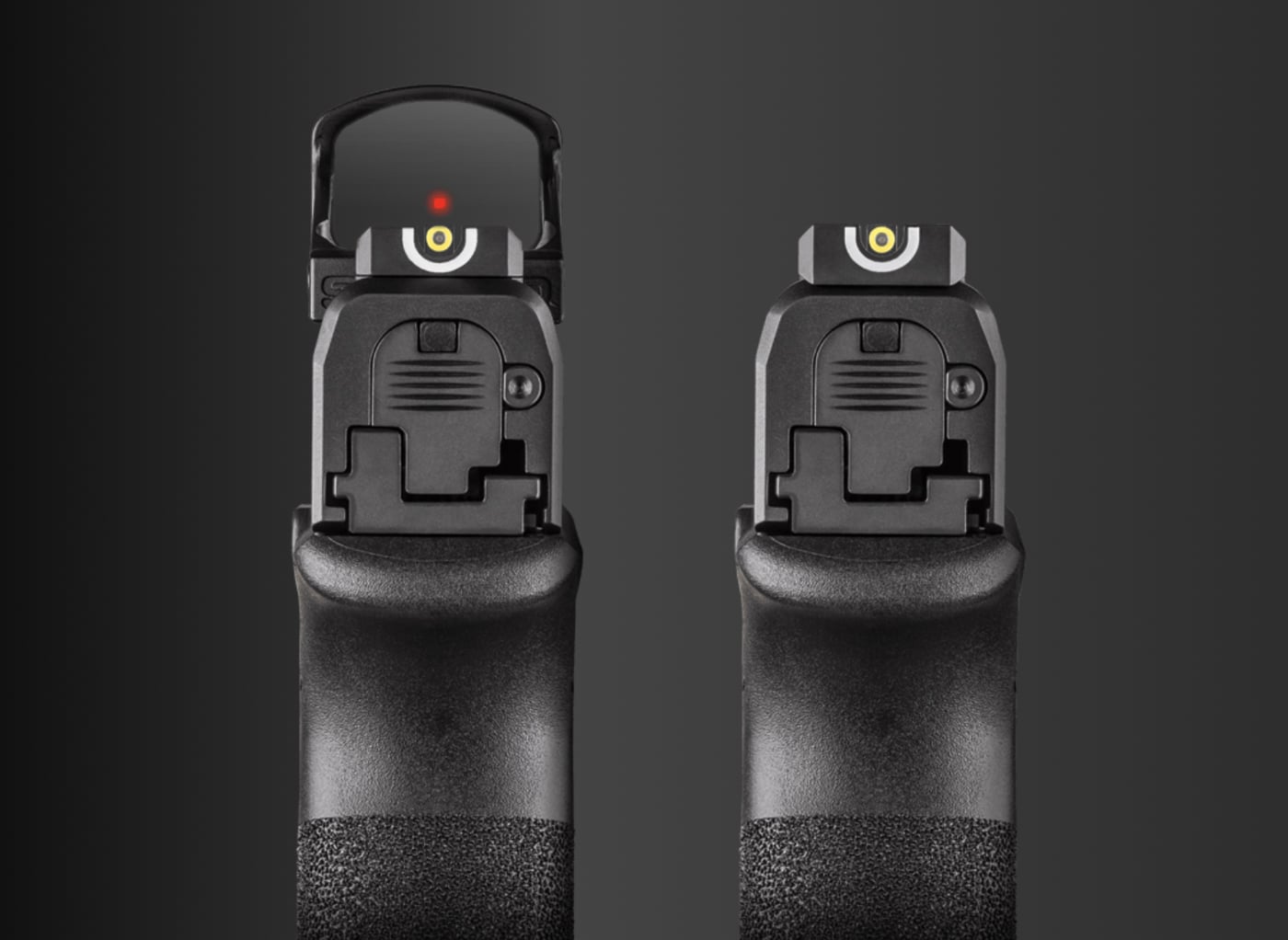
In recent years, the rise and proliferation of red dot sights have added a third dimension to this endless debate. Without question, red dot sights can simplify the process as the user is now dealing with a single focal point rather than trying to use traditional iron sights that requires multiple focal points. Have red dots rendered iron sights obsolete? I don’t think so, but they do bring something very different to the table.
Does Point Shooting Really Work?
Point shooting is a technique where one acquires the target without looking at the sights. The gun is pointed rather than aimed in a conventional manner, and in a defensive shooting scenario focus is on the threat rather than the sights. Point shooting goes by other names, including target focus or instinctive shooting.
Throughout gunfighting history, there were a number of legendary lawmen such as Jelly Bryce, Hank Sloan and Bill Jordan that were masters of this craft and used this technique with great success in real-life situations. To say the least, these gentlemen were not only able to put hits on bad guys under less-than-optimal conditions, but they could do it in the blink of an eye. These were dangerous men who spent countless hours refining their skill.
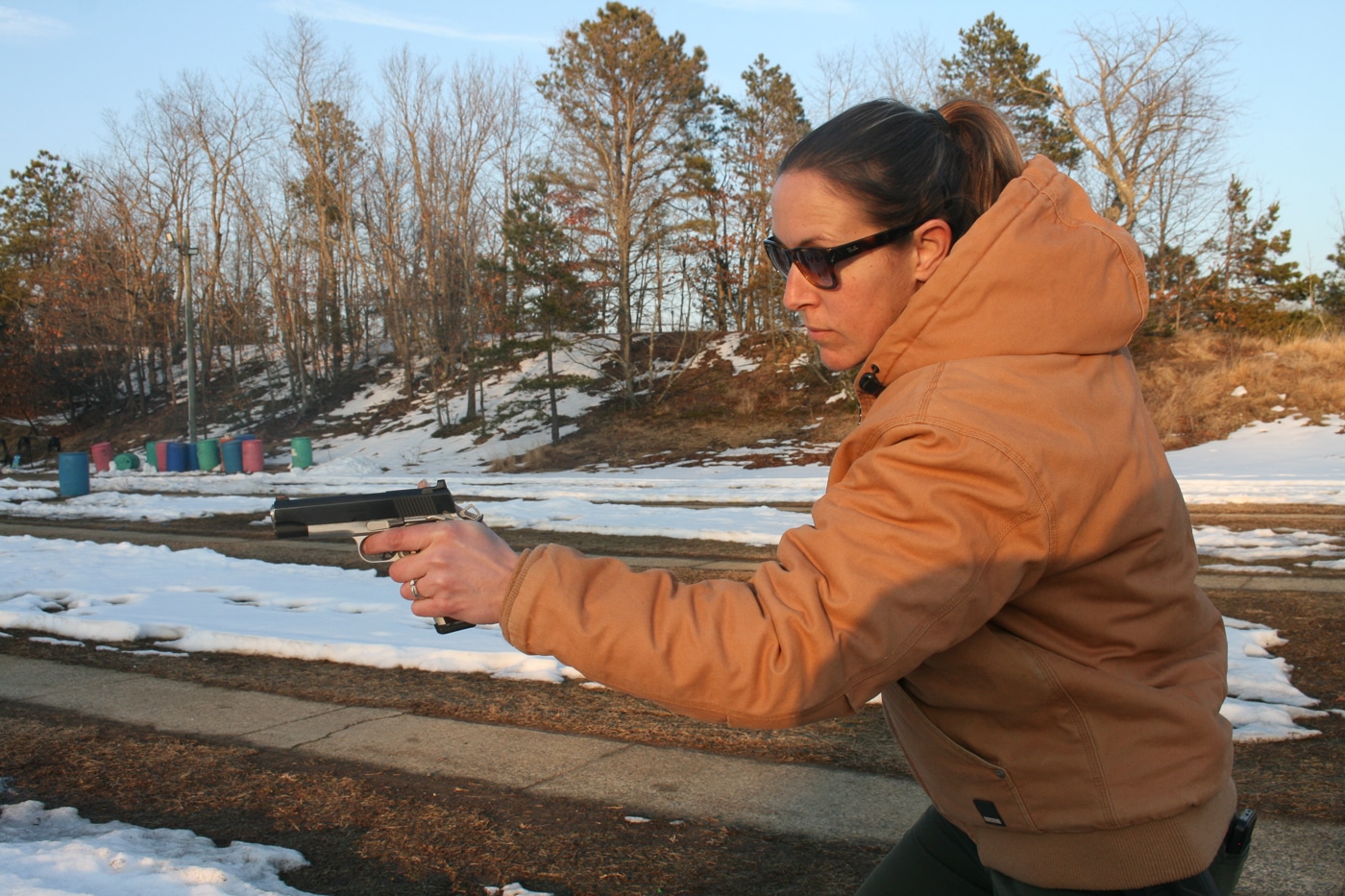
How might this compare to today’s police officer or armed citizen who gets to the range a couple of times per year? I would offer that unless you were born with two pounds of metal at the end of your arm, there is nothing truly instinctive about point shooting. Despite what its many proponents might offer, it is not as simple as pointing your finger and requires a bit of body aiming to get on a threat more than a couple of feet away. This is especially true if the gun is not brought up to eye level.
As indicted earlier, much of my initial indoctrination in shooting a handgun included a heavy dose of point shooting. Quite frankly, I wasn’t very good at it and it took me a while to get proficient. To fix that problem, I spent quite a bit of time shooting a .22 caliber revolver loaded with CB caps from a deep crouch and finally got to the point where I was blasting the X-ring out of the B-21 target. By placing my feet a certain way and making sure my strong side arm was parallel with the ground as I cycled the gun, the hits then came very easy. Out to 7 yards or so, I enjoyed great success.
But like many things in life, reality has a nasty way of kicking us in the teeth. I soon found out the technique worked great on level ground with that B-21 directly in front of me, but it all came unraveled if my target was off center, at a higher or lower elevation, or was moving. Sure, it was fast, but in real life only hits in high-value areas count.

Live The Armory Life. The latest content straight to your inbox plus an automatic entry to each of our monthly gun giveaways!
I have read and agree to the terms & conditions.Considering that a great deal of gun play unfolds inside of what many us would categorize as conversational distance, I still think there is some application for point shooting. Where I differ from many of the point shooting proponents is that I feel the distances where it can save your bacon are indeed very short, probably on the order of 3 or 4 yards, and only if the threat is unobstructed. Beyond that, hit placement gets pretty sloppy — particularly when you factor in life-threatening stress. Trust me, emptying your magazine toward a threat a few yards away and hoping you strike gold is not the answer.
Even at close distance, drive the gun to eye level and superimpose the mass of the gun against the threat’s high chest. Good shot placement can be achieved, providing the threat is fully exposed. However, a partially exposed threat or innocent bystanders in close proximity can muddy up the waters. Can we stretch out a little further? Perhaps, but you do so at your own risk.
Flash Sight Picture
Data from a number of definitive sources continues to tell us that conflicts in which handguns are used typically unfold at relatively close range. Very often, an aggressor has already initiated the threat, which leaves us precious little time to counter. You not only have to assess the situation, but also get into action and make decisive hits as quickly as possible.
Unlike the Silver Screen or TV, the effect of handgun rounds on the human body is unpredictable. It isn’t just important that we hit, it’s important that we hit something important. Sure, even a peripheral hit may instantly shut down an adversary, but you can’t count on it. The best chance of meeting with success is to place one or more hits in the high chest, which disrupts the vital organs. That area is significantly smaller than the high value area of what many popular targets portray.
At typical defensive distance, excellent shot placement can be achieved by using a coarse or crude sight picture. Even if the front sight is grossly misaligned with the notch in the rear sight, you can still make quality hits and do it at speed. In fact, it is no slower than point shooting and, in my experience, shot placement is far superior.
The flash sight picture is the polar opposite of deliberate, precision firing. With the flash sight picture, one merely catches a glimpse of the front sight as it is brought to the center of the target to confirm acquisition. The key to success is practice of the draw stroke and repetition, which builds a consistent firing platform and gets you up on target very quickly.
As distance between you and a threat increases, a more classic sight alignment/sight picture is critical. But in fights where a handgun is utilized, this is the exception rather than the rule. No matter what the distance, get an acceptable sight picture before you press the trigger.
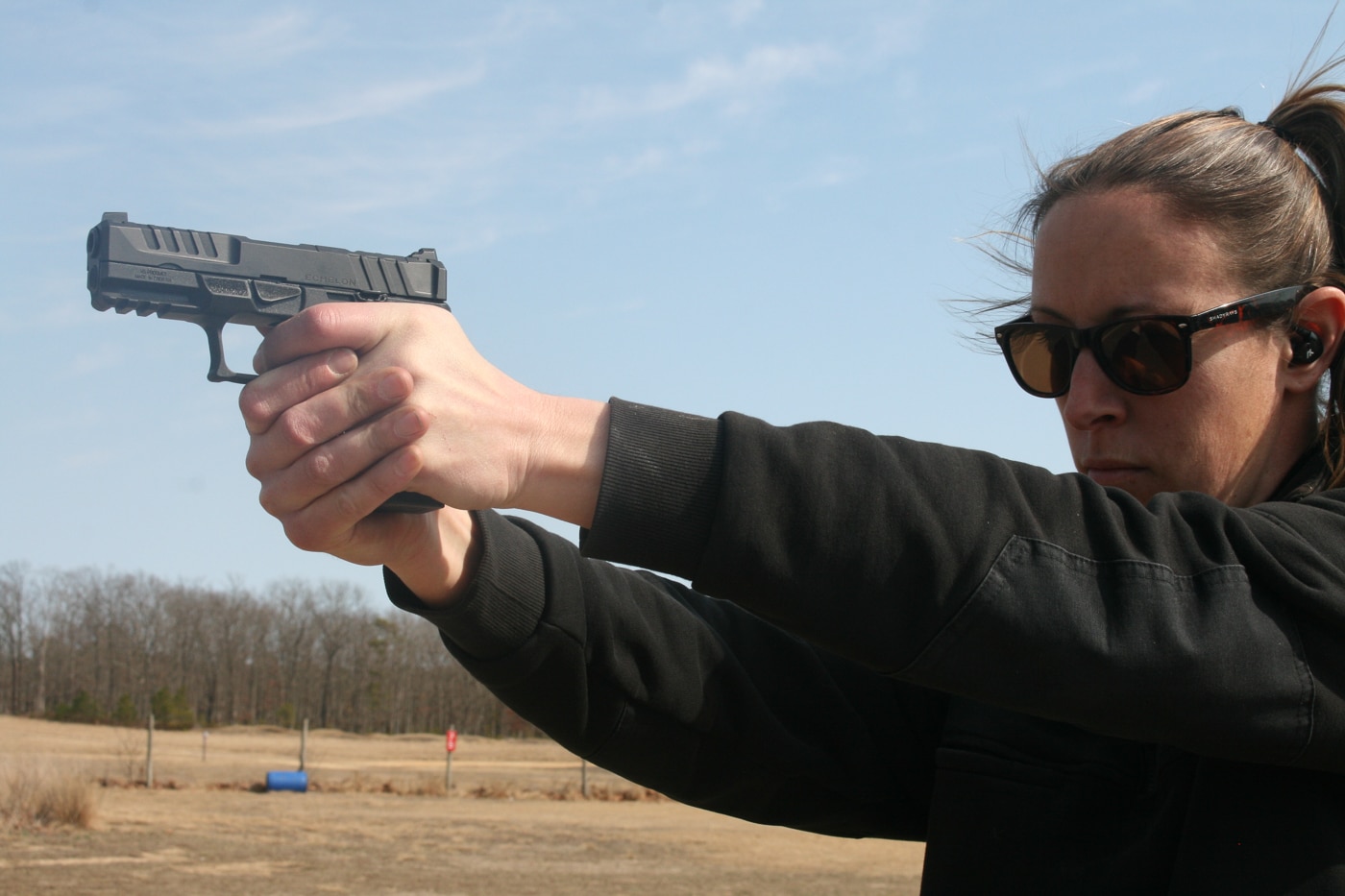
Will you really see the sights of your pistol in a fight? I would give it a very qualified yes, but it depends on any number of things including your training and mental state. To tip the odds in your favor, the front sight on your pistol should be something that grabs your attention in the widest possible range of light conditions. One example is the Big Dot Tritium Sight from XS Sights, which is tough to ignore once you drive your gun to eye level. I’m also pretty partial to the tritium, high-luminescent front sight of my Springfield Armory Echelon 4.0C, which I can also pick up very quickly.
A simple formula that has worked for me goes something like this. When confronted with lethal danger at close range, your focus will indeed be on the threat. As you drive the gun to eye level, the gun will break that plane of vision from the eye to the threat. See the bold front sight against the high value area of the threat and press the trigger.
Are Red Dots the Future?
Red dot sights for handguns have been around since the 1980s and in recent years have evolved from the exotic category to commonplace. The manufacturers of red dot sights have succeeded in building models that are smaller, lighter and far more robust than those that came before, making them a good choice for personal defense. Battery life and mounting systems are also much improved over what was available only a few short years ago.
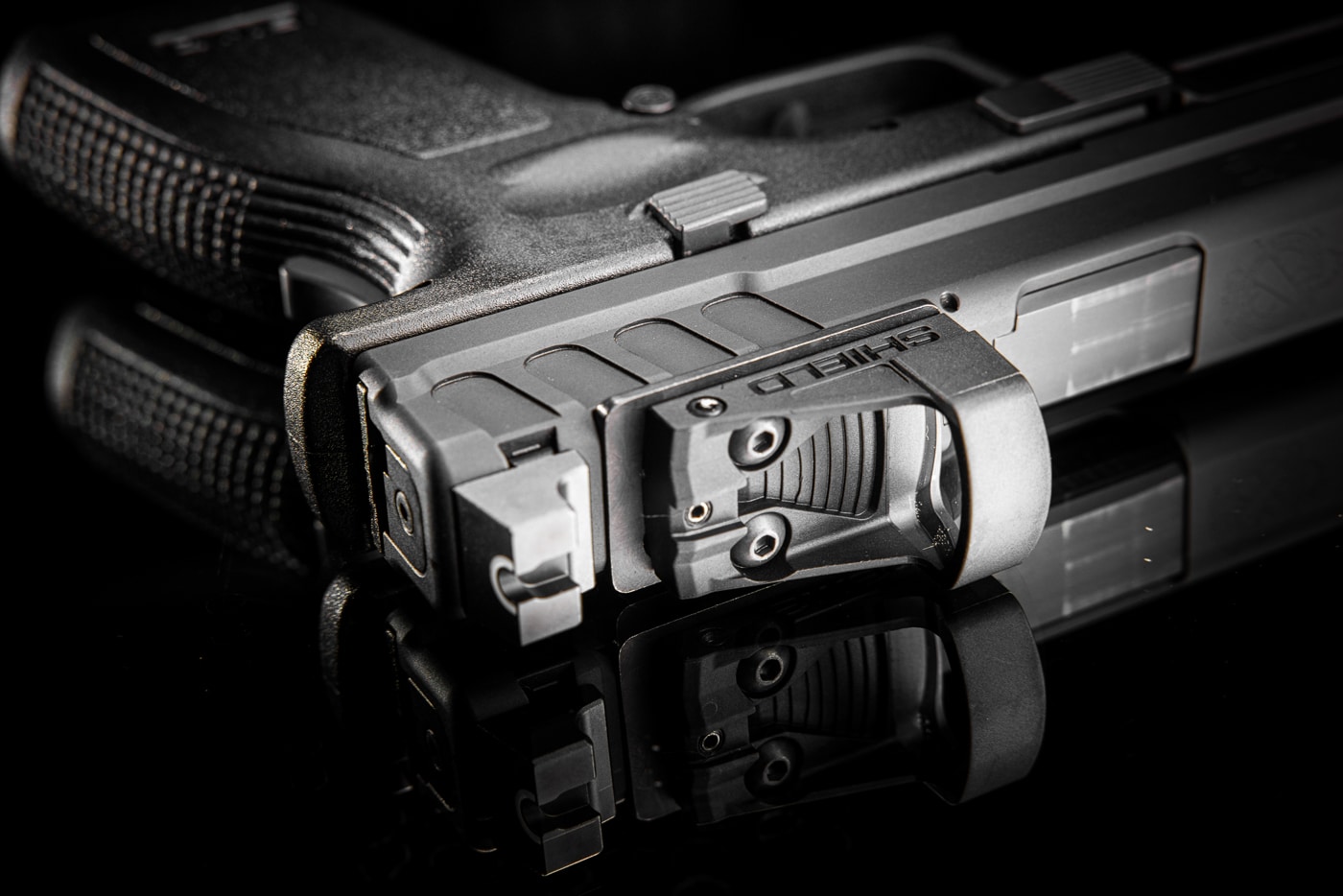
My immersion into red dot technology kicked into high gear half dozen years ago, and I’m still learning. As a long-time user of traditional iron sights, initially I found red dots a steep hill to climb, and for me that change was no less dramatic than from when I transitioned from a revolver to an autopistol. However, I was able to put it all in perspective when I took an instructor-level class, which put me on the right track.
The big advantage of red dot sights is the single focal plane. With iron sights, the eyes move back and forth from the target, front sight and rear sight multiple times. Although this happens very quickly, it involves three different focal planes and can be very disconcerting to say the least. Essentially, with a red dot system, focus remains on the threat, and you superimpose the red dot where you want the bullet to impact. When subjected to extreme stress, this process is more in tune with body alarm reaction.
At extended distance, I initially found red dot sights to be beneficial but felt they slowed me down at typical combat distance. My issue was finding the dot fast enough to make an accurate shot. But when I broke it all down, I discovered my presentation to the target was not consistent, which caused me to hunt for the dot and slow down my response. By going back to the basics and focusing on my grip and draw stroke, I made significant progress.
As this is written, my primary carry guns still sport iron sights, but I wouldn’t rule out a red dot in the future. I do, however, use a dot-equipped pistol when conducting training. There may be something in this for tired old eyes and my experimentation continues. When I consider the improvement some of my students and peers have made by going with a red dot sighting system, there is no doubt that they will be an even bigger part of the future.
Sorting It All Out
It’s abundantly clear to me that a sighted index, either by iron sights or a red dot, will result in far better shot placement than point shooting. With that said, I still believe that point shooting has a place and I regularly include it into my practice routine. Consider that many real-world shooting scenarios unfold at very close range, well inside of conversational distance. Situations could arise where distance, injury, mental state or inability to see the sights prevent you from using your technique of choice. After thousands of repetitions of drawing my pistol and looking for the sights, I’m confident I can make quality hits at close range even if I can’t see them.
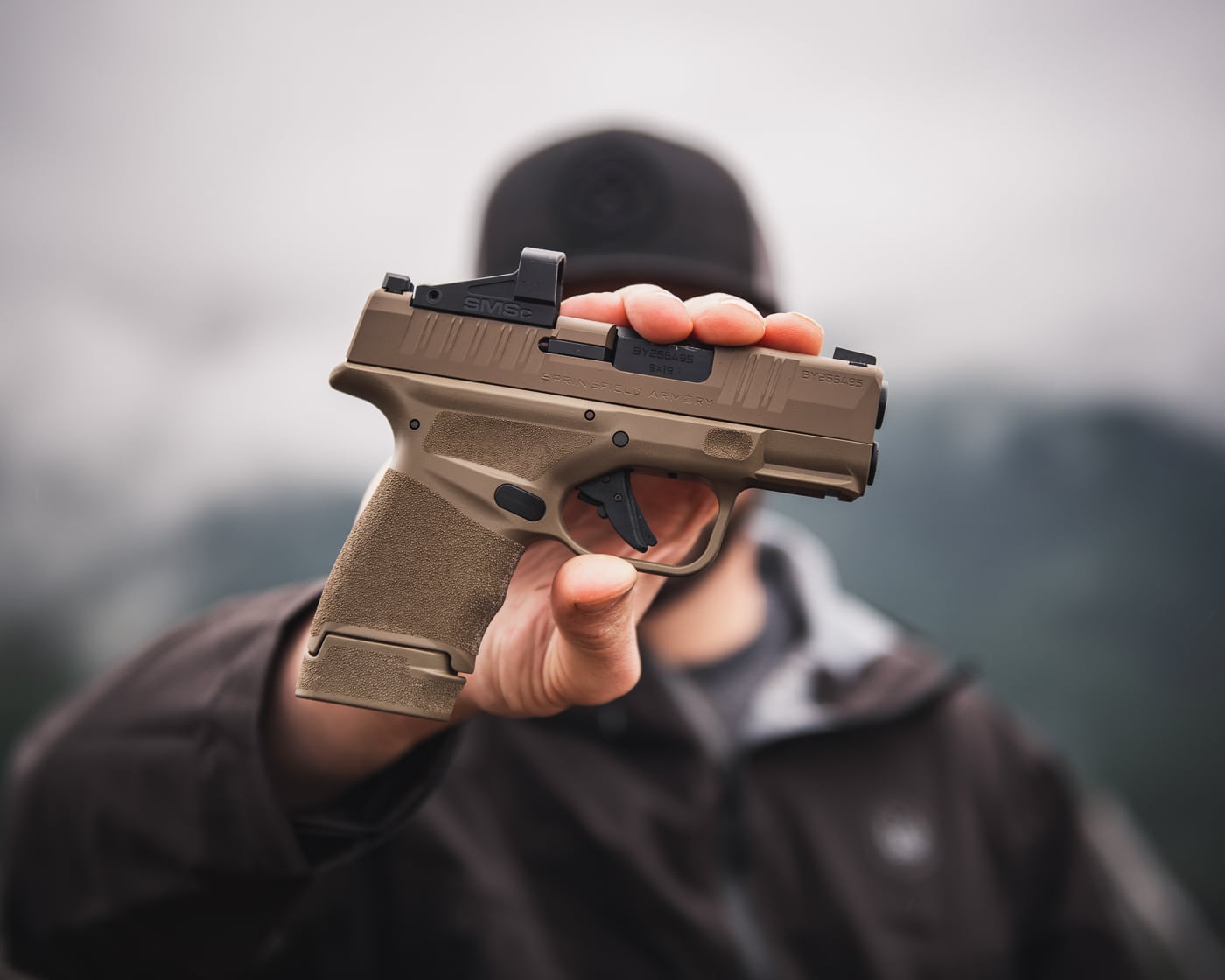
No matter if you go with irons or a red dot, select something you can pick up in a hurry in the widest range of lighting conditions. I’ve made my case for a bold front sight. If you go with irons and optics, I prefer a red dot of 3 MOA or slightly greater. There are also some dot and ring reticles available that are very hard to miss and some users have come to prefer them.
If you do go the red dot route, choose carefully and select something with a proven reputation for durability. This is clearly an area where “hobby grade” doesn’t cut it. Also, pay attention to the mounting of the optic. There are some pistols out there like the Echelon or Hellcat that allow direct mounting to the slide, eliminating a need for the plate. If you are unfamiliar with this process, consider having someone with experience mount your optic as this is often a source of failure.
In the end, go with what works for you. The fact that you prefer iron sights does not make you a Fudd, nor will going with an optic turn you into John Wick. No matter which route you follow, regularly structured practice is the key to success. There is no perfect solution that will satisfy everyone and, ultimately, we need to go with the technology with which we are most comfortable.
Editor’s Note: Please be sure to check out The Armory Life Forum, where you can comment about our daily articles, as well as just talk guns and gear. Click the “Go To Forum Thread” link below to jump in and discuss this article and much more!
Featured in this article
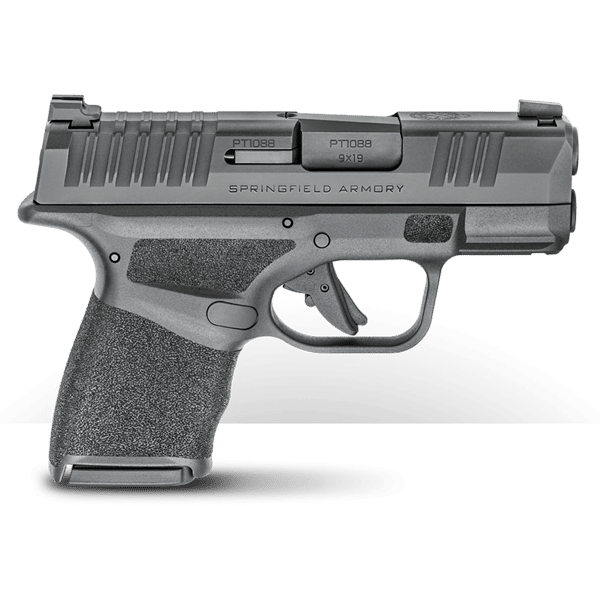
Hellcat® Series
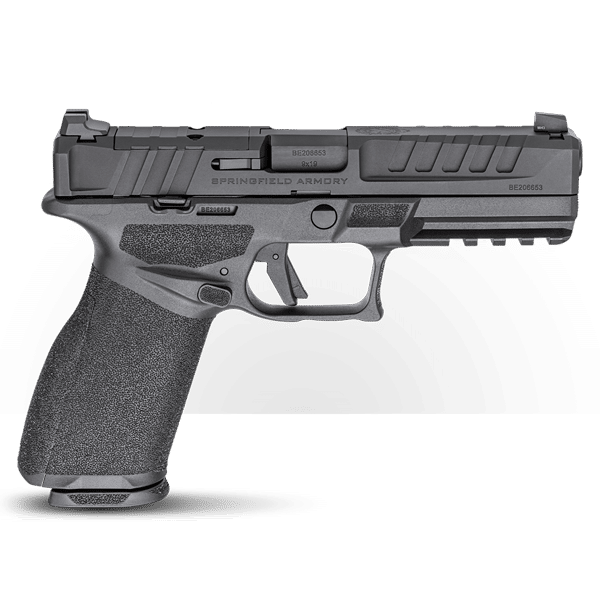
Echelon™ Series

Other Optics
The post Combat Index: Dots, Irons or Point Shooting? appeared first on The Armory Life.