CZ 457 American Review: Quarter-Inch Groups Right Off the Rack
My typical grading system for products is “don’t buy it,” “it’s OK,” and “pretty damn good.” After testing hundreds of pieces of gear, I can say that the CZ 457 is a rare product that I love. I own a CZ 455 and two 457s; all three of them are great shooters right out of the box. If you feel like you need more out of the gun, you can dress it up with after-market accessories, barrels, stocks, and chassis.
The CZ 457 does have its quirks, and some of the factory configurations are missing key features like a threaded barrel and Picatinny scope mounts. But, dollar for dollar, I don’t think there is a finer factory .22 LR on the market. Here’s how my two 457s performed, and what its like using them in the field
CZ 457 American and American Synthetic SR Specs and Features
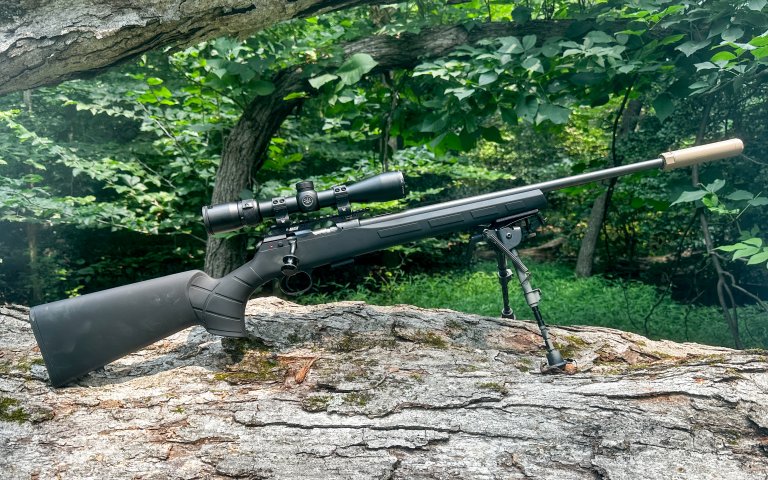
- Barrel Length: 24 inches (American) and 20 inches (Synthetic SR)
- Synthetic SR is threaded 1/2 x 28
- Adjustable Trigger: 1.8 to 3.4 pounds
- Comes with a 5-round magazine
- User-swappable barrels and calibers
- 11mm dovetail scope base
- 60-degree bolt throw
- Overall 50-Yard Average (150 shots): 0.39 inches
- Stock Trigger Pull: 3.2 pounds (American) and 2.9 pounds (Synthetic SR)
- Weight: 6.61 pounds (American) and 5.51 pounds (Synthetic SR)
- Price: $680 (American) and $630 (Synthetic SR)
Shooting Experience

Whether I’m shooting the smallest target on a KYL rack or giving a gray squirrel a long-range craniotomy, the American and Synthetic SR are ergonomic, quick to shoulder, and cycle reliably. This is a platform that I genuinely enjoy shooting, and I don’t have many complaints.
I have well over a thousand rounds through my three rifles, and I’ve had a few failures to extract. Some were caused by the gun being dirty, and others by short-stroking the bolt. (Shooting overly waxy rimfire ammo and shooting suppressed is a recipe for a dirty rifle.) In the cases where I’ve short-stoked the bolt, the empty casing drops right on top of the next round in the mag. In general, brass flies out of the chamber, and fresh rounds feed reliably.
The CZ 457s have a 60-degree bolt throw, which is a nice quality-of-life improvement. It provides better clearance for scopes, and it makes follow-up shots a little faster.
All my CZ 457 bolts are smooth and lock up tight. You can run them pretty fast and maintain your solid firing position on follow-up shots.
Accuracy Testing
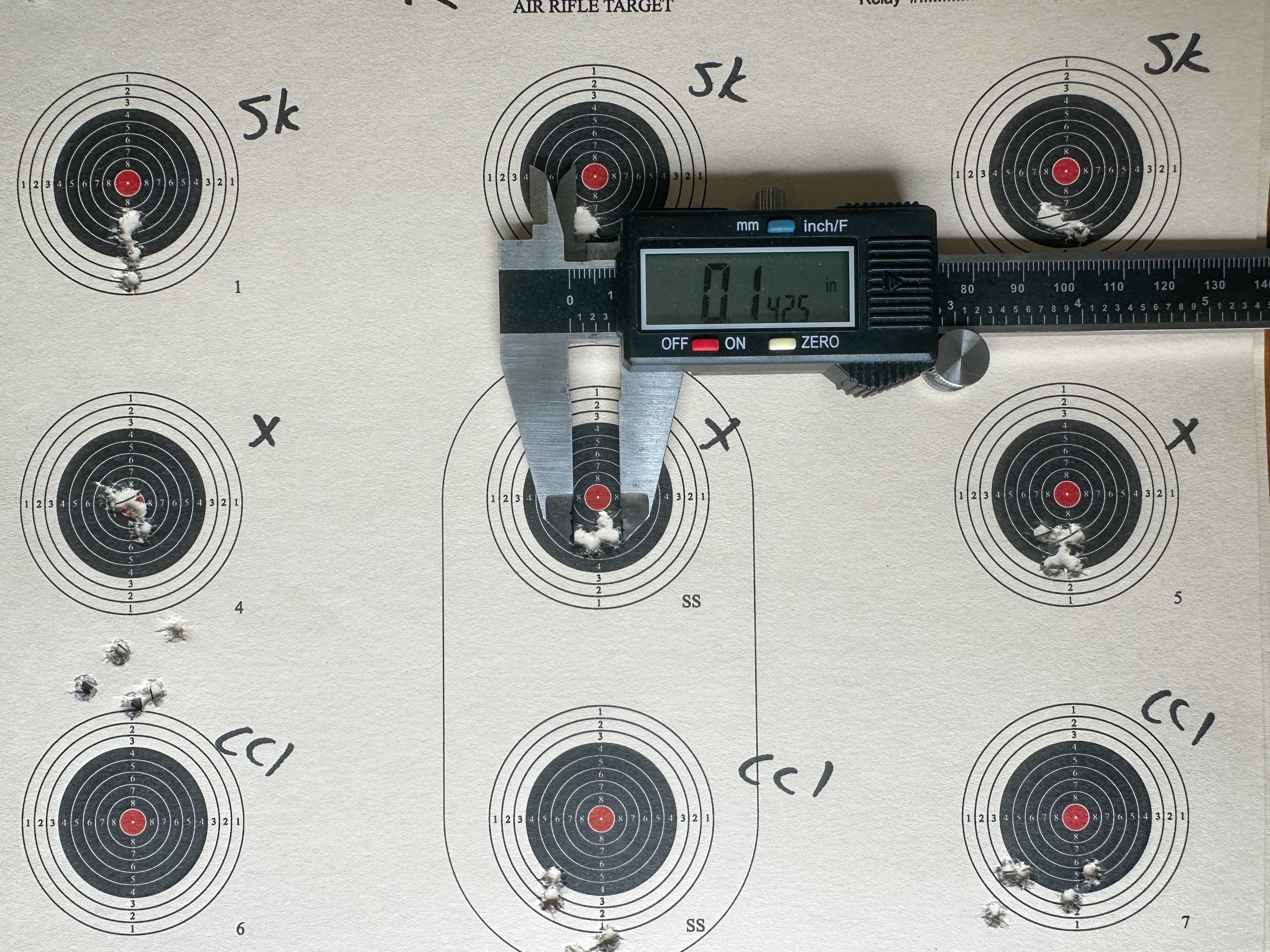
One of the better groups shot during testing. 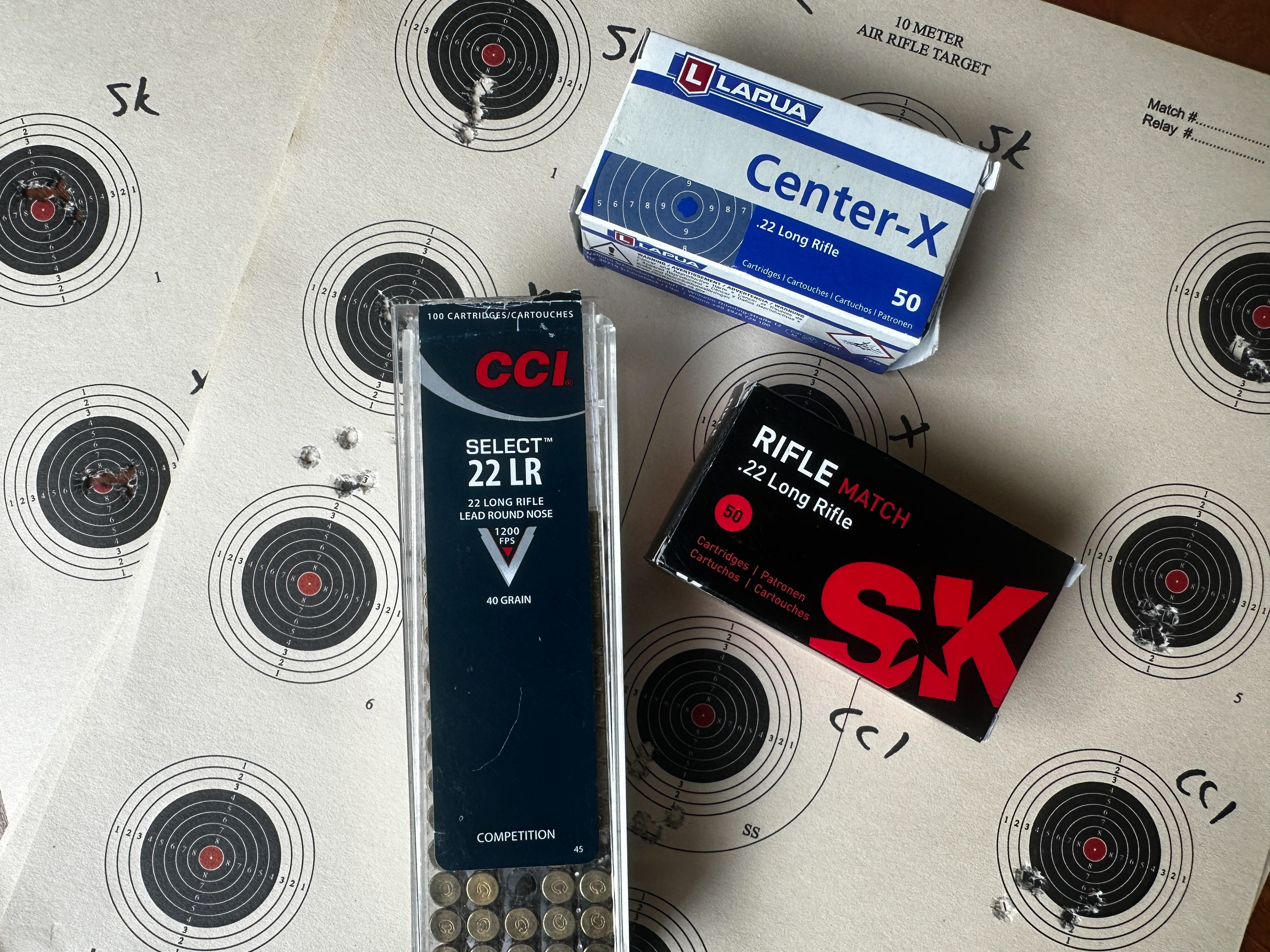
Ammo used for accuracy testing.
I shot subsonic .22 ammo, in three price ranges, at 50 yards. The CCI Standard is my go-to quality, yet affordable, .22 ammo. I typically shoot it at steel from 25 to 50 yards. The SK Rifle Match is match-grade ammo that isn’t crazy expensive. Then there’s Lapua Center-X, my go-to for long-distance hole punching when I don’t mind dropping 40 cents per round.
I shot five, five-shot groups from each rifle with each type of ammo. When swapping between loads, I shot five fouling rounds first to allow the barrel to acclimate to the new ammo. This ended up being a moot practice because the groups were practically identical.
| Rifle | Lapua Center-X | SK Rifle Match | CCI Standard |
| American Synthetic SR | 0.28 | 0.32 | 0.52 |
| American | 0.20 | 0.29 | 0.72 |
As the accuracy results show, if you want a .22 to shoot to a high standard, you have to feed it good ammo. With mid- to elite-tier ammo, the CZ 457 will give you mid- to elite-tier accuracy. You could easily take these bone-stock rifles and be competitive at a local NRL .22 match against rifles costing three times as much. I primarily just want to enjoy fun shooting and small game hunting with these rifles. For that, a 1-inch group at 50 yards is acceptable. That’s why I typically hunt with CCI Standard.
Just for fun, I also shot the Synthetic SR at 100 yards with Lapua Center-X. It shot a 0.94-inch group average in a light crosswind.
CZ 457 American vs CZ 457 American Synthetic SR
For aesthetics, the CZ 457 American with a wood stock is phenomenal. The 24-inch barrel isn’t as lanky as I thought it would be, and I would stick with it if not for one pain point. The barrel isn’t threaded. Shooting a firearm doesn’t get more enjoyable than a .22 LR with a suppressor, and I prefer to have a can on all my rimfires. I plan on swapping the barrel or getting it cut down and threaded.
That’s where the American Synthetic SR comes in. It has everything I like about the CZ 457 American with a threaded 16.5-inch barrel. The synthetic stock is ergonomic, but it lacks the charm and classic feel of a wood stock. If you can get past that, the Synthetic is absolutely the way to go.
Modularity
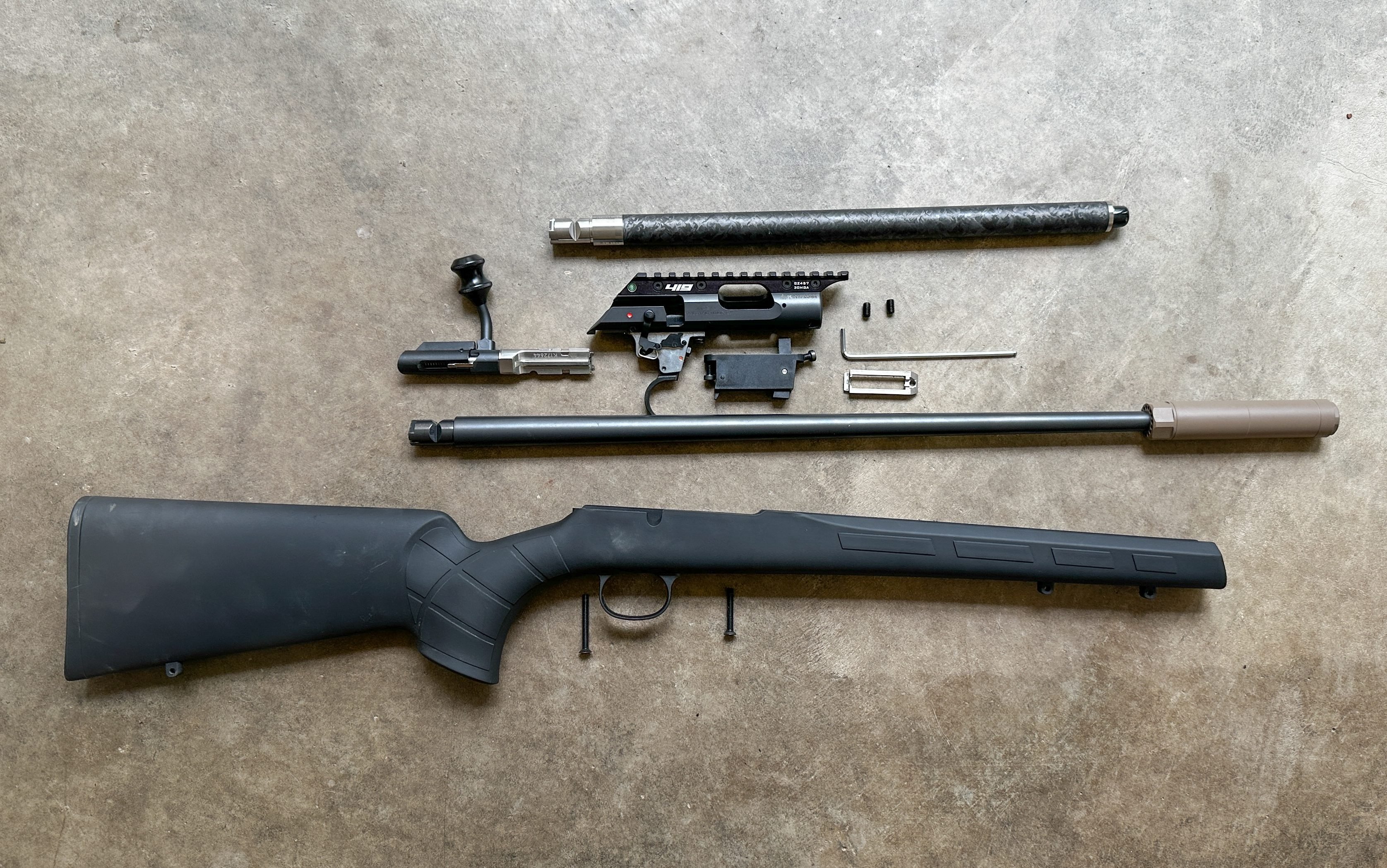
The CZ 457 easily comes apart for customization. 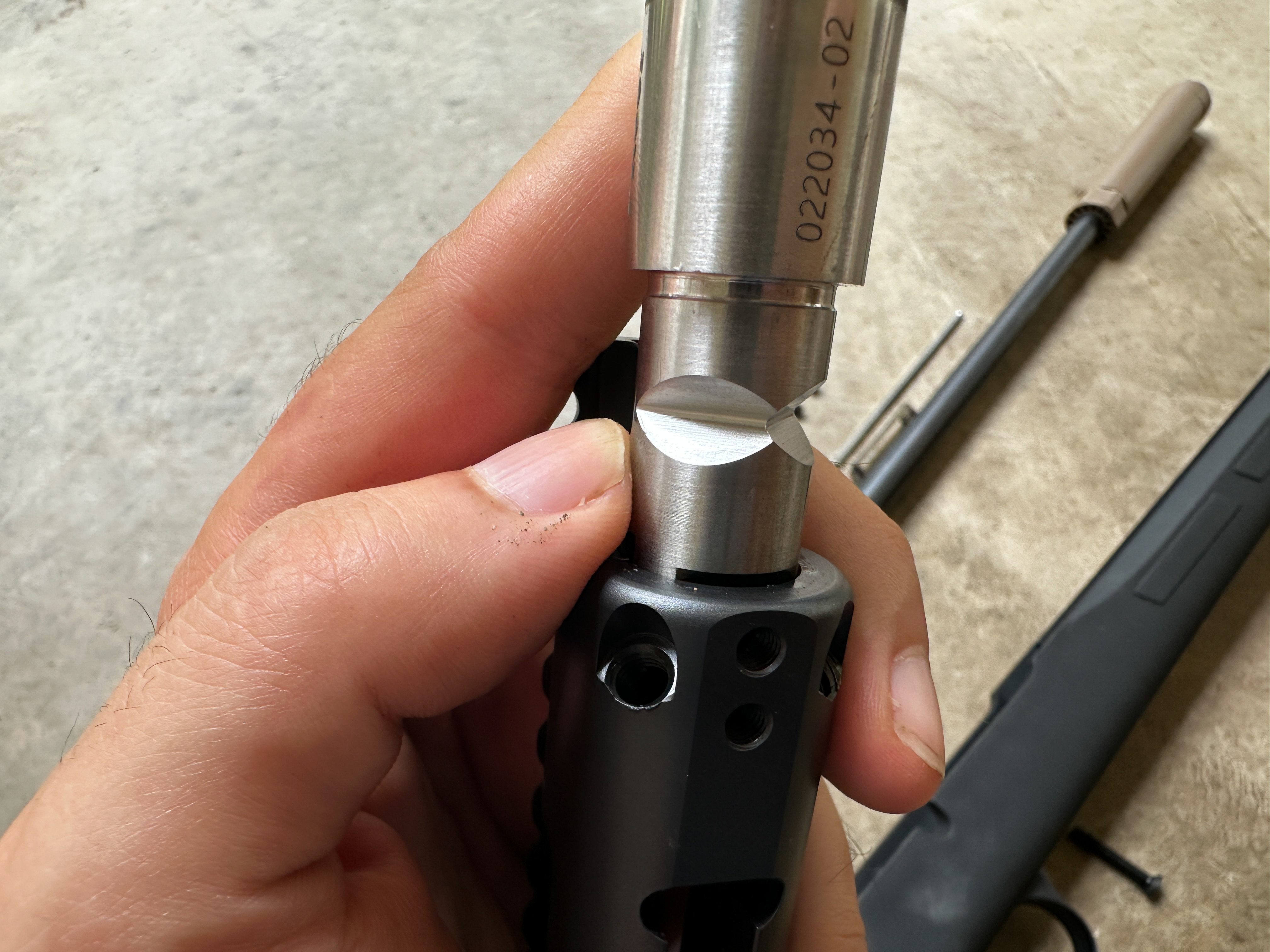
Swapping the CZ457 barrel.
The 457 is a great rifle right off the rack, but you can transform it into a world-class rimfire with the wealth of aftermarket accessories available. For barrels, you can get a pre-fit Lilja or a carbon fiber-wrapped barrel from Proof. Swapping a barrel only requires unscrewing two set screws, sliding the new barrel in, and retorquing the set screws. You can even jump between .22 LR and .17 HMR while you’re swapping barrels.
There are also chassis options from MDT, KRG, XLR, Grey Birch, Woox, and MasterPiece Arms. Within their catalogs, you’ll find everything from ultralight to heavy competition chassis.
Where the 457 Can Improve
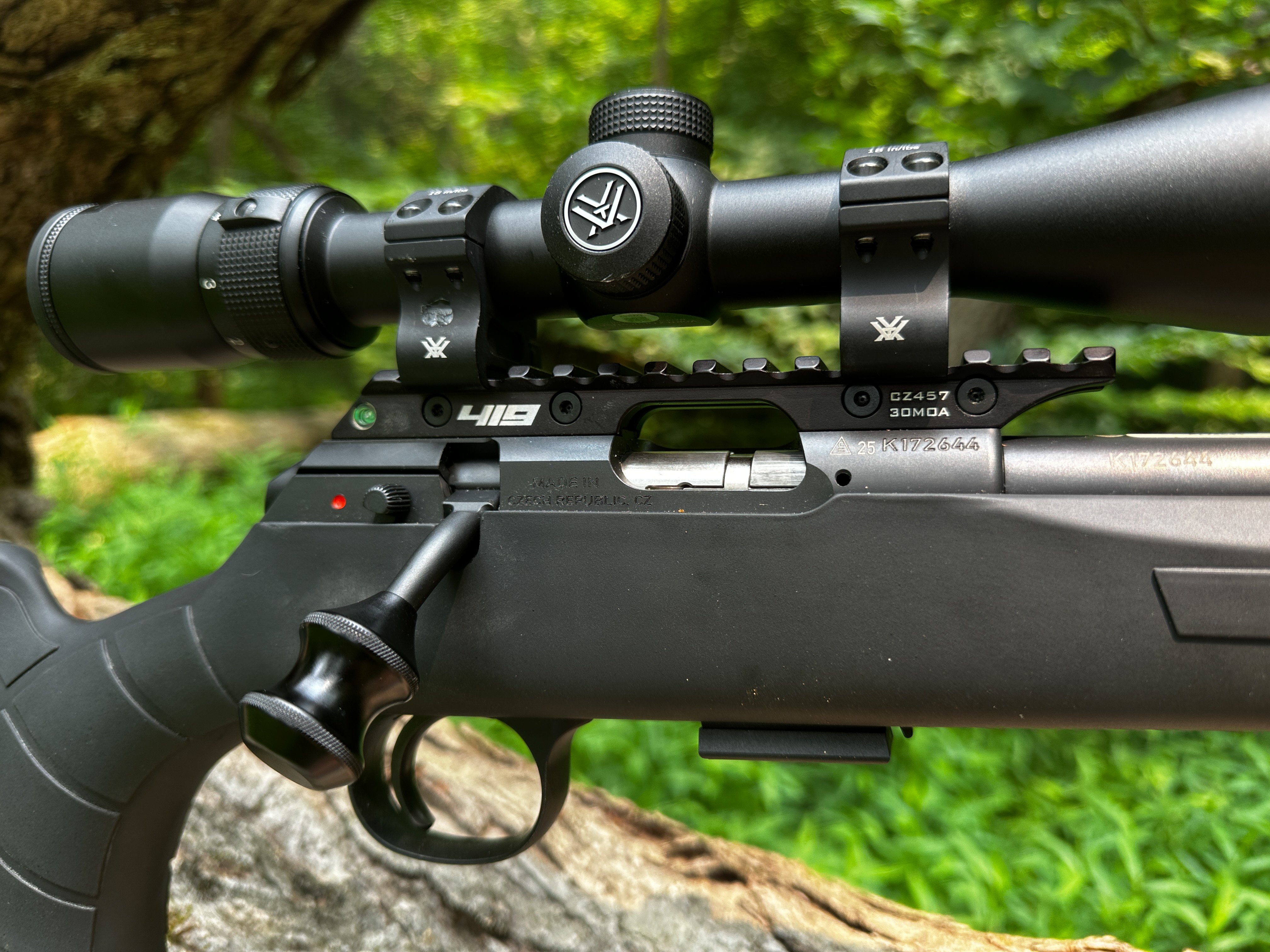
The Area 419 scope base is an excellent upgrade. 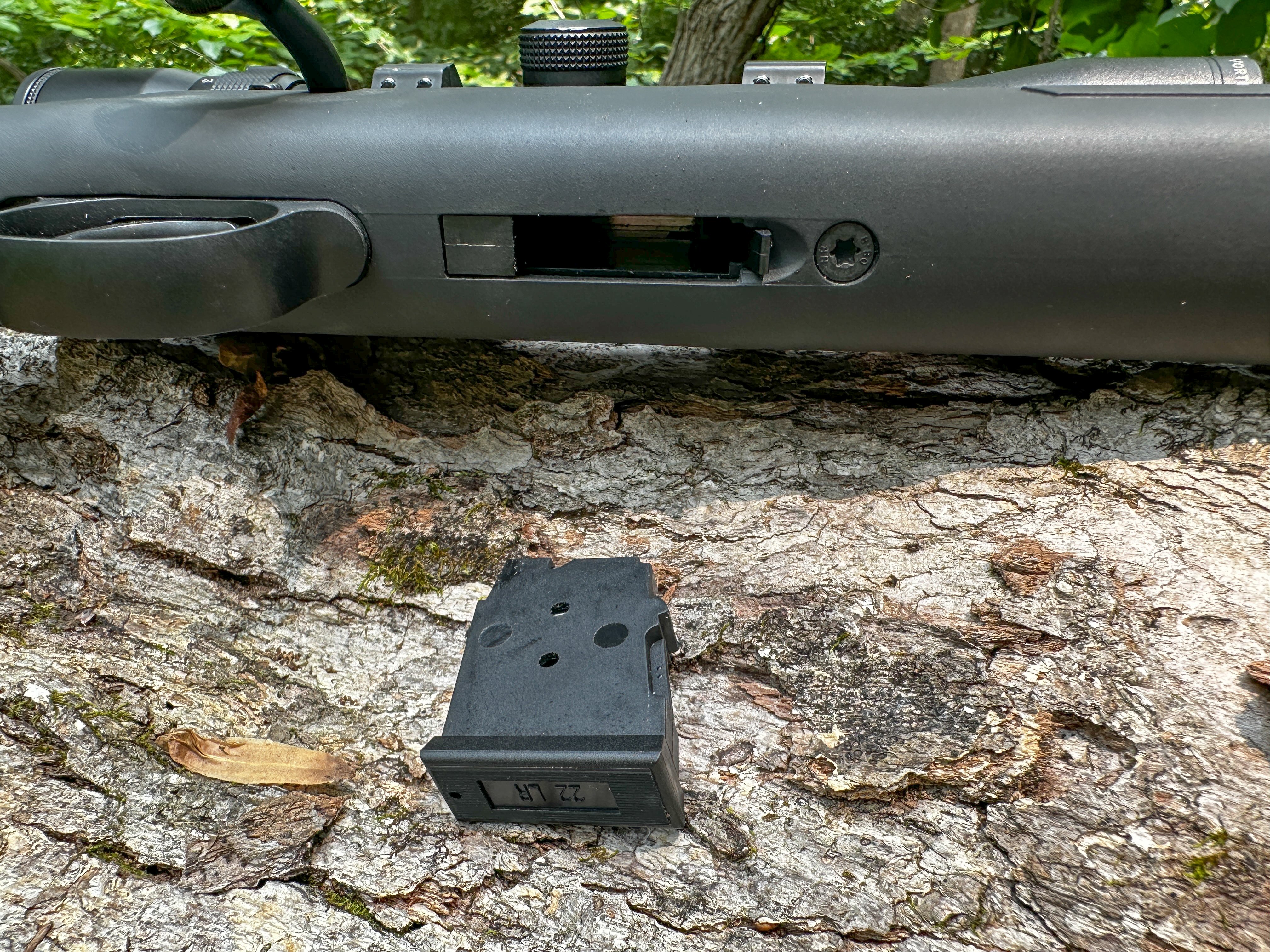
The 457 magazine well and 5-round magazine.
The CZ 457 uses an 11mm dovetail scope base, which isn’t the preferred mounting method for most people these days. A more modern upgrade would be a 20- or 30-MOA Picatinny base. You can find high-quality aftermarket 11mm to Pic adapters for the 457, but I’d prefer it came stock from the factory in that configuration.
If you plan on building a CZ457 for competition shooting where you’ll be reloading on the clock, you’ll be at a disadvantage compared to people with 700-pattern .22s. The larger magazines and magwells of rifles built on actions like a RimX are easier to reload. The CZ’s magwell is also plastic, which can cause the mag to bind, and I’ve heard of some breaking. There are metal magwells available for the 457, but they’re pretty expensive, at around $200. Along those lines, I’d prefer the 457s came with a 10-round magazine rather than the 5-rounder. Another con is the magazines are pretty expensive, at $40 for 10- and 15-rounders.
Read Next: The Best Air Rifles for Squirrel Hunting
Final Thoughts
I’ve tested some great rimfires, but I’ve yet to find any that match the CZ 457 in performance for the price. The fact that you can get the American Synthetic SR for $630 and it’ll shoot .25-inch (or smaller) groups right out of the box is insane. That alone makes it my favorite squirrel gun. If you add in the fact that you can easily change the barrel and chassis, you have a highly-versatile .22 platform that’s inherently accurate. It’s a step above pretty damn good if you ask me.
The post CZ 457 American Review: Quarter-Inch Groups Right Off the Rack appeared first on Outdoor Life.