Don’t Melt at the Range: 5 Summer Range Gear Must-Haves
When I was young I was stupider and among the stupid things I did was try to tough it out at the range in the hot sun. Show up, sweat through the session, drink a warm bottle of water I left in the truck, and call it training.
Now that I'm a little older and less stupid I understand that being prepared not only makes more more comfortable it also means I'll be more effective and get more out of my time on the range in the hot sun.

A younger and stupider Jacob spending all day in the sun at the range.
Here are five recommended purchases that make hot summer range days genuinely better. None of them are tactical. Every one of them solves a specific problem the heat creates.
1. An Insulated Bottle and Some Electrolytes
Dehydration does not announce itself. By the time you feel thirsty, you are already behind.
And heat does more than make you uncomfortable. It slows your reaction time and clouds your judgment, which is a strange thing to shrug off on a square range where the whole point is making good decisions with a gun in your hands.
The fix is boring and it works. Show up already hydrated instead of trying to catch up on site. Drink steadily through the session rather than chugging a bottle at the end. And replace what you are sweating out, because plain water alone does not cover it once you are soaked through.
An insulated bottle matters here for one reason: cold water gets consumed, warm water gets ignored. A lot of folks I know swear by the Owala bottles. I run a Zulu myself.
Electrolyte powder handles the rest. I like Ultima Replenisher because it is not loaded with sugar, but that comes with a catch. Sugar helps electrolytes absorb faster into the body but without it, you have to be using it before things go sideways. Mix some while you are getting ready to head out and keep drinking it at the range, not after you already feel light headed. By then you are playing catch-up.
- Owala bottles
- Zulu (my pick)
- Ultima Replenisher (my preferred electrolyte)
2. A UPF Sun Shirt Beats Bare Skin
This one feels backwards until you try it. A lightweight long-sleeve sun shirt is usually cooler than exposing your arms to hours of direct sun.
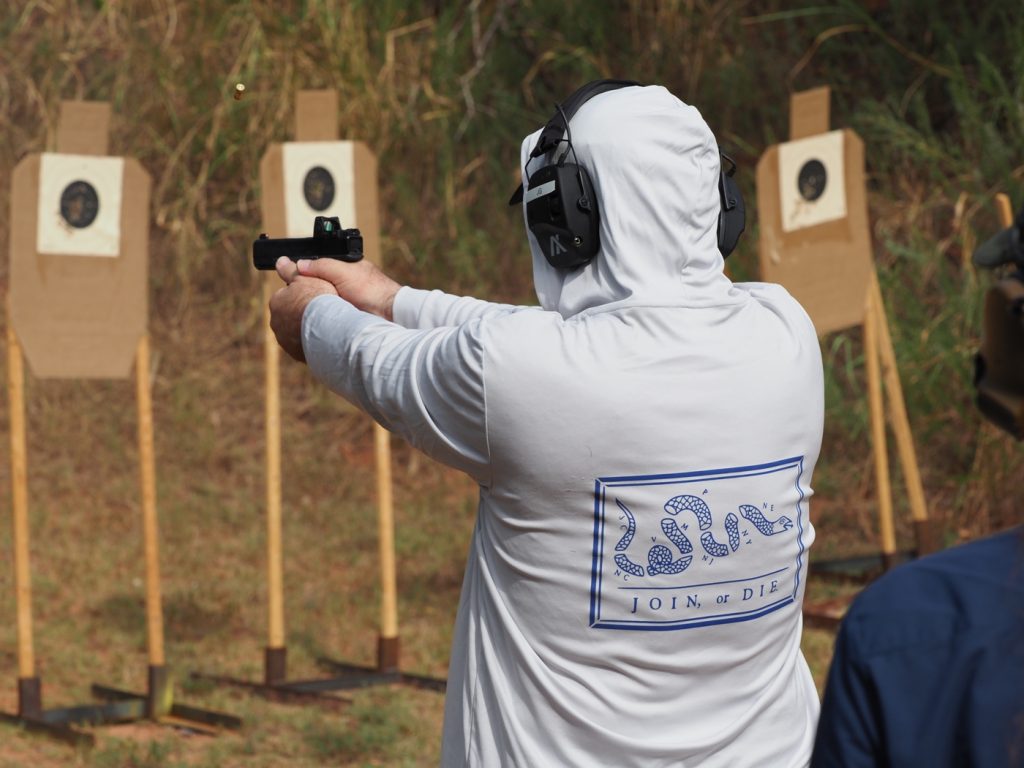
A student at Guardian Conference well protected from the sun!
The reason is airflow and shade. The fabric blocks the sun, wicks your sweat, and lets that evaporation actually cool you instead of frying your skin. Look for a UPF rating (that is the fabric equivalent of SPF, and UPF 50 blocks the vast majority of UV).
I prefer the hooded versions. Pull the hood up and it covers the back of your neck and your ears, which are two of the first spots people burn, and I can wear my ear muffs right over the top of it. That combination solves a lot of problems at once.
We carry sun shirts here, and there are plenty of solid hooded options on Amazon too if you want more colors and sizes to pick from.
If you do not own a UPF shirt yet, sunscreen matters even more. Hit your ears, neck, face, and hands, and reapply through the day instead of trusting one morning coat to last. Frankly the main reason I started wearing long sleeve hooded sun shirts was so that I didn't have to worry about remembering to apply and reapply sunscreen which I wasn't good at doing.
3. A Cooling Towel Is the Cheapest Upgrade Here
Most of what wears you down in the heat is that your body never gets a chance to cool off between strings. You just keep climbing.
A cooling towel breaks that cycle for a few dollars. You soak it in cold water, wring it out, and drape it around your neck while you reload or wait your turn. The evaporation does the work, and for something this cheap it is surprisingly effective at pulling your core temperature back down.
4. A Hat That Works With Your Ear Protection
Everybody says wear a hat. Almost nobody mentions the catch that only shooters run into: your hearing protection.
There are a lot of good sun protection hats out there, and plenty of them include neck coverage, which is exactly what you want in the heat. The problem is that most of them do not play well with over-the-ear muffs. If you love a wide, floppy sun hat, you are basically committing to in-ear protection to make it work.
My own setup sidesteps that. With my hooded sun shirt handling my neck and ears, I can just wear a traditional ball cap and I am fine. The muffs sit right over the cap and nothing fights for the same space. If you go the ball cap route, the one detail worth caring about is a dark underside on the brim, which cuts glare instead of bouncing light back into your face.
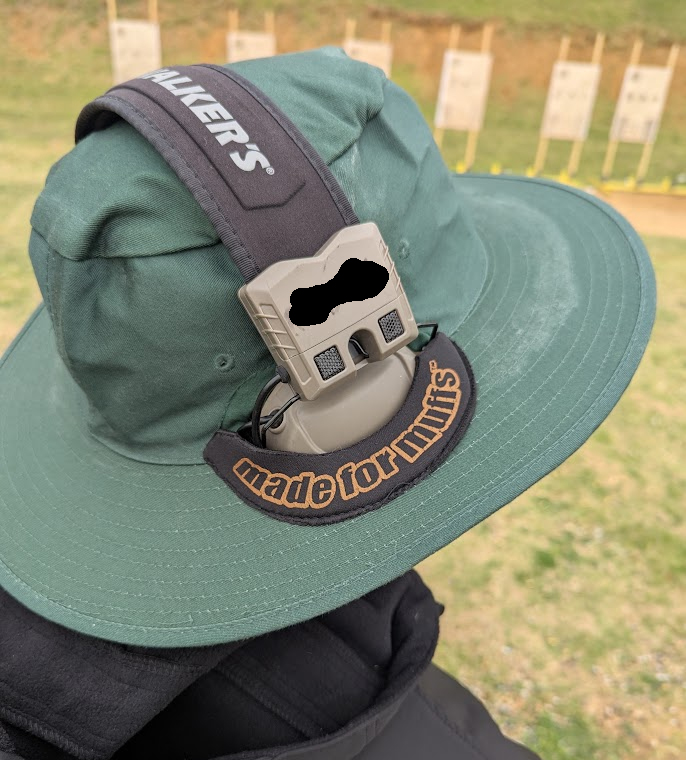
Took this picture at TacCon this spring. Same of student removed.
If you would rather have a real sun hat and keep your muffs, there is a specialized version with flaps that fold back so your over-the-ear protection still fits. To be transparent, the “made for muffs” hat shown in the picture above is available directly from the company in Australia that makes it but the link I've provided is to what appears to be a similar product on Amazon. I have no personal experience with either.
The point is not the specific hat. It is that you need to protect your ears and neck, and your hearing protection decides which hat can actually do that for you.
5. A Pop-Up Canopy Is the Biggest Comfort Jump
Plenty of public ranges have zero shade. You and everything you brought bake for however long you can stand it.
A pop-up canopy is probably the single biggest upgrade on this list. It gives you somewhere to actually cool off between strings. It keeps your optics, ammo, and electronics out of the sun instead of letting them cook on the bench. And it turns an all-day class from something you survive into something you can think clearly through.

I have 3 pop-up canopies for range use because as an instructor I feel its my obligation to keep my students comfortable
That last part is the real payoff. If you are going to invest a full day in getting better, you want to spend it learning and not managing heat exhaustion. A good day of instruction is where the actual improvement happens, so protect your ability to absorb it. (Here is where to start if you are looking for that kind of training.)
It is also the easiest way to shoot with family or friends without half your group retreating to the car.
One honest word of warning: you tend to get what you pay for here. If your range gets really windy, the cheapest canopies will fight you all day and can end up in the next county. In that case it is worth spending up for something built heavier.
Where to Start
Decide for yourself what makes sense from this list for you, but don't avoid the hottest months of the year at the gun range. Continue your training and practice and don't pass up quality classes or events you could attend just because the hot weather is inconvenient!
Share in the comments below your best strategies for surviving the heat at the gun range!