Every Amicus Brief in Viramontes and Grant: Supreme Court Fight Over AR-15 Bans
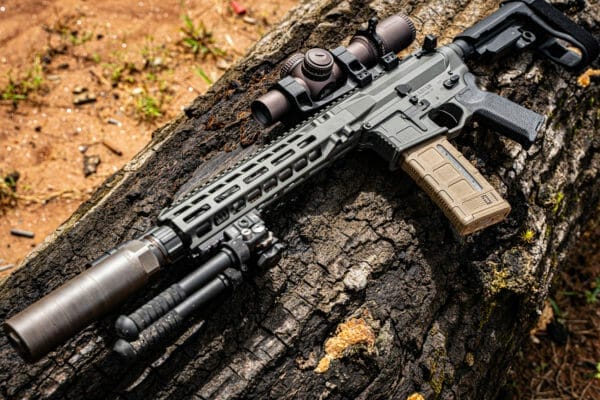
The Supreme Court is preparing to decide whether state and local governments may ban possession of the most popular rifle platform in America.
In the consolidated cases of Viramontes v. Cook County and Grant v. Higgins, the Court will answer a direct question: “Whether the Second and Fourteenth Amendments guarantee the right to possess AR-15 platform and similar semiautomatic rifles.”
The answer should be equally direct. AR-15-style rifles are bearable arms, they are overwhelmingly owned for lawful purposes, and they are unquestionably in common use. That should end the constitutional inquiry.
Cook County, Illinois, and Connecticut nevertheless claim authority to prohibit these rifles based largely on cosmetic and ergonomic features such as pistol grips, adjustable stocks, barrel shrouds, and muzzle devices. Those features do not turn a semiautomatic rifle into a machine gun. They generally make a rifle easier, safer, or more comfortable for its lawful owner to operate.
The Supreme Court granted both petitions on June 30, 2026, consolidated the cases, and directed that subsequent filings appear under Viramontes, No. 25-238. Oral argument is scheduled for December 2, 2026.
The challengers filed their opening merits brief on August 28. They argue that AR-15s are “arms” under the Second Amendment’s plain text, are commonly possessed by law-abiding Americans, and cannot be supported by any historical tradition of banning an entire class of ordinary rifles.
That position has received remarkable support. As of September 16, the docket contains over 40 merits-stage amicus submission.
Here is what every amicus brief filed so far tells the Court.
The United States and Elected Officials
1. The United States
The United States’ brief, filed by Solicitor General D. John Sauer, argues that AR-15s are “arms” and that history and Supreme Court precedent foreclose categorical bans on weapons in common lawful use.
The government emphasizes that the longstanding and widespread legality of a type of arm is powerful evidence that law-abiding citizens possess it for lawful purposes. The Solicitor General has also asked to participate in oral argument, making the federal government’s support especially significant.
2. Tennessee, Kansas and 25 Other States
The 27-state brief argues that millions of Americans lawfully own AR-15s and comparable semiautomatic rifles for self-defense, hunting, sport, and other protected purposes.
The states also point out that rifles are used in crime far less often than handguns and many other weapons. The states imposing these bans are the outliers—not the tens of millions of Americans who own the prohibited rifles.
3. Senators Ted Cruz, Jim Justice, Mike Lee, Cynthia Lummis and Jim Risch
The brief filed by five U.S. senators and two state legislators draws an essential distinction: “Assault weapon” is a statutory label, while “arms” is a constitutional category.
A legislature may classify firearms for regulatory purposes, but it cannot define protected rifles out of the Second Amendment by attaching a politically loaded name to them. Constitutional protection depends on the firearm’s actual character and use—not a label invented by anti-gun lawmakers.
4. Members of Congress and the American Center for Law and Justice
The ACLJ and congressional brief focuses on the Second Amendment’s militia language.
It argues that military usefulness has historically supported constitutional protection. Ordinary citizens were expected to keep arms suitable for the common defense. Lower courts have turned that principle upside down by treating a rifle’s military utility as a reason to prohibit it.
Law Enforcement and Public Safety
5. National Sheriffs’ Association and Western States Sheriffs’ Association
The sheriffs’ brief argues that law-abiding citizens need reliable defensive firearms and that AR-15s are among the most commonly owned rifles in the country.
The associations warn that banning popular defensive arms also creates problems for law enforcement. Officers depend on armed citizens for cooperation, emergency assistance, and the immediate defense of homes and communities when police cannot arrive in time.
6. Peace Officers Research Association of California and Other Law-Enforcement Groups
The peace-officer brief attacks the claimed public-safety justification for the bans.
It argues that prohibited rifles account for an insignificant share of homicides and that credible studies have not established that “assault weapon” bans reduce violent crime, mass shootings, or threats to police officers. Criminals also overwhelmingly obtain firearms through sources unaffected by feature-based bans imposed on lawful purchasers.
Firearms Data, Common Use and Criminal Misuse
7. Professor William English and the Center for Human Liberty
Professor William English’s amicus brief provides some of the strongest evidence that the targeted rifles are in common use.
His 2026 National Firearms Survey estimates that 25 percent of gun owners possess an AR-15-type rifle, while approximately 26.4 million adults own an AR-15 or a similarly styled semiautomatic rifle. The survey estimates that Americans possess approximately 60 million rifles falling within those combined categories.
There is no honest way to describe an arm owned by tens of millions of Americans as “unusual.”
8. National Shooting Sports Foundation
The NSSF brief supplies manufacturing, ownership, and lawful-use evidence from the firearms industry.
NSSF argues that semiautomatic rifles are widely owned for target shooting, competition, hunting, and defense. Because the rifles are plainly arms and commonly possessed for lawful purposes, the government cannot satisfy its burden by presenting policy objections to the Supreme Court’s common-use test.
9. Professor Gary Kleck and FPC Action Foundation
The Kleck and FPC Action Foundation brief warns courts against conflating semiautomatic-rifle bans with magazine restrictions.
An AR-15 has one magazine well capable of accepting detachable magazines of different capacities. Its ability to accept a standard-capacity magazine does not create a separate class of rifle. The brief also argues that empirical evidence fails to support claims commonly made about magazine capacity and mass shootings.
10. The Buckeye Institute
The Buckeye Institute’s brief attacks the fiction that repeating firearms and larger-capacity magazines are unprecedented modern developments beyond the Second Amendment’s protection.
The brief traces multishot firearms back approximately 400 years, documents the growth of magazine capacity during the 19th century, and discusses the invention of detachable magazines in the 1860s. Its broader point is straightforward: the Founders understood that arms technology would improve. The Constitution does not protect only the firearms technology available in 1791, and governments cannot strip a modern rifle of protection by portraying its capacity or operating system as historically unimaginable.
Technical and Defensive-Use Evidence
11. Ballistics Experts and Second Amendment Law Professors
The ballistics brief directly confronts some of the most sensational claims made about AR-15s.
The experts explain that semiautomatic rifles do not fire at the rate of machine guns, that common .223/5.56 ammunition is less powerful than many traditional rifle cartridges, and that certain centerfire rifle loads may penetrate common building materials less than handgun or shotgun projectiles.
The brief also challenges the Second Circuit’s lurid claims about wound size and alleged decapitation. Constitutional analysis cannot rest on ballistics mythology.
12. California Gun Rights Foundation, Danielle Jaymes and Use-of-Force Experts
The use-of-force brief explains why Americans choose AR-15s for defense.
The platform is controllable, accurate, easy to learn, and adaptable to shooters of different sizes and physical abilities. Those qualities can be particularly valuable to women, older gun owners, and people with limited upper-body strength. The brief notes that law enforcement selects similar rifles for many of the same practical reasons.
13. Dr. Javier Herrera
Dr. Javier Herrera’s brief places the individual gun owner at the center of the dispute.
Herrera argues that the Second Amendment’s plain text protects his possession of commonly owned rifles inside his home. Historical regulations concerning unusual weapons or the manner in which arms were carried cannot justify a modern ban on keeping a common rifle on private property.
14. National African American Gun Association and Other Minority Gun-Owner Organizations
The National African American Gun Association brief was joined by the Asian Pacific American Gun Owners Association, Liberal Gun Club, and Operation Blazing Sword–Pink Pistols.
These organizations argue that members of minority communities have an especially strong interest in being able to defend themselves and their families. The same features demonized by gun-control advocates—including adjustable stocks and pistol grips—make rifles more useful to ordinary citizens defending themselves against violent attack.
The Second Amendment’s Original Meaning
15. Second Amendment Law Center
The Second Amendment Law Center brief, authored by Stephen Halbrook, traces the AR-15 through more than a century of semiautomatic-rifle development.
It explains that the civilian Colt AR-15 Sporter was classified as a semiautomatic rifle—not a machine gun—and argues that “assault weapon” has no objective or constitutional meaning. The historical record contains no tradition of banning ordinary rifles possessed by the public.
16. Second Amendment Institute, Tyler Yzaguirre and Carlos Ayala
The Second Amendment Institute brief argues that the militia purpose confirms rather than narrows the individual right.
The common defense includes resistance to invasion, insurrection, and usurpation. Arms suitable for that purpose sit near the core of the Second Amendment. Lower courts inverted Miller by treating an arm’s suitability for militia service as a reason to ban it.
17. Dr. Angus McClellan and Original-Meaning Organizations
The McClellan brief examines the historical meaning of “dangerous and unusual.”
The phrase generally concerned the threatening manner in which arms were carried or displayed, not a legislative power to prohibit possession of whatever weapons politicians considered dangerous. At the Founding, ordinary militia arms could not be banned merely because they were effective.
18. Hawaii Rifle Association
The Hawaii Rifle Association brief similarly argues that “dangerous and unusual” historically described conduct with weapons rather than an intrinsic category of prohibited arms.
Affray laws punished going armed in a manner calculated to terrorize the public. They did not authorize the government to outlaw possession of a common weapon inside the home.
19. Hawaii Firearms Coalition
The Hawaii Firearms Coalition brief argues that AR-15s are weapons citizens may possess, train with, and use for self-defense or militia service.
The coalition also maintains that the Second Amendment’s textual coverage extends to arms and the equipment necessary to use them. Historical affray restrictions regulated misconduct, not ownership.
20. G. Antaeus B. Edelsohn
Edelsohn’s amicus brief emphasizes the military and militia purposes recognized in the constitutional text.
It documents America’s longstanding practice of encouraging citizens to possess and train with rifles suitable for militia duty, including through civilian-marksmanship programs. The brief also explains why technological development does not remove modern arms from constitutional protection.
21. Cato Institute
The Cato Institute brief argues that AR-15s are overwhelmingly chosen for lawful purposes and are particularly suitable for service in the reserve militia.
Cato rejects the notion that military usefulness becomes constitutionally disqualifying. A common rifle useful for both individual defense and the common defense falls squarely within the Second Amendment.
22. Landmark Legal Foundation
The Landmark Legal Foundation brief argues that both lower courts misapplied Bruen by refusing to treat AR-15s as arms and by relieving the governments of their historical burden.
Founding-era affray laws and other restrictions on carrying weapons cannot support prohibitions on possessing an entire category of common rifles.
23. Michigan Coalition for Responsible Gun Owners
The MCRGO brief stresses that the Second Amendment recognizes a preexisting right and limits government power.
Reconstruction-era laws disarming particular people do not establish a historical tradition of banning classes of arms. Neither military resemblance nor generalized claims of dangerousness can carry the governments’ burden.
24. Minnesota Gun Owners and Colorado State Shooting Association
The Minnesota and Colorado organizations’ brief examines the AR-15’s military origin and subsequent civilian development.
It argues that American small-arms development has always crossed between military, commercial, and civilian use. The AR-15’s lineage and usefulness are evidence supporting constitutional protection—not an excuse for prohibition.
Common Use and the Lower Courts
25. NRA Civil Rights Defense Fund
The NRA Civil Rights Defense Fund brief presents a straightforward argument: the AR-15 is an “arm,” and the Second Amendment precludes bans on arms in common use for lawful purposes.
Lower courts have manufactured additional tests to avoid that result. Nothing in Heller authorizes judges to decide that a popular arm is insufficiently necessary for self-defense.
26. National Rifle Association, American Suppressor Association and Independence Institute
The NRA-led brief traces five centuries of development in repeating firearms.
It demonstrates that the Founders knew weapons technology would improve and did not freeze the Second Amendment at the single-shot musket. Modern semiautomatic rifles remain protected just as modern communications remain covered by the First Amendment.
27. Gun Owners of America and Allied Organizations
The GOA-led brief argues that modern semiautomatic rifles are indisputably in common use and that the case can be resolved under existing Supreme Court precedent.
Once the rifles are shown to be bearable arms possessed by ordinary Americans, the governments must identify a historical tradition supporting their bans. Policy arguments and judicial interest balancing cannot substitute for that missing history.
28. National Association for Gun Rights and Texas Gun Rights
The NAGR brief addresses attempts to prohibit protected arms indirectly by banning their components.
The Second Amendment necessarily protects magazines and functional firearm parts that facilitate the lawful exercise of the right. A government cannot evade the Constitution by dividing a protected rifle into components and regulating them separately.
29. New York State Rifle & Pistol Association and Allied Organizations
The NYSRPA brief argues that Miller and Heller already decide the case.
Common use and militia utility describe overlapping characteristics of protected arms. The brief rejects attempts to transform Heller’s discussion of M16 rifles into a rule disfavoring every civilian firearm with military ancestry.
30. Illinois State Rifle Association
The ISRA brief documents the Seventh Circuit’s continued reliance on tests incompatible with Heller and Bruen.
Those judicial inventions include asking whether the arm was common at the Founding, whether citizens have alternative means of self-defense, and whether judges perceive a sufficient militia connection. The Constitution allows none of those escape routes.
31. Second Amendment Defense and Education Coalition and Aurora Sportsmen’s Club
The SADEC brief openly addresses lower-court resistance to Supreme Court precedent.
It asks the Court to provide unmistakable instructions to the Second and Seventh Circuits and to use its supervisory authority when lower courts continue applying doctrines incompatible with Heller, Bruen, and the Court’s other Second Amendment decisions.
32. Eleven State-Based Firearms Advocacy Organizations
The state-organization brief asks the Court to clarify the common-use test.
It argues that the term “arms” must first be defined according to the Second Amendment’s text. Courts may not use a distorted version of the “dangerous and unusual” doctrine to erase textual coverage or place the burden on gun owners.
33. Advancing American Freedom and Allied Organizations
The Advancing American Freedom brief emphasizes that the Second Amendment is a limit on government power—not an obstacle officials may balance away.
The brief asks for a clear decision defining the protection owed to common rifles so states and lower courts cannot continue inventing new workarounds.
Feature-Based Bans and Legislative Evasion
34. Knox Williams of the America First Policy Institute
Williams’ amicus brief explains how feature tests draw nonsensical distinctions between functionally identical rifles.
Stocks, bayonet lugs, pistol grips, and other targeted characteristics are not modern inventions unknown to American history. Lawmakers use these features to manufacture a prohibited category without showing that the resulting firearms operate differently from other lawful semiautomatic rifles.
35. Palmetto State Armory and Firearms Regulatory Accountability Coalition
The PSA and FRAC brief explains that the AR-15 is a family of rifles incorporating commonly used components and configurations.
The Court must prevent governments from formally recognizing constitutional protection for the AR-15 while effectively banning it through restrictions on its ordinary features. Otherwise, hostile lawmakers will simply prohibit the rifle piece by piece.
36. American Firearms Association and State Affiliates
The American Firearms Association brief argues that the challenged laws ban numerous firearms that were already commonly owned before the prohibitions took effect.
It also urges the Court to treat the laws as facially unconstitutional. Narrow relief for individual models or plaintiffs would leave the same unconstitutional machinery in place.
37. California Rifle & Pistol Association and Allied Plaintiffs
The CRPA brief argues that constitutional protection includes the ordinary means of keeping, using, feeding, and maintaining a firearm.
Because AR-15s are designed to use detachable magazines, courts cannot pretend the rifles and their magazines are constitutionally unrelated. CRPA asks the Court to provide guidance applicable to pending magazine-ban litigation, including Duncan v. Bonta.
38. Association of New Jersey Rifle & Pistol Clubs, GOAL and New Jersey Firearms Owners Syndicate
The ANJRPC-led brief addresses similar prohibitions in New Jersey and Massachusetts.
It asks the Court to clarify how the ruling applies to magazine bans and to control the level of abstraction courts use when searching for historical analogues. A restriction on carrying a weapon in a particular manner cannot be inflated into historical support for banning possession altogether.
39. Commonwealth Second Amendment
The Commonwealth Second Amendment brief uses Massachusetts’ expanding “copies or duplicates” ban to illustrate the real target: firearms development and innovation.
The brief warns against allowing governments to label modern improvements exceptionally dangerous. Protection cannot disappear every time a manufacturer makes a lawful arm more accurate, adaptable, or effective.
40. Rocky Mountain Gun Owners
The Rocky Mountain Gun Owners submission warns that governments may replace direct bans with licensing and prior-permission schemes.
Using Colorado’s permit-to-purchase system as an example, RMGO argues that states cannot accomplish indirectly what the Constitution forbids them from doing directly. The Court must issue an administrable rule that blocks both outright bans and transparent evasions.
41. Huang Tiange, Corey Biazzo and Other Individual Amici
The corrected Huang and Biazzo submission argues that legislative “assault weapon” classifications do not describe a distinct functional category of arms.
Feature-based definitions do not reliably track firing function, lethality, or rate of fire. The brief also places the dispute within the Supreme Court’s continuing correction of decades in which lower courts underprotected the Second Amendment.
Hunting and Protection for Other Arms
42. U.S. Sportsmen’s Alliance Foundation and Safari Club International
The sportsmen’s brief documents the lawful use of semiautomatic rifles for hunting and wildlife management.
Hunters have used semiautomatic rifles for more than a century. AR-15s are particularly useful for predator control, varmints, and many forms of medium-game hunting. Hunting is a lawful purpose protected by the Second Amendment, even though self-defense remains its central component.
43. Knife Rights and Knife Rights Foundation
The Knife Rights brief stresses that the Court’s common-use rule applies to every arm covered by the Second Amendment—not firearms alone.
Commonality should be measured nationally, and the government bears the burden of proving that an arm is both dangerous and unusual. The constitutional principle decided here will affect knives and other bearable arms as well as rifles.
Anti-Gun Briefs Styled as Supporting Neither Party
44. Professor Akhil Reed Amar
Professor Akhil Reed Amar formally filed his brief in support of neither party, but its proposed constitutional framework is hostile to the full protection of the right to keep and bear arms.
Amar does recommend reversing the judgment against the Viramontes challengers. He concludes that AR-15s are proper weapons for lawful self-defense and notes that most states do not seriously restrict them. That conclusion, however, comes attached to a request that the Court abandon or substantially weaken the Bruen framework.
Instead of enforcing the Second Amendment as an enumerated right according to its text and historical meaning, Amar would place heavy weight on contemporary state-law counting. Under his approach, constitutional protection could depend on how many state legislatures currently respect a particular exercise of the right.
The danger becomes unmistakable when Amar turns to magazines. He claims that an ordinary citizen does not need a 30-round magazine for “ordinary self-protection,” urges the Court to consider how many states currently impose magazine limits, and suggests allowing additional states to join what he calls the “magazine-restricting club.” He even warns the Court to “think twice” before striking down magazine bans nationwide.
45. United States Conference of Catholic Bishops
The United States Conference of Catholic Bishops also labels its brief as supporting neither party. In substance, it is an anti-gun brief defending the power of state and local governments to restrict firearms.
The USCCB argues that historical tradition and Catholic social teaching support allowing elected officials to impose “focused regulation” on weapons they believe create exceptional dangers to innocent life and public peace. It praises local authority, characterizes certain firearms as exceptionally lethal, and cites lower-court decisions that upheld bans on commonly owned semiautomatic rifles.
The bishops never squarely ask the Court to uphold the Cook County and Connecticut bans, but the argument supplies those governments with precisely the interest-balancing rationale they need. Whether a legislature believes a rifle is unusually dangerous cannot displace the constitutional test. The Second Amendment is not subject to a local-government veto, and Catholic social teaching cannot alter the original public meaning of “shall not be infringed.”
Whatever position appears on the cover, the USCCB brief asks the Court to preserve legislative discretion over constitutionally protected arms.
The Constitutional Case Is Overwhelming
The 45 briefs differ in emphasis, but the core case against AR-15 bans is remarkably consistent.
AR-15s are arms. Tens of millions of Americans own them. They are used for defense, training, competition, hunting, recreation, and the common defense. Semiautomatic rifles have been lawfully possessed for generations, and the government cannot produce a historical tradition of banning ordinary rifles from American homes.
The rifles are not machine guns. A pistol grip does not change their rate of fire. An adjustable stock does not make them uniquely lethal. A muzzle brake does not erase constitutional protection. A detachable magazine is not a loophole in the Bill of Rights.
The lower courts reached the opposite result by avoiding the Supreme Court’s precedents. Some treated military utility as a constitutional defect. Others imported interest balancing, exaggerated the rifles’ ballistics, or compared possession bans to historical laws regulating the threatening misuse or public carry of weapons.
Those approaches cannot be reconciled with Heller or Bruen. Nor can they be reconciled with the text the Justices will confront when oral argument begins on December 2: “the right of the people to keep and bear Arms, shall not be infringed.”
Cook County and Connecticut’s supporting amici will have their opportunity to defend the bans after the respondents file their merits briefs. This article will be updated to include those filings.
But the first wave has already established the central fact of these cases: the AR-15 is not some exotic arm lurking beyond the Second Amendment’s boundaries. It is the modern American rifle, commonly chosen by the very people whose right the Constitution commands the government to respect.
About Duncan Johnson:
Duncan Johnson is a lifelong firearms enthusiast and unwavering defender of the Second Amendment—where “shall not be infringed” means exactly what it says. A graduate of George Mason University, he enjoys competing in local USPSA and multi-gun competitions whenever he’s not covering the latest in gun rights and firearm policy. Duncan is a regular contributor and editor-in-chief for AmmoLand News and is responsible for AmmoLand’s daily gun-rights reporting and industry coverage.