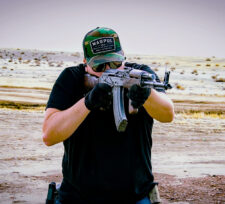
Florida AG Declares Short-Barreled Rifles and Shotguns Legal Without NFA Registration or Tax Stamps

Florida Attorney General James Uthmeier has officially confirmed that law-abiding Floridians can possess short-barreled rifles (SBRs) and short-barreled shotguns (SBSs) without National Firearms Act (NFA) registration, ATF approval, or federal tax stamps. The November 6, 2026, memorandum goes further than simply recognizing changes in federal enforcement. It directs law enforcement agencies and prosecutors throughout Florida to stop treating possession of these firearms without NFA paperwork as a crime.
In the five-page memorandum, addressed to Florida’s law enforcement agencies and prosecuting authorities, Uthmeier declared:
“I am issuing this memorandum to inform law enforcement and prosecuting authorities that all law-abiding residents of the State of Florida may now possess a short-barreled rifle (‘SBR’) or short-barreled shotgun (‘SBS’) without fear of prosecution.”
The announcement resolves a significant state-law question left after the federal government’s decision to stop enforcing major provisions of the NFA.
Law-abiding Floridians may possess SBRs and SBSs without NFA registration, a tax stamp, or fear of prosecution under Florida law.
We are issuing guidance and will not defend a conviction on appeal. This office will always defend the Second Amendment rights of peaceable citizens. https://t.co/wgAEq4ylVM
— Attorney General James Uthmeier (@AGJamesUthmeier) November 6, 2026
Florida Removes the State-Law Obstacle
Under Florida Statute § 790.221, possessing an operable short-barreled rifle, short-barreled shotgun, or machine gun is generally a second-degree felony. However, the statute contains an exemption for firearms lawfully owned and possessed under federal law.
That exemption became particularly important after Congress reduced to zero the NFA’s making and transfer taxes on SBRs, SBSs, suppressors, and certain other firearms through the One Big Beautiful Bill Act.
On August 5, 2026, a federal judge in Silencer Shop Foundation v. ATF ruled that the federal government’s registration and prior-approval requirements could no longer be justified under Congress’s taxing power after those taxes were reduced to zero.
The Justice Department declined to appeal, and on October 9, ATF announced that it would stop enforcing those requirements nationwide for the affected firearms.
Uthmeier’s memorandum concludes that because SBRs and SBSs may now be lawfully possessed under the federal government’s current interpretation and enforcement policy, Florida’s existing statutory exemption applies.
He also argues that treating Florida’s prohibition as an independent ban on these firearms would implicate the Second Amendment and likely fail the constitutional test established in N.Y. State Rifle & Pistol Association v. Bruen.
No NFA Paperwork, No Grounds for Search or Seizure
The most consequential portion of Uthmeier’s memorandum establishes specific statewide enforcement guidance.
Effective immediately, the attorney general instructs Florida law enforcement that mere possession of an SBR or SBS does not establish reasonable suspicion or probable cause for a search or seizure. Likewise, discovering one during an otherwise lawful encounter does not, by itself, justify seizing the firearm as evidence.
Uthmeier also makes clear that his office will not defend a conviction under § 790.221 on appeal when the sole basis for that conviction is the owner’s lack of NFA approval, registration, or a federal tax stamp.
The memorandum further explains that Florida’s firearms preemption statute, § 790.33, prevents local governments from imposing additional restrictions on SBR or SBS possession.
These directives give gun owners something the federal announcement alone could not provide: a statewide interpretation of Florida law from the state’s chief legal officer.
What Florida Gun Owners Still Need to Know
The announcement does not eliminate other federal firearms laws. Licensed dealers must continue complying with applicable Gun Control Act requirements, including background checks and firearm transfer records. Federal restrictions on prohibited possessors and possession in restricted locations also remain applicable.
Interstate transportation of SBRs and SBSs still requires prior ATF authorization on Form 20 where federal law mandates it. Machine guns and destructive devices remain subject to applicable NFA requirements.
Uthmeier also notes that voluntary NFA registration does not guarantee future registration or grandfathering protections if federal policy changes.
The memorandum does not repeal Florida’s existing statute or constitute a new court ruling. Instead, it establishes the attorney general’s interpretation of that statute and directs statewide enforcement accordingly.
For Florida gun owners, the practical result is substantial. The state’s chief legal officer has confirmed that law-abiding residents may possess SBRs and SBSs without the federal paperwork that previously accompanied their ownership.
Florida’s law enforcement agencies have now been told to recognize that right rather than treat the absence of an NFA tax stamp as evidence of a crime.
About Duncan Johnson:
Duncan Johnson is a lifelong firearms enthusiast and unwavering defender of the Second Amendment—where “shall not be infringed” means exactly what it says. A graduate of George Mason University, he enjoys competing in local USPSA and multi-gun competitions whenever he’s not covering the latest in gun rights and firearm policy. Duncan is a regular contributor and editor-in-chief for AmmoLand News and is responsible for AmmoLand’s daily gun-rights reporting and industry coverage.