How the 1911 Evolved Into the 2011, and Took Over the Handgun Market
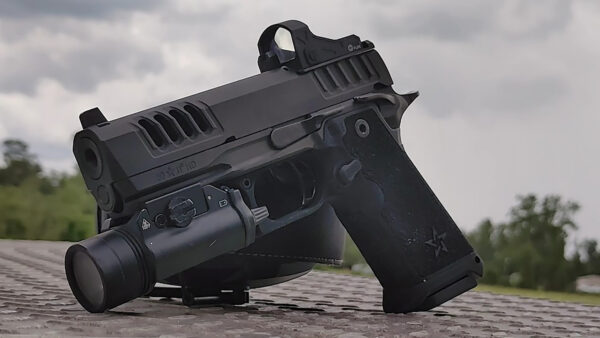
In the world of handguns, the 1911 remains an American icon. One of John Browning’s most ingenious designs, it served as the standard U.S. military sidearm for a remarkable 75 years and earned a reputation for reliability, accuracy, and exceptional shootability. Although originally developed as a combat pistol, the 1911 quickly found a devoted following among civilian shooters, becoming a favorite for personal defense, competitive shooting, law enforcement, and collecting.
More than a century after its adoption in 1911, Browning’s masterpiece continues to influence handgun design. While modern shooters have embraced lightweight, high-capacity polymer pistols, many remain unwilling to give up the crisp single-action trigger, natural ergonomics, and intuitive handling that made the 1911 legendary. That demand ultimately gave rise to the 2011—a modern evolution that preserves the heart of Browning’s original design while adapting it to the needs of today’s competitors, law enforcement professionals, and everyday carriers.
Today, the 2011 has become one of the hottest handgun platforms on the market. Often regarded as a class of its own, its success is rooted in a design first conceived by Browning more than a century ago. From the trenches of World War I to the firing lines of modern shooting competitions, the evolution from the 1911 to the 2011 demonstrates that truly great firearm designs do not become obsolete, rather, they adapt, improve, and continue to shape the future.
A Brief History of the 1911
The origins of the 1911 can be traced to the U.S. military’s search for a more effective service handgun at the turn of the twentieth century. At the time, American troops were primarily equipped with the Colt M1892 double-action revolver chambered in .38 Long Colt. During the Philippine-American War, however, the limitations of the cartridge became apparent. American forces found that the .38-caliber revolver often lacked the immediate stopping effectiveness needed against determined Moro warriors, who frequently continued fighting despite sustaining multiple hits.
To address the problem, the Army returned a number of Model 1873 Single Action Army revolvers to service. Chambered in the more powerful .45 Colt cartridge, these revolvers proved considerably more effective in combat. The experience convinced military leadership that a new service pistol chambered in a larger caliber was needed.
Chief of Ordnance General William Crozier soon began laying the groundwork for a replacement. In 1904, the Thompson-LaGarde Tests were conducted to determine the most suitable caliber for a new military sidearm. Using both live and deceased cattle to evaluate penetration and terminal performance, the tests ultimately concluded that no projectile smaller than .45 caliber should be considered for military service.
With the caliber established, General Crozier initiated military trials in 1906 to identify the best handgun design to chamber the newly developed .45 ACP (Automatic Colt Pistol) cartridge. Six pistols were submitted for evaluation, but as the trials progressed, the Colt entry—John Browning’s design—quickly emerged as the clear frontrunner.
During the final endurance trials, Browning’s pistol fired a staggering 6,000 consecutive rounds over two days, stopping only for scheduled cooling periods, during which it was immersed in water after becoming too hot to handle. Despite the grueling test, the pistol suffered remarkably few malfunctions and demonstrated a level of reliability unmatched by its competitors.
The trials confirmed that Browning’s design possessed the reliability, durability, and performance the Army demanded. On March 29, 1911, it was officially adopted as the U.S. Pistol, Caliber .45, M1911. What began as the Army’s search for a better service sidearm ultimately produced one of the most influential handgun designs in history—a pistol that would serve American forces for the next 75 years and continue shaping handgun development more than a century later.

An Iconic Legacy
After its adoption by the U.S. Army, the 1911 was quickly selected by the U.S. Navy and Marine Corps, cementing its place as America’s standard military sidearm. It served with distinction through World War I, World War II, the Korean War, and the Vietnam War, earning a hard-fought reputation for reliability and battlefield effectiveness in some of the most demanding conditions imaginable.
Few military handguns have remained in service through nearly every major American conflict of the twentieth century—a testament to the soundness of Browning’s design. Even after its official replacement by the Beretta M9 in 1985, the 1911 continued to serve with specialized military units that valued its proven performance.
The 1911’s legacy, however, extends far beyond military service. It found an equally devoted following among civilian shooters, becoming a trusted choice for personal defense, competitive shooting, law enforcement, and collecting. Much of its enduring appeal comes from its combination of design features. The slim profile, natural ergonomics, crisp trigger, low bore axis, and accuracy all create a handgun that feels intuitive in the hand and rewarding to shoot.
Whether carried daily in a lightweight Commander model or transformed into a finely tuned competition pistol, the 1911 has remained a benchmark against which many other handguns are measured.
That enduring popularity also revealed the platform’s greatest strength: its adaptability. Over the decades, gunsmiths and manufacturers refined the design with improved sights, enhanced safeties, match-grade barrels, and countless other upgrades, proving that Browning’s original pistol could evolve with the needs of successive generations of shooters. Yet despite all those improvements, one limitation remained—and solving it would ultimately pave the way for the development of the 2011.
The Need for More
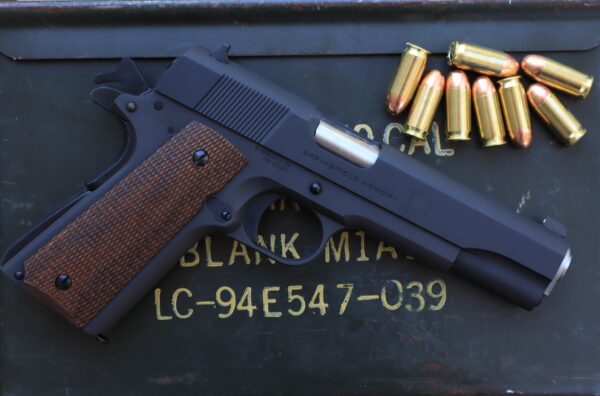
For all of its strengths, the 1911 was not without its limitations. Its single-stack magazine, which typically held seven rounds in its original military configuration and eight rounds in many modern variants, was more than adequate when the pistol entered service in 1911. At the time, it offered a practical balance of firepower, reliability, and ergonomics.
As the twentieth century progressed, however, expectations for service handguns began to change. Advances in magazine design and the rise of high-capacity “Wonder Nine” pistols in the 1970s and 1980s demonstrated that shooters no longer had to choose between reliability and ammunition capacity. Military and law enforcement agencies increasingly adopted double-stack pistols capable of carrying 15 or more rounds, while competitive shooters sought every possible advantage in speed and efficiency. Despite these changing trends, many shooters were reluctant to abandon the qualities that had made the 1911 so popular.
The question became increasingly clear: could the timeless handling characteristics of the 1911 be combined with the ammunition capacity of a modern double-stack pistol?
That challenge would inspire one of the most significant evolutions in modern handgun design. By marrying Browning’s proven operating system with a modular frame and double-stack magazine, designers created what would become known as the 2011.
Live Inventory Price Checker
| Dawson Precision Charger Rear Sights for Staccato 2011 Pistols | Staccato 2011 | $ 39.95 |
|
|
| Dawson Precision Charger Rear Sights for Staccato 2011 Pistols | Staccato 2011 | $ 39.95 |
|
|
| Dawson Precision Charger Rear Sights for Staccato 2011 Pistols | Staccato 2011 | $ 39.95 |
|
|
| Staccato 2011 Black Soft Pistol Sleeve | Staccato 2011 | $ 59.99 |
|
Birth of the 2011
During the 1980s, not everyone was convinced that the newest high-capacity 9mm pistols represented the pinnacle of handgun design. Gunsmith Virgil Tripp believed that competitive shooters in disciplines such as IPSC and USPSA shouldn’t have to sacrifice the superb trigger, ergonomics, and accuracy of the 1911 in exchange for increased magazine capacity.
Combining the defining characteristics of Browning’s legendary design with a double-stack magazine and modern cartridges such as the 9mm seemed like a winning formula.
In 1992, Tripp recruited engineer Sandy Strayer to help bring that vision to life. Together, the pair developed the first iteration of what would become known as the 2011, which debuted in 1994.
The pistol featured a patented modular three-piece design consisting of a steel frame and a polymer grip module that accepted double-stack magazines. This modular design became one of the defining characteristics of the platform, allowing shooters to benefit from reduced weight, improved ergonomics, and increased magazine capacity while maintaining the proven operating system of the 1911.
The combination proved successful. The platform quickly established itself as an exceptionally accurate and competitive handgun.
The two founded Strayer Tripp International (STI) to manufacture the new platform, though the partnership proved to be short-lived as Strayer eventually departed to form his own company. STI continued refining the design and, over time, became the leading name in the 2011 market before eventually rebranding as Staccato.
For years, however, the 2011 remained largely confined to the competition world. Its patented design limited widespread adoption, and relatively few manufacturers could produce true 2011-style pistols.
That changed in 2016, when key patents began to expire. The expiration opened the door for other manufacturers to enter the market, setting the stage for the 2011’s transition from a niche competition handgun to one of the fastest-growing and most sought-after pistol platforms in America.
Into the Modern Era
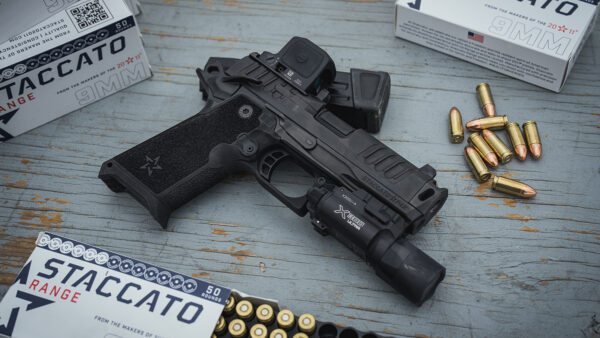
While the 2011 was becoming a more recognizable and respected platform, examples produced prior to the expiration of the patents were expensive and relatively few compared to the wide variety of double-stack 9mm options already available on the market. For many years, the 2011 remained primarily a competition-focused handgun, admired by serious shooters but largely unknown to the broader firearms community.
After 2016, however, the door opened for other manufacturers to introduce their own interpretations of the platform. The expiration of key patents allowed companies to modify the design, improve manufacturing processes, and bring 2011-style pistols to a much larger audience.
At the same time, Staccato began shifting the perception of what the 2011 could be. The company focused on developing a more refined, duty-oriented version of the platform. By improving reliability, simplifying production, and marketing the pistol toward defensive shooters and law enforcement professionals, Staccato helped prove that the 2011 was more than just a race gun built for competition.
As confidence in the platform grew, other manufacturers began entering the market with their own versions of the double-stack 1911 design. Companies ranging from niche custom builders to major firearm manufacturers began recognizing the demand for a handgun that combined the legendary trigger and ergonomics of the 1911 with the capacity and versatility of modern service pistols.
Today, the 2011 has become one of the most influential handgun platforms of the modern era. What began as a specialized competition pistol has evolved into a premium option for competitive shooters, law enforcement professionals, and everyday carriers.
More than a century after John Browning’s original design, the 2011 proves that the fundamentals of a great handgun can endure—provided they continue to evolve with the needs of each new generation of shooters.
About Ryan Hodges
Ryan is an outdoorsman and firearms enthusiast with over a decade of experience in the industry. He holds a B.A. in History with a concentration in Public History from Roanoke College and was an intern at the Cody Firearms Museum in Cody, Wyoming where he contributed to exhibit development and public education initiatives. He later worked with Taylor’s & Co. in Winchester, Virginia for 9 years, building expertise in historical and reproduction firearms.
An avid hunter and shooter based in Northern Virginia and the West Virginia panhandle, Ryan has a deep appreciation for the intersection of history, firearms, and the natural world. His primary area of focus is 19th-century American firearms, particularly those used during the Civil War and the era of westward expansion. Through his writing, he aims to educate and engage readers by connecting the historical significance of firearms with their enduring legacy in the field today.