Illinois Judge Rules Foster and Daycare Homes Are ‘Sensitive Places’
A federal judge for the United States District Court for the Central District of Illinois, Springfield Division, ruled without trial that foster homes and in-home daycare centers are sensitive areas and that guns can be regulated in these private residences.
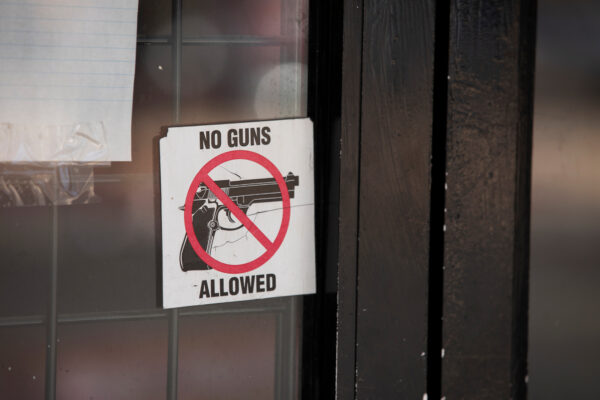
The case, Miller v. Mueller (18-cv-3085), challenged the Illinois Day Care Home Rule (89 Ill. Admin. Code § 406.8(a)(17)–(18)) and Foster Home Rule (related provisions under 89 Ill. Admin. Code § 402). The Day Care Home Rule prohibited handguns in any home that offers home daycare (with limited exceptions for peace officers or certain employment-required possession by residents). Other firearms must be kept disassembled, unloaded, and in locked storage inaccessible to children. Ammunition must be locked separately and inaccessible to children. Parents must be notified of the presence of firearms and ammunition, as well as the storage arrangements. Residents must also display “No Firearms” signs.
The Foster Home Rule requires that firearms and ammunition be kept locked and inaccessible to children. Loaded guns are generally prohibited (with limited exceptions) within residences. The maximum penalty for violations is license revocation.
Illinois residents and licensed foster parents Jennifer and Darin Miller, joined by the Second Amendment Foundation, Illinois State Rifle Association, and Illinois Carry, sued Heidi Mueller (Acting Director, Illinois DCFS) and Kwame Raoul (Illinois Attorney General). They claimed that the state codes violate the Second Amendment right to keep and bear arms for self-defense in the home under Heller and Bruen. Jennifer Miller also runs an in-home daycare center, giving her standing to challenge the Day Care Home Rule. The lawsuit was originally filed in 2018. A district court granted summary judgment for the defendants in 2022 (pre-Bruen). The Seventh Circuit vacated and remanded for reconsideration in light of New York State Rifle & Pistol Ass’n v. Bruen (2022).
The plaintiffs claimed that the rules could not survive a Bruen analysis. They succeeded at step one because the plain text of the Second Amendment presumptively covers the Millers’ desire to keep firearms operable in their home for self-defense. The judge, Obama-appointed Sue E. Myerscough, however, found that day-care homes and foster homes qualify as “sensitive places” analogous to schools (a category Heller and Bruen treat as presumptively lawful for firearm restrictions). She reasoned that both are environments overwhelmingly dominated by children; both involve learning, education, supervision, and skill-building; and both are already subject to extensive state safety regulation precisely because of the presence of children.
The judge wrote:
“The Court finds that the plain text of the Second Amendment covers the Day Care Home Rule and the Foster Home Rule, that day care homes and foster homes are sensitive places analogous to schools where firearms may be restricted, and, therefore, that the Day Care Home Rule and the Foster Home Rule restricting firearms kept in day care homes and foster homes, respectively, are constitutional. The Court also finds that both the Day Care Home Rule and the Foster Home Rule are reasonable restrictions on government contractors’ and licensees’ assumedly implicated Second Amendment rights.”
Judge Myerscough said the rules are consistent with the Nation’s historical tradition of firearm regulation in analogous sensitive places. They impose a comparable burden (not a total ban on possession in the home; limited to the licensed activity; discrete application to a narrow class of licensees/contractors; temporary while the license is held). She said the rules are conditions attached to government licenses (day care) and to government contractor status (foster care).
According to the judge, the government has greater latitude to impose conditions on those who voluntarily seek state benefits or contract with the state, especially when the conditions further the state’s interest in protecting children under its regulatory or custodial responsibility. The judge also said the Millers are not treated as “ordinary” law-abiding citizens in the Heller/Bruen sense because they have voluntarily invited intensive state regulation into their home in exchange for the privilege of providing licensed child care. They remain free to forgo the licenses if they prefer unrestricted firearm possession.
The court upheld both the Day Care Home Rule and the Foster Home Rule as constitutional under Bruen (sensitive-places analysis + historical tradition) and under the unconstitutional-conditions doctrine. The judge said the restrictions are treated as reasonable, place- and role-based regulations tied to the state’s child-protection responsibilities rather than as general bans on the right to keep arms in the home.
Judge Myerscough’s decision prioritizes the state’s interest in regulated care environments over the full exercise of Second Amendment rights by licensees while they hold those licenses. This decision appears to apply interest balancing, which is explicitly prohibited by the Bruen decision. To many, this is a district court rejecting Supreme Court precedent. More shockingly, the judge ruled without a trial after deciding one was not needed. The plaintiffs are expected to appeal to the Seventh Circuit Court of Appeals.
About John Crump
Mr. Crump is an NRA instructor and a constitutional activist. John has written about firearms, interviewed people from all walks of life, and on the Constitution. John lives in Northern Virginia with his wife and sons, follow him on X at @right2bear, or at www.crumpy.com.