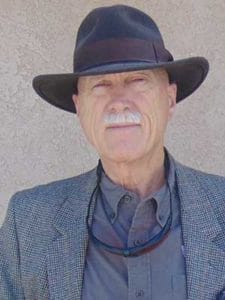
Inside NRA 2.0: A Conversation with Finance Chairman Jonathan Goldstein
A Talk with NRA Director and Chairman of the Finance Committee, Jonathan Goldstein. The transcript has been lightly edited for length and clarity.

Jonathan Goldstein has an interesting history of how he came to be on the NRA Board. Goldstein became involved with the NRA shortly after law school. The Heller decision had recently been published by the Supreme Court. Jonathan started volunteering with the NRA, with considerable success. Chris Conte, who managed much of the NRA litigation work at the Institute for Legislative Action, noticed him.
In 2011, Goldstein won an award from the NRA for his volunteer work. Jonathan did enough volunteer work and raised enough money that he attracted the attention of NRA directors and was appointed as a non-director member of some committees. He was appointed to the legal affairs committee and to the nominating committee.
“This was at the time…Wayne was at peak thievery,” Goldstein told AmmoLand. “They realized I was competent. I was on the legal affairs committee. They were spending tens and tens and tens of millions of dollars on legal fees without oversight. I got sort of marginalized. I was asking questions and wasn’t getting answers.”
“This was during the Brewer’s years. We were spending tons of money with Brewer, and I was on the Legal Affairs Committee. At the time, I was saying, ‘Guys, we should hold a legal affairs committee meeting and review some of this spending.’ The chair at the time flatly refused. It was Sandy From.”
Jonathan Goldstein made a moral decision. He said, referring to his previous time on the Legal Affairs Committee:
“I said can’t be part of the effort where we are spending tens and tens and tens of millions of dollars in legal fees, and no one has oversight. So I was done, and I backed away from the organization.”
Jonathan continued to work in the Second Amendment space, but not from inside the NRA.
Bill Bachenburg started putting together NRA 2.0. effort about 2-3 years ago. Bachenberg was on the Board of Directors for many years and was elected to be President of the NRA in 2025. Jonathan is a friend of Bachenburg. After Jonathan heard about NRA 2.0, he called Bill Bachenburg up and said, “I’d love to help.’ “What can I do to help?”
Very shortly, Jonathan’s name was being circulated on petitions for nomination to the NRA Board of Directors as a reform candidate. He was elected to the NRA Board in 2025. He was asked to become chairman of the NRA Finance Committee. Now, Jonathan is the Chairman of the Finance Committee of the NRA.
“The goal was to do a couple of things. Number one was to stop losing money. The NRA has spent a lot of years where the budgeting and finance function was really somewhat of a charade.”
“The goal when I took over as finance chair was to build an actual, real, true budget which guided the organization economically. We did that. We delivered a budget last year that was sound, that put the organization in the black. We made money. So that was the first thing we did. We made sure the budget actually reflected the way the organization was funding itself and spending its money. That was number one.”
“Number two was to start looking around and to figure out: What business are we in? The budget is in no small way an expression of your priorities. So, where did we spend our money and what does it say about the priority of are our projects?”
“That was more of an archeological exercise than anyone thought it would be,” Goldstein explained. “We had to go figure out where the money was being spent and what did it say about our priorities.”
Then the finance committee linked back to the programmatic committees on the board. They went to the committees which handled training, competition or other things. Here are the questions they were asked:
“Here is the way we are spending money in your functional area. Does that marry up with the things the priorities ought to be? There was a fair amount of time we spent doing that, and in fact, we are still engaged in that exercise,” Goldstein said.
“The third thing was to look ahead and say: What business do we really want to be in? What do we need to be in the business our members really want us to be in? What assets do we need, what programs do we need, what people do we need, what infrastructure do we need to be in the business our members really want us to be in. That is the exercise we are involved in now.”
“We are trying to really make sure the business we are in and the infrastructure we have built to support it are aligned. That is what the 2027 budget exercise is going to be about.”
That led to questions about the state of the finances at the NRA when Goldstein took over as the NRA Finances Committee Chairman.
“I would say that at the time I took over, we were in a state of uncertainty,” Goldstein told AmmoLand. “We had a lot of leftover legal expenses that we were trying to resolve. We had cuts that needed to be made to our staff, to our infrastructure, to some of our programs that were long, long, long overdue. Everyone knew they had to be made, they just hadn’t been made yet.”
“We were in a place where we had to come to the table with a significant dose of sobriety about what our finances represented.”
Jonathan went on to explain that finances at the NRA go up and down with the political situation. If people perceive a greater threat, membership and finances increase. If people perceive less of a threat, membership and finances go down.
When Jonathan took over as NRA Finances Committee Chairman, President Trump had been elected, and the Republicans controlled both houses of Congress. Finances at the NRA were down a bit. In 2026, the NRA expects to have about $135 million in revenue. The NRA will be in the black with that amount. There will be a modest surplus.
“The question becomes, what do we do with that (surplus)? We now know where to spend a dollar to get a dollar fifty to two dollars back. We also know where to spend a dollar to get eighty cents.”
Gun owners and NRA members have heard that the organization spent up to $200 million in legal expenses on the Brewer firm. The question is obvious: how is that justifiable?
Goldstein gave a blunt answer, “The answer is easy. It is unjustifiable.”
When asked if that number is close to reality, Goldstein gave another honest answer.
“Unfortunately, it is. One of the things we have taken a close look at over the last eighteen months is: Is any of that money spent with Brewer recoverable? I should simply say you should stay tuned, because to the extent any of that money is recoverable, it is not lost on us in the Association. The NRA was damaged and may have an opportunity to seek redress for those damages.”
AmmoLand then asked if Goldstein could comment on the NRA Foundation being renamed the 1791 Foundation.
“A lot of the Directors who were responsible for the disaster in terms of the legal fees retreated over to the Foundation and thought, ‘Why don’t we do it again?’ That money was raised in NRA’s name, for NRA purposes, using NRA’s trademarks, and we seek to have that money brought back under our umbrella to see that it is used again for that purpose. We are not going to let the folks that crashed all the assets over at the main NRA do it again.”
“A question which would be interesting to put to the 1791 folks is: Now that they are a foundation in their own name, that is 1791 Foundation, how much money are they raising? Not from bequests, not from money which was left to the NRA Foundation, but fresh money. I think you would find they have a very limited ability to raise money in their own name. Which speaks volumes about why people gave money originally. They gave because it was the NRA.”
All of this takes time. The process takes considerable time, leaving members wondering what is happening to the assets during this period.
Goldstein agreed with this concern, “we have asked that very question. We are exceedingly interested in the answer. If you look at the court case, you will see that those are questions we have posed directly.”
As a lifetime NRA member, this AmmoLand reporter gave him his perspective over the decades: the NRA lost a lot of legitimacy and trust.
“We had a failure of leadership in this organization. We had a board that was, in many ways, hand-picked by a guy who turned out to be a pretty bad actor. As a result, we broke faith with our membership. We lost track of what they needed and what they wanted,” Goldstein said.
“As an organization, we did the right thing. We put President Trump in office. We had victory after victory in the legal world. But we lost track of our fundamental purpose. Our spending was out of control. Our internal controls were lacking. It was time to put in place a new governance model. The NRA 2.0 Board that is firmly in control of the organization has done that. We have restored internal controls. We restored budgetary sanity. We have restored programmatic sanity. We have renewed our focus on our members, on our political activities where appropriate, on training and competitions, and we are getting back to basics.”
“We like to think we have re-earned the trust of our longtime members. For people who haven’t taken a look in a while, we are asking them to take a fresh look at what we have been able to accomplish as a leadership team, and to understand we are now worthy again of their trust. That is a trust argument.”
“Let me also make a pragmatic argument. We are a $135 million revenue organization at this point, maybe a little bigger than that. When you look at all the other gun groups on the playing field, go look at their Form 990s. They are nowhere near our size. Nowhere near. Our membership rises and falls in a given month more than those groups have as members, paid members, in the aggregate. So when you look at who can sustain the effort to keep our gun rights secure over time, over geography, across the state, federal and regulatory levels, there is one and only one organization with the heft, with the gravity, with the reputation, with the brand, to do that. That organization is NRA.”
“For people out there who are looking at the landscape and saying, ‘Some other group had a legal victory here, some other group is doing a little more lobbying over here,’ those groups are fairly new to the game. Each of them, in their own way, is contributing, and we are happy to have them on the playing field. Only the NRA is positioned on a sustained multi-decade, multi-state basis to keep gun rights secure. There is a reason why the NRA is freedom’s safest place.”
One of the strengths of the NRA is its strong NRA instructor program, its support of law enforcement, and the military. Those programs are not political, at least not directly. So how much of the NRA budget is spent on those functions?
“We spend more of our money on training, Eddie Eagle, competitions, law enforcement, than we do on our political ads,” Goldstein answered.
Jonathan: “NRA is a group of different entities. Some of what we do is charitable in nature, that is to say it can be funded by 501(c)(3) charitable dollars. Our training, our law enforcement efforts, our programs that focus on youth, all of that is funded by charitable dollars. The political work is funded by non-charitable dollars.”
“One of the things that can be funded by charitable dollars, that could be considered political but which is fully legitimate under the IRS code, is litigation. Some of our litigation efforts are funded by charitable dollars. The vast majority of what we do can be funded by charitable dollars because it can be education by nature.”
Is there any part of the NRA Civil Rights dollars that are being allocated to bring civil rights violation cases, where an individual was harmed, to bear against officials or organizations who violated those rights?
“I just recently wrote an article on this topic. It is called “Warring against the Constitution: Section 1983 and the Knowing Enforcement of Void Firearms Law.”
“We think that is an emerging frontier in civil rights litigation. Once it became clear you could not discriminate against African Americans in terms of the right to vote in the sixties, state actors who continued to try to inhibit and interfere with voting rights for African Americans should have been subject to legal challenges. If you know what someone’s civil rights are and if you interfere with them none the less, you should be held accountable for that. Stay tuned. Be on the lookout for more cases.”
Goldstein has written extensively, including an article titled “Analysis: How Revolutionary-Era Privateers Play Into the Supreme Court AR-15 Case.”
“I went back, and I looked at it. Congress in 1788 ratified the Constitution. Three years later, they ratified the Bill of Rights, including the Second Amendment. In the Constitution, they give a power, an explicit power, to Congress to issue what are called letters of Marque and Reprisal. A letter of Mark and Reprisal is a way to turn what would otherwise be piracy into state-sponsored commerce raiding.”
“If you went out, stopped a British Merchant ship on the high seas as an American, and you did not have a letter of Marque and Reprisal, you were a pirate. If you got a letter of Mark and Reprisal, you were considered a state sponsored commerce raider. You could grab that British Ship, sail it into an American port, put it before a prize court, and have adjudicated the economics how the proceeds would be divided up.”
“What the Congress knew when it was giving that power was that the only way to have that kind of commerce raiding was if there were privately owned ships covered in cannon, privately owned cannon, that could be granted these letters of Marque and Reprisal to go out and do this commerce raiding.”
Following that, AmmoLand asked Goldstein about the good documentation that there were plenty of privately owned cannon at the ratification of the Constitution.
“We have 1700 letters of Marque and Reprisal that were issued. We know that the people who ratified the Constitution and ratified the Bill of Rights knew that cannon were privately owned. (They) counted on it and relied on it. The notion that having a weapon that is too military in character places it beyond the Second Amendment is farcical.”
“One of the things I point out is you cannot have a Miller decision which says the shotgun is insufficiently military in character, but the AR15 is too military in character. Which is it, folks?”
Chairman of the Finance Committee is an extremely powerful position. As an attorney outside the NRA, do you have a practice dealing with corporate finances?
Goldstein said, “I am not only a lawyer. I buy and turn around small American manufacturing companies. I have a portfolio of five or six small manufacturing companies that I own and operate. My background is in what they call private equity.”
This is a positive picture of NRA finances. We have bottomed out and are on the way up. What advice would you give to present NRA members and those who left the organization?
“My advice is that it is time to come home. The NRA is freedom’s safest place. We are in for the fight of a lifetime. With President Trump, the Progressive anti-gun states are on the ropes. We have taken suppressors, essentially, out of the NFA. We have Viramontes (AR-15 case) up in the Supreme Court. We just won Wolford and the Hemani cases. We have these people on the ropes and they realize they are in a prison knife fight.”
“They want us back on the ground, struggling and suffering to keep our rights intact.”
“If you are an NRA member and want us to finish the job, you want us to complete the work we have started doing to make sure our rights are robust and protected, it is time to come home. Come home to freedom’s safest place. Come home to rejoin, engage, and refresh your NRA credentials. Go to a Friends of the NRA event. Go to one of our competitions. Get involved in some of our litigation. Take a look at our fresh content on our website and our social media channels. Be aware of just how many victories we are winning at the state and federal levels, and against the regulatory state. Rejoin us. We welcome you back. We hope we have earned your trust and your faith, and we welcome you back.”
Are there any cautions about what associations might have been with the NRA, I am thinking of the 1791 Foundation, for people to be careful about?
“Just make sure if you want to support NRA programs that you are careful about giving to NRA-controlled organizations. We have something called the Freedom Action Fund, which replaces the NRA Foundation while this litigation goes on. If you have the NRA Foundation in your will, you may want to make sure you adjust it. Make sure you aim your will at NRA HQ. If you send us an email, we will be happy to help anybody who needs that assistance.”
“You can have them send it to me directly. I’d be happy to help anybody who needs a hand. I am [email protected]. If you go to the NRA website, there is a contact us page. If you fill that out, it gets routed to the right place. If that doesn’t work, reach out to me directly. I’d be happy to help a member.
If people believe an injustice has been done, a violation of Second Amendment rights, is there anyplace they can reach out to send information about particular cases of Second Amendment rights violations?
“They can go up on the Civil Rights Defense Fund website, and there is a contact us page there they can use to submit a case. If it is a case we think we can help with, we will reach back out and get involved. If it is not something we can do, but you need legal help, we maintain a roster of qualified attorneys that we would be happy to put you in touch with. Go and check out the NRA Civil Rights Fund Defense site.”
AmmoLand was happy to speak with Director and Finance Chairman Jonathan Goldstein.
About Dean Weingarten:
Dean Weingarten has been a peace officer, a military officer, was on the University of Wisconsin Pistol Team for four years, and was first certified to teach firearms safety in 1973. He taught the Arizona concealed carry course for fifteen years until the goal of Constitutional Carry was attained. He has degrees in meteorology and mining engineering, and retired from the Department of Defense after a 30 year career in Army Research, Development, Testing, and Evaluation.