Off Body Carry: What Do You Have to Overcome
Off body concealed carry is the term most often associated with any portable holster or system that secures the firearm but isn't directly attached to the body. Over the years it has been my own observation that off body carry holsters are gaining popularity and momentum particularly with the rise in the number of women entering the world of firearm related defense.
I do know people who primarily use an off body carry system and do it well, but the challenges are great and in my experience off body carry options should be considered a last resort after exhausting all other options. Here is an overview of some of my thoughts on the idea.
It Is More Than Just the Concealed Carry Purses
While the concealed carry purses do seem to be the most common and popular of all the off body carry systems they are not the only systems that fall into the category. There are also backpacks, iPad cases, briefcases and a variety of other objects that look to be normal and casual that in fact have been manufactured or designed to hold a firearm.
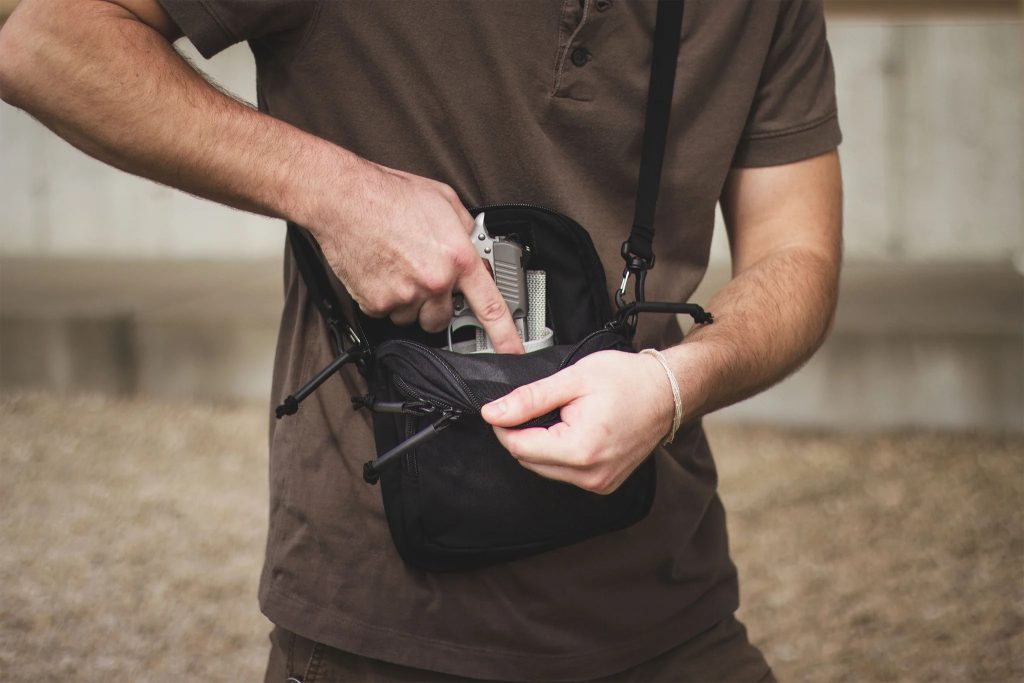
Thinking of it just in terms of purses tends to also make you think of it in terms of a woman thing which it is not. I know men who regularly off body carry when they go to the gym, go to the beach, or just generally prefer to carry in a bag than in a holster on their body.
Is That System Really a 24/7 Solution?
The first question I ask someone when they tell me they plan to use, or already do use, an off body carry system is along the lines of:
Do you plan on wearing/carrying that around the house with you as well?
I just don't know anyone who can honestly tell me they keep their purse or backpack on them as they walk around the house in the evening after work. There are also a number of times when the gun owner might be tempted to leave the gun along with its bag/purse in the car to run into the gas station really quick or to visit the restroom at the restaurant.
If using an on-body concealed carry holster, the gun owner would not be vulnerable in those moments but the off-body carrier is. So inevitably the gun owner either has to accept the fact that they will be without their firearm a lot of the time or they have to switch back and forth between off body and on-body systems as they enter and leave certain environments.
That isn't ideal since we know some of the places you are most likely to need your firearm are the places where you are likely to relax and be away from that bag.
Can You Draw The Same Every Time?
Another significant challenge of off body carry systems is the tendency for that system to be in a different position relative to the body in any given moment. When you enter a life threatening situation your ability to think and make deliberate decisions along with physical movements is greatly diminished.
As such your body always reverts back to the most instinctive and practiced mode of movement and thinking. Building that kind of muscle memory is very difficult when the firearm is in a slightly different location on the body from moment to moment depending on how the user is carrying the holster system that day.
The solution is then of course to be highly consistent with how/where you carry the bag.
Breaking Decades of Bad Habit: Maintaining Control
I carry a backpack (VIKTOS Perimeter 25) to our office everyday. It has my laptop, favorite headphones, etc. When I get home in the evening what do you think is the first thing I do when I come through the door? I can promise it is the exact same thing that my wife does with her purse. Set it down.
Not a big deal when it only contains a laptop, wallet, or the like. A gun? That becomes a problem because the firearm is no longer in my direct control or in my direct access should there be an emergency at the home.
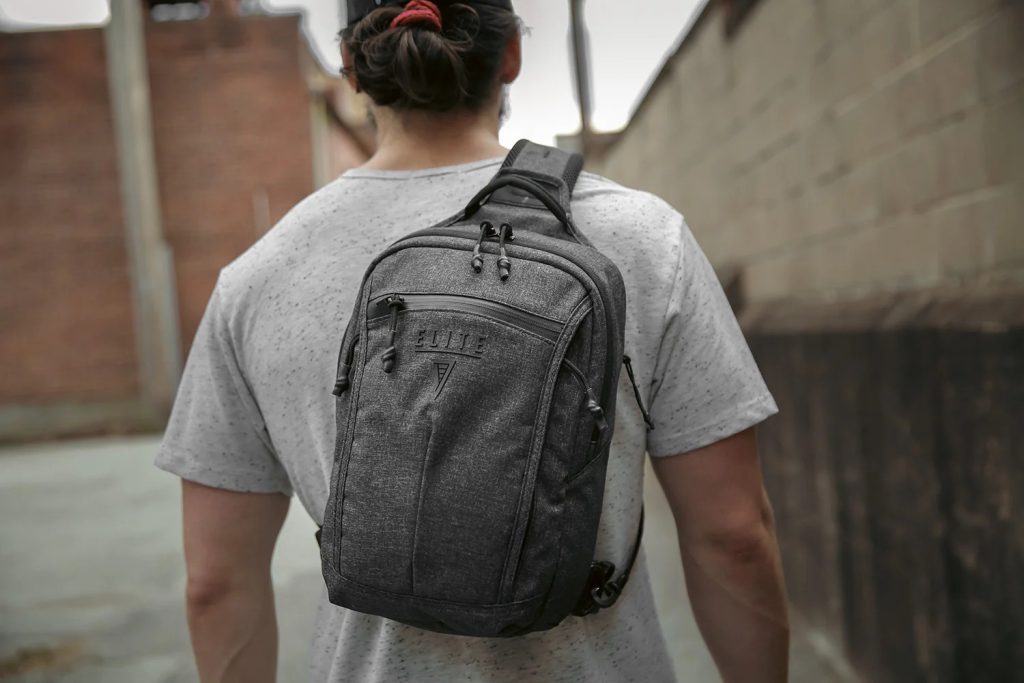
Also consider what you do with that “carry system” when you are in the car, at a restaurant, at work, etc. Is it always in your control? It has been my own observation that off body carry systems like purses are more likely to be out of reach when the threat arises.
Is The Bag Itself A Safe Holster?
As long time readers know, we subscribe to a strict set of holster safety rules and they apply to all holsters including bags that hold your gun. Specific to off-body systems we tend to see 2 concerning issues.
1: Does the bag protect the trigger guard from outside interference. Our experience is that bags themselves are not strong enough, or made with reinforced material sufficient on their own to protect the trigger guard from outside influence. This can be managed effectively by using a “pocket-style” holster in conjunction with the bag to add an additional layer of safety.
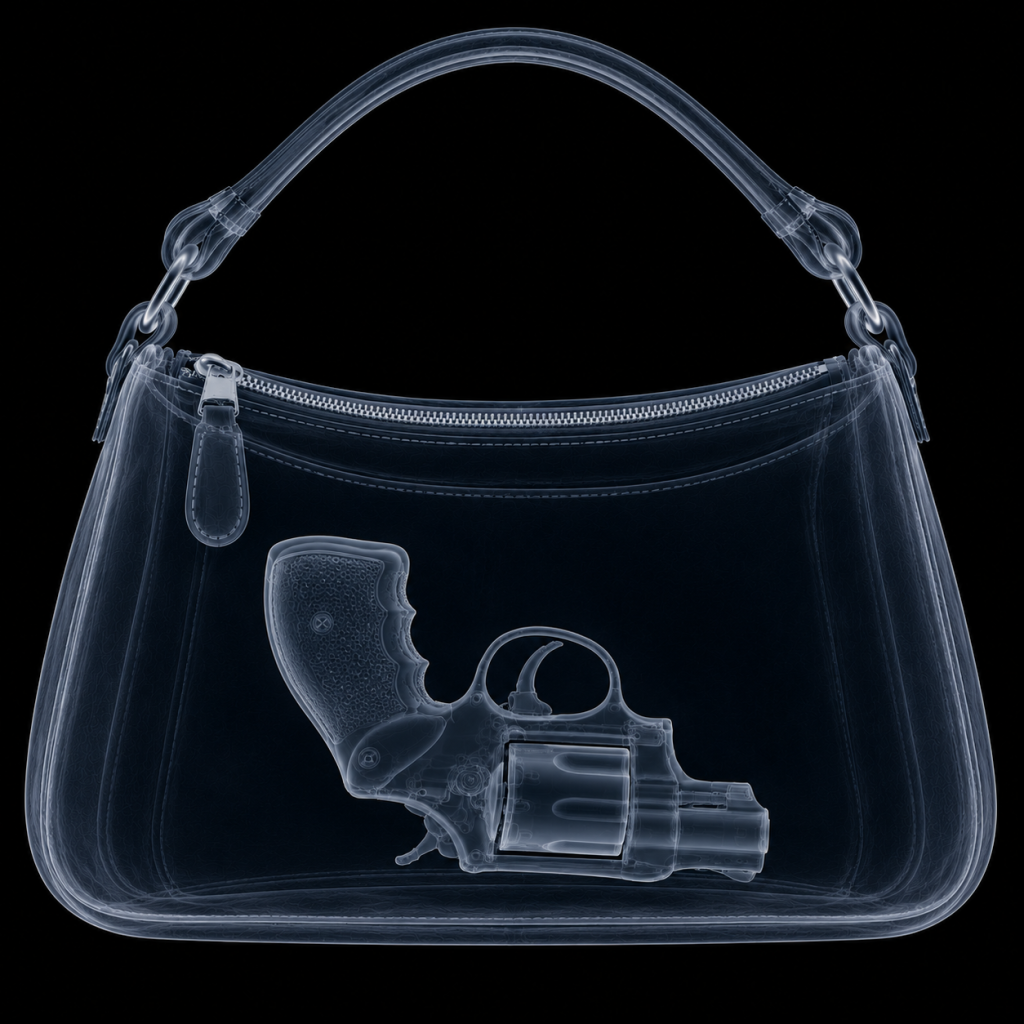
2: Is the firearm oriented in the same way all the time. If the gun shifts and rotates around inside the pocket of the bag then when you reach in to draw it you may not be able to obtain an effective grip in order to draw the gun. This is generally managed by fixing the pocket holster into a position with velcro or by sewing it directly into the bag.
So What is the Solution?
I urge my students to consider off body carry systems as a last resort. That doesn't mean that it can't be done or done well but only that there seems to be more barriers to carrying off body well than there are for any of the other common concealed carry systems. What I want to know, is how you carry your gun. Is it on body? Off body? Let us know in the comments what your preferred method of carrying a concealed gun is.
Want to explore this topic in more depth. Beth Alcazar and I discussed this topic on episode 322 of The Concealed Carry Podcast. You can listen to it below.
Also we talk about muscle memory a lot. One thing that may be beneficial for your gun training, is if you listened to our podcast dedicated to muscle memory. It may point out some things you never thought about while training.
*This article is an updated and republished version of an article originally published in May 2017.