Ohio Lawmakers Pass Sweeping Suppressor, SBR and SBS Reform, Send SB 214 to Governor DeWine
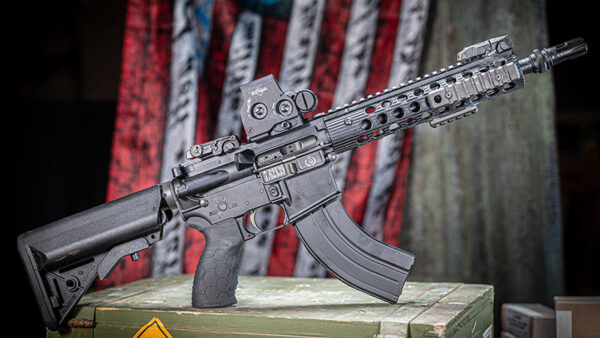
Ohio lawmakers have passed Senate Bill 214, legislation that would remove suppressors, short-barreled rifles (SBRs), and short-barreled shotguns (SBSs) from the state’s classification of “dangerous ordnance.” The expanded legislation now heads to Governor Mike DeWine, marking a major development for Ohio gun owners following the federal government’s retreat from National Firearms Act (NFA) registration enforcement.
On November 10, 2026, the Ohio Senate voted 21–9 to concur with amendments adopted by the House, according to Gun Owners of America (GOA). Earlier that day, the House Public Safety Committee approved amendments expanding the original suppressor-focused legislation to include SBRs and SBSs. The final concurrence vote completes the legislature’s work on a bill that began as a relatively narrow suppressor reform measure and developed into broader relief from Ohio’s NFA-dependent restrictions.
BREAKING
Ohio SB 214 Passes the Senate Concurrence vote 21-9!
It now heads to @GovMikeDeWine’s desk!
Huge thanks to the GOA team, our members, & the elected officials who supported the bill and GOA-backed amendment. Let’s get this signed!
https://t.co/M3JxM0UqAK
— Gun Owners of America (@GunOwners) November 10, 2026
Ohio SB 214 Expands Beyond Suppressors
Sponsored by Republican State Senator Kyle Koehler, SB 214 originally sought to remove firearm suppressors from Ohio Revised Code § 2923.11’s definition of dangerous ordnance. The Senate initially passed that version on March 25 by a 31–1 vote before sending it to the House for consideration.
The House amendments substantially strengthened the bill by adding short-barreled rifles and short-barreled shotguns to the proposed changes. Both the National Rifle Association’s Institute for Legislative Action and Gun Owners of America confirmed the expansion following the committee vote. GOA subsequently announced that the Senate had approved the amended legislation in its 21–9 concurrence vote.
Under existing Ohio law, suppressors and certain short-barreled firearms fall within the state’s dangerous-ordnance classification. Ohio Revised Code § 2923.17 generally prohibits knowingly acquiring, possessing, carrying, or using dangerous ordnance without a qualifying exemption, making a violation a fifth-degree felony.
One of the principal exemptions allows possession of dangerous ordnance registered in the federal National Firearms Registration and Transfer Record. That provision has become particularly problematic following the federal government’s decision to stop enforcing major NFA registration requirements for these firearms and accessories.
As AmmoLand previously reported, Ohio’s reliance on federal registration creates a potential felony trap for gun owners. A suppressor or short-barreled firearm acquired without federal NFA registration under the government’s current nonenforcement policy would not automatically qualify for the state’s registration-based exemption.
SB 214 addresses that problem directly by removing all three categories from Ohio’s dangerous-ordnance classification rather than continuing to make lawful possession dependent on federal registration.
Federal NFA Victory Exposed Ohio’s Outdated Restrictions
The legislation has taken on greater significance following the federal government’s response to Silencer Shop Foundation v. ATF and the consolidated Jensen v. ATF litigation.
On August 5, 2026, U.S. District Judge James Wesley Hendrix issued an injunction blocking enforcement of challenged NFA registration and approval requirements for suppressors, SBRs, SBSs, and any other weapons (AOWs) against the plaintiffs and other covered parties. The Department of Justice subsequently declined to appeal the ruling.
On October 9, the Bureau of Alcohol, Tobacco, Firearms and Explosives announced that it would stop enforcing specified NFA registration and advance-approval requirements nationwide for those categories.
The change allows eligible gun owners in states without conflicting restrictions to acquire suppressors through ordinary dealer transfers using ATF Form 4473, without separate NFA registration or advance Form 4 approval. Short-barreled firearms also received federal enforcement relief, although applicable Gun Control Act requirements remain in place.
The distinction is important: ATF’s nationwide policy does not repeal the underlying federal statutes, nor does it override state firearms laws.
For Ohio gun owners, that meant federal relief could remain out of reach because state law continued to classify the affected items as dangerous ordnance and relied on federal registration as a principal exception to its criminal prohibition.
AmmoLand reported in October that Firearms Policy Coalition had identified Ohio among 15 states whose laws reference federal NFA requirements, while the American Suppressor Association was also working to resolve state-level restrictions. Those laws differ considerably, but they share a fundamental problem: federal nonenforcement does not automatically eliminate independent state criminal penalties.
Ohio’s amended SB 214 represents a legislative response to that problem. Instead of requiring gun owners to depend on conflicting interpretations of state and federal law, the legislation would remove suppressors, SBRs, and SBSs from the dangerous-ordnance category altogether.
Governor DeWine Has the Final Decision
With the House amendments approved and the Senate’s reported 21–9 concurrence vote complete, SB 214 now heads to Governor Mike DeWine for consideration.
If signed, the legislation would remove Ohio’s dangerous-ordnance restrictions on suppressors, short-barreled rifles, and short-barreled shotguns. It would not repeal remaining federal firearms restrictions or eliminate requirements such as applicable background checks and interstate transportation approval for certain short-barreled firearms. It also does not extend the reported state-law changes to AOWs.
Nevertheless, eliminating Ohio’s independent dangerous-ordnance classification would address a significant obstacle that has remained in place despite the federal government’s NFA enforcement changes.
The broader implications extend beyond Ohio. Other states continue to maintain firearms restrictions dependent on federal registration or authorization, leaving gun owners navigating conflicting laws even after the federal government has stopped enforcing major portions of the NFA registration system.
Ohio’s legislation offers an example of how lawmakers can address those state-law barriers directly. What began as a bill focused exclusively on suppressors has expanded to cover short-barreled rifles and shotguns, bringing three categories of commonly owned firearms and accessories under the same proposed reform.
For Ohio gun owners, the November 10 concurrence vote marks the culmination of that legislative effort. The General Assembly has completed its work, and Governor DeWine now has the final decision on whether SB 214 becomes law.
About Duncan Johnson:
Duncan Johnson is a lifelong firearms enthusiast and unwavering defender of the Second Amendment—where “shall not be infringed” means exactly what it says. A graduate of George Mason University, he enjoys competing in local USPSA and multi-gun competitions whenever he’s not covering the latest in gun rights and firearm policy. Duncan is a regular contributor and editor-in-chief for AmmoLand News and is responsible for AmmoLand’s daily gun-rights reporting and industry coverage.