PSA 570 Brings Build-It-Yourself Modularity to the Pump Shotgun
Palmetto State Armory has officially launched the PSA 570, a new 12-gauge pump-action shotgun built around a modular, owner-configurable design.
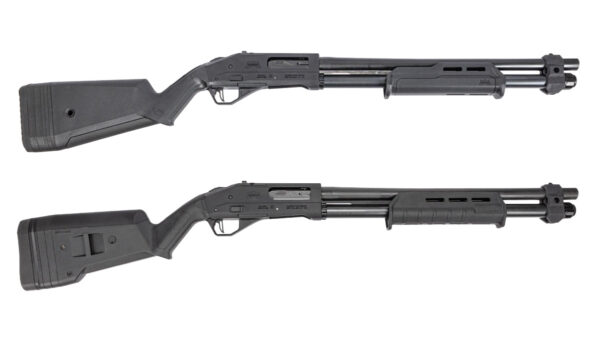
The PSA 570 combines an 18.5-inch barrel, 7+1 capacity, fixed-cylinder choke, direct-mount RMR optic cut and compatibility with Remington 870-pattern furniture. More importantly, PSA designed the shotgun around interchangeable barrels, magazine tubes and receivers that the company plans to sell separately.
Rather than adding another fixed-configuration defensive pump to a crowded market, PSA is attempting to bring some of the AR-15’s build-it-yourself appeal to the shotgun.
The 570 officially launched on July 24, 2026. Its arrival follows years of development and considerable interest from shooters. According to PSA, the 570 was one of the most heavily supported products in the company’s recent SHOT Show product poll.
Now it has moved from a voter-backed concept into a production firearm.
Live Inventory Price Checker
| Palmetto State Armory Liberty Lower - 1535 | Palmetto State Armory | $ 69.99 |
|
|
| Palmetto State Armory A2 EPT Rifle Lower Build Kit - 516445142 | Palmetto State Armory | $ 129.99 |
|
|
| Palmetto State Armory A2 EPT Rifle Lower Build Kit, Black | Palmetto State Armory | $ 129.99 |
|
|
| Palmetto State Armory Magpul MOE EPT Lower Build Kit - Flat Dark Earth | Palmetto State Armory | $ 129.99 |
|
Four PSA 570 Models Available at Launch
PSA is launching the 570 in four configurations. Buyers can select PSA-designed furniture or Magpul furniture, with both versions offered in black or Flat Dark Earth.
All four launch models share the same basic specifications:
- 12-gauge pump action
- 18.5-inch barrel w/ fixed cylinder choke
- 3-inch chamber
- Compatibility with 2¾- and 3-inch shells
- 7+1 capacity
- Direct-mount RMR optic footprint
- Glock-pattern front sight
- Integrated backup rear sight
- Remington 870-pattern furniture compatibility
The PSA furniture includes an integral QD sling socket in the stock, along with removable spacers that allow the shooter to adjust the length of pull. That is a useful feature on a defensive shotgun, where a stock that is too long can make the gun harder to mount and operate, particularly for smaller shooters or anyone wearing body armor or heavy clothing. The Magpul-equipped versions use familiar aftermarket furniture already trusted by shotgun owners.
PSA’s product listings show the initial models spanning approximately $449 to $549.99, depending on the furniture package. That places the 570 above some entry-level defensive pumps but below many premium tactical shotguns. Whether the additional modularity justifies the difference will ultimately depend on reliability and how fully PSA develops the parts ecosystem.
Optics-Ready From the Factory
Every PSA 570 receiver comes cut for an RMR-pattern optic. Owners who prefer iron sights can leave the included cover plate installed. That plate incorporates a backup rear sight that works with a Glock-pattern front sight mounted on the shotgun’s forward hanger.
That arrangement gives the shooter usable sights out of the box without placing a tall Picatinny rail and adapter beneath a red dot. Direct mounting should keep the optic lower and help the shooter maintain a more natural cheek weld.
Red dots on defensive shotguns are no longer unusual. A properly zeroed optic makes aiming with slugs more precise and gives the shooter one focal plane when using buckshot at defensive distances. PSA’s decision to machine every receiver for an optic, rather than limiting the feature to a premium model, reflects how defensive-shotgun setups have changed.
The 570 also uses a right-side action release and a tang-mounted safety. Both controls should be familiar to experienced pump-shotgun users, although shooters will need actual trigger time before drawing conclusions about their placement and operation.
The Free-Float Hanger Makes the 570 Different
The defining component is what PSA calls its free-float hanger system. On the 570, the forward hanger can move independently of the barrel and magazine tube. The magazine-feed tube locks into the receiver at the rear, rather than using the hanger as an essential part of the lockup. This allows PSA to accommodate different barrel and magazine-tube combinations without tying the receiver to one permanent setup.
PSA says it plans to offer different barrel lengths, magazine-feed tubes, standalone receivers and additional configurations in the future. Selling those components separately would allow owners to build or modify a 570 at home instead of buying another complete shotgun every time they want a different setup.
That is where the 570’s real potential lies. The AR-15 became America’s rifle partly because the owner—not merely the factory—controls the final configuration. Shooters can start with a basic receiver and select a barrel, stock, handguard, sights and other components appropriate for the job. PSA is now attempting to bring some of that same owner-driven flexibility to the pump shotgun.
The comparison should not be taken too far. The PSA 570 is not an AR-style firearm, and PSA has not claimed the near-universal parts interchangeability found across the AR market. Nevertheless, the commercial idea is similar: establish the receiver as the foundation and give the owner a growing selection of components.
Compatibility with Remington 870-pattern furniture is especially important. PSA does not have to create every possible stock and forend in-house because the 570 enters the market with access to an established aftermarket.
The PSA 570 Still Has Something to Prove
Specifications and modularity do not replace reliability. A defensive pump shotgun must extract, eject and feed under hard use, and it must continue doing so after hundreds or thousands of shells.
The Remington 870 and Mossberg 500/590 families have earned their reputations through decades of military, law-enforcement, hunting and defensive use. The PSA 570 enters a mature market against guns with enormous stocks of replacement parts and generations of institutional knowledge behind them.
The 570’s success will also depend on whether PSA follows through with the promised barrels, tubes and receivers. A modular firearm only delivers its full value when the components are readily available and remain compatible over time.
For now, the 570 appears to be a well-equipped defensive pump with sensible controls, useful sighting options and a genuinely interesting mechanical design. If PSA can prove the shotgun reliable and support it with an affordable parts ecosystem, the company may have done more than launch another pump gun. It may have created a shotgun platform that owners can make their own.
About Duncan Johnson:
Duncan Johnson is a lifelong firearms enthusiast and unwavering defender of the Second Amendment—where “shall not be infringed” means exactly what it says. A graduate of George Mason University, he enjoys competing in local USPSA and multi-gun competitions whenever he’s not covering the latest in gun rights and firearm policy. Duncan is a regular contributor to AmmoLand News and serves as part of the editorial team responsible for AmmoLand’s daily gun-rights reporting and industry coverage.