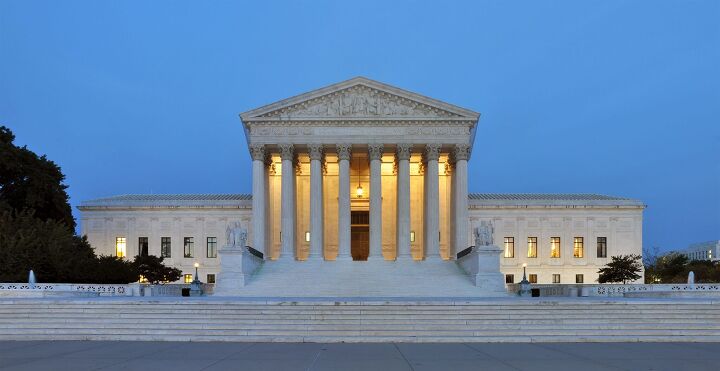
The Supreme Court handed down its decision in United States v. Hemani this week, and the headline writes itself: Marijuana users can own guns. The Court ruled that the government can't prosecute Ali Danial Hemani under the federal law that bars drug users from possessing firearms, at least not the way it tried to do it here.
That's the good news. The fine print is where things get complicated, and I'd encourage you to actually read it before you celebrate.
Back in March, after oral arguments, I figured the Court would land on case-by-case analysis rather than nuking the statute outright. That's more or less what happened. The ban is still on the books. What died today was the government's theory that it can flip your Second Amendment rights off like a light switch the moment you admit to using a controlled substance, no questions asked.
How We Got Here
Quick refresher. The statute is 18 U.S.C. §922(g)(3), part of the 1968 Gun Control Act. It makes it a federal felony for any "unlawful user of or addicted to any controlled substance" to possess a firearm. Because marijuana is still illegal under federal law, that sweeps in every cannabis user in America, no matter what their state says.
Hemani's case started in 2022, when federal agents searched his family's home in the Dallas area on suspicion of terrorism-related activity. They never charged him with anything close to terrorism. What they found was a Glock 19, some marijuana, and cocaine in his parents' closet. Hemani cooperated the whole way through, handed over the pistol, and told agents he used marijuana "about every other day."
Six months later, the government indicted him on a single charge: Possessing a gun while being an unlawful drug user. Nothing about the cocaine. Nothing about violence. Just the weed. For that, he was looking at up to 15 years in prison and a lifetime firearms ban.
Worth noting that §922(g)(3) prosecutions are rare. The Congressional Research Service pegs them at roughly 5% of all §922(g) convictions. This was never a high-volume enforcement tool. It's a trap that springs on people after the fact.
The Founders Drank Like Fish
Justice Gorsuch wrote the majority opinion, and his reasoning leaned hard on the Bruen framework. If the government wants to restrict a Second Amendment right, it has to find a historical analogue from the founding era that's "relevantly similar" to the modern law.
The government's analogue was "habitual drunkard" laws. Its argument, roughly: The Founders disarmed habitual drunkards, drunkards are people who regularly use an intoxicant, marijuana users regularly use an intoxicant, therefore §922(g)(3) is constitutional.
Clean on paper, but hilariously falls apart when exposed to the historical record. A "habitual drunkard" in early America wasn't a guy who liked a drink. It was someone so far gone that he'd "lost the power of self-control" and was "incapable of conducting his own affairs." The bar was incapacitation, not consumption.
And consumption back then was staggering. John Adams started his day with a tankard of hard cider at breakfast. Washington put away three glasses of Madeira most evenings. Jefferson took three or four glasses of wine with dinner. A few days before the framers signed the Constitution, 55 people threw Washington a farewell party in Philadelphia and reportedly went through 54 bottles of Madeira, 60 of wine, 22 of porter, plus beer, cider, and seven bowls of punch. The American Temperance Society didn't even call you a "confirmed drunkard" until you were drinking 24 ounces of hard liquor a day.
If regular intoxicant use disqualified you, half the Constitutional Convention couldn't have owned a musket.
So the analogy failed on the "why." It also failed on the "how." Those old laws (vagrancy statutes, civil commitment, surety bonds) almost always gave a person some kind of process before stripping his liberties: A conviction, a hearing before a probate court, a justice of the peace. §922(g)(3) gives you nothing. It disarms you automatically, the second you become a user, with no pre-deprivation process at all. As Gorsuch put it, the government's habitual-drunkard laws "targeted different kinds of people, did so for different reasons, and operated in different ways."
"To state the analogy is to expose its deficiency." Gorsuch was clearly enjoying himself.
The Part Everybody's Going to Skip
Here's where I have to play wet blanket, because the Court went out of its way to make this decision painfully narrow. It explicitly did not rule on:
- Banning actual addicts from owning guns
- Banning people who are currently intoxicated
- The felon-in-possession ban under §922(g)(1)
- The ban on the "mentally ill" under §922(g)(4)
- Future laws Congress might pass if it decides a specific drug makes users dangerous
- Prosecuting a drug user under §922(g)(3) with individualized proof that his drug use actually makes him a danger
That last one is the big one. The Court didn't say the government can never go after a marijuana user. It said the government can't do it on autopilot, without showing that this particular person is dangerous. Bring evidence that someone's drug use makes him a threat, and you may well have a different case. The justices were careful to leave that door open.
The decision is also "as-applied," not "facial." §922(g)(3) survives. It just can't be enforced the lazy way the DOJ tried here.
What It Actually Means If You Live in a Legal-Weed State
For the millions of Americans in the 40-some states with legal cannabis who also own firearms, this is real relief, with caveats.
The relief: The feds can no longer treat "I use marijuana" as an automatic, standalone felony trigger for gun possession. Gorsuch even pointed out how awkward the government's position had become. Marijuana was on Schedule I when this case started. After oral argument, the government moved some marijuana products to Schedule III. The DOJ told prosecutors back in 2013 to ease off cannabis users. The federal government helped build the legal weed industry and then tried to argue in court that everyone using its product is "categorically and unusually dangerous." The Court wasn't buying it.
The caveat, and please hear me on this: The ruling doesn't touch Form 4473. The question on the form asking whether you're an unlawful user of marijuana is still there, still federal, and lying on it is a separate crime under a different statute. This decision was about prosecuting possession, not about what you write on a 4473 at the gun counter. Nothing here is legal advice, and if you're trying to figure out your own situation, talk to an actual lawyer who knows your state. I'm a guy who writes about guns, not your attorney.
The Concurrences Are Worth a Look
The judgment was unanimous. Nobody dissented. But the Court splintered on reasoning, and a couple of the side opinions matter.
Justice Thomas concurred to argue something bigger: That §922(g) as a whole may exceed Congress's power under the Commerce Clause, since it criminalizes simply possessing a gun that crossed state lines at some point in the past. He's been beating this drum for years. He's basically inviting a future challenge to the whole structure of federal gun-possession law. That's a much larger fight than this case, and it's now sitting on the table with a sitting justice's name on it.
Justice Jackson, joined by Sotomayor, concurred to say the quiet part out loud: She thinks Bruen itself is unworkable. Her argument is that making judges dig through centuries of inconsistent historical records to settle modern gun questions produces arbitrary results, and the Court should go back to means-end scrutiny. Worth watching, because if the Bruen coalition ever cracks, this is where the pressure comes from.
Alito, joined by Kagan, concurred in the judgment only. He'd have decided it on the narrowest possible ground, that the government just didn't show Hemani was incapacitated the way a habitual drunkard was, and said no more.
Bottom Line
A regular cannabis user can't be automatically stripped of his gun rights and thrown in prison for it on the government's say-so alone. That's a meaningful win, and it lines up with where the Court's Second Amendment cases have been trending since Bruen and Rahimi.
But "marijuana users can own guns" is the bumper-sticker version. The real holding is narrower, the form question hasn't moved, and the Court left itself plenty of room to come back around with an individualized case. Read the opinion, not the headlines. Mine included.
The full opinion in United States v. Hemani (No. 24-1234) is available on the Supreme Court's website. Background coverage via SCOTUSblog.