Should You Use Tactical-Style Optics for Hunting?
Editor’s Note: The author was provided the product for this article by Vortex Optics and Silencer Central, and creates content for both companies. The rifle was provided by Springfield Armory.
As a professional photographer in the hunting and shooting industry, I spend over 100 days a year in the field—either behind a rifle or behind a lens. That time has given me a front-row seat to the small mistakes that cost hunters big opportunities.
Before we dive into my solution, let me lay out a scenario that I have seen play out time and time again in one form or another—so that you can get an idea of where I am coming from.
A Scenario I See Too Often
Somewhere in the mountains of Utah, our guide, the hunter, and I sit quietly on the side of a ridge, glassing down into a drainage, hoping to spot a mature bull elk. A light breeze is blowing up the ridge into our faces, and the fall air is crisp.
After about 20 minutes, our guide spots a quality bull elk down in the bottom of the drainage about a mile away from our current position. He is alone and milling around some small standing timber patches.
Our guide lays out his plan of attack for us, and we begin quietly making our way down the side of the ridge toward our prey. The wind holds mostly steady for us, but as the sun is getting higher, the odds of it switching directions and blowing our opportunity increase. We are working with limited time, and we know it.
The bull disappeared into one of the standing timber patches, and we lose sight of him for about 15 minutes as we approach where we last saw him. We carefully make our way through a small stand of trees, and as we exit the far side, a bugle sounds only 350 yards away. In the time that we lost sight of the bull elk, he had moved around 300 yards closer than we expected.
He is now standing broadside on the edge of a much larger stand of timber that covers the far side of the drainage and goes all the way up the side of the far ridge. There is little cover between us and him, so closing any more distance without him seeing us is a nonstarter.
In a rush, the guide starts helping the hunter get set up on shooting sticks. I can feel the wind starting to shift out of our favor. It will be only seconds before the bull can smell us—and then the game is all over.
“Are you on him?” the guide asks the hunter.
“No, I can’t find him in my scope,” our hunter replies.
“He’s right there on the hillside!” the guide whispers enthusiastically as he points to the elk.
The hunter briefly looks over his optic for the bull and then drops back into the scope.
“He’s about to bust; our wind is bad now,” the guide urgently tells our hunter.
As the guide says this, I watch the bull sniff the air, look our direction, and bolt into the timber.
“Shit…” I hear the hunter curse under his breath. “I saw him just as he started to bolt.”
The guide looks at the hunter’s scope and quickly realizes what the issue is. The 5–25 power optic was cranked to 18 power, making his field of view very small. So, while he could visually see the bull elk with his naked eye, finding it in the scope was very difficult, especially under stress—and I’ve seen this exact problem cost hunters opportunities more times than I can count.
The issue isn’t bad shooting. It’s an inadequate field of view.
I have seen this scenario play out in one form or another on elk hunts, deer hunts, antelope hunts, etc.
A Simple Solution—and Another Option
Now, obviously, one way to solve this problem is to make sure your optic is not cranked way up when you are hunting—and only to turn up the power on your optic once you are on your target. In this scenario, 5X would have been ample for a 350-yard shot; the hunter did not need 18X.
I offer another solution, however, that may be a better alternative.
Running a 12 O’clock–Mounted Red Dot
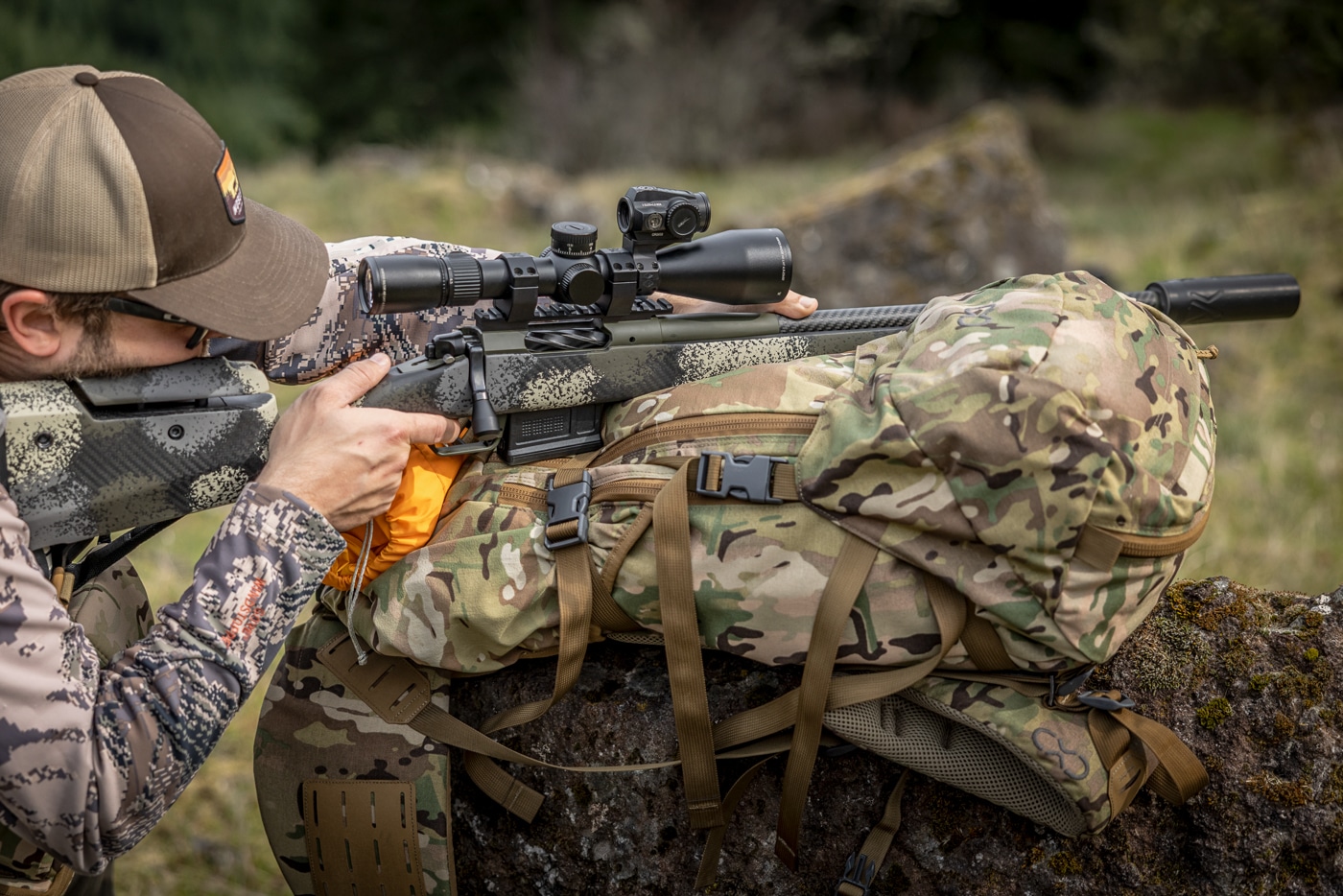
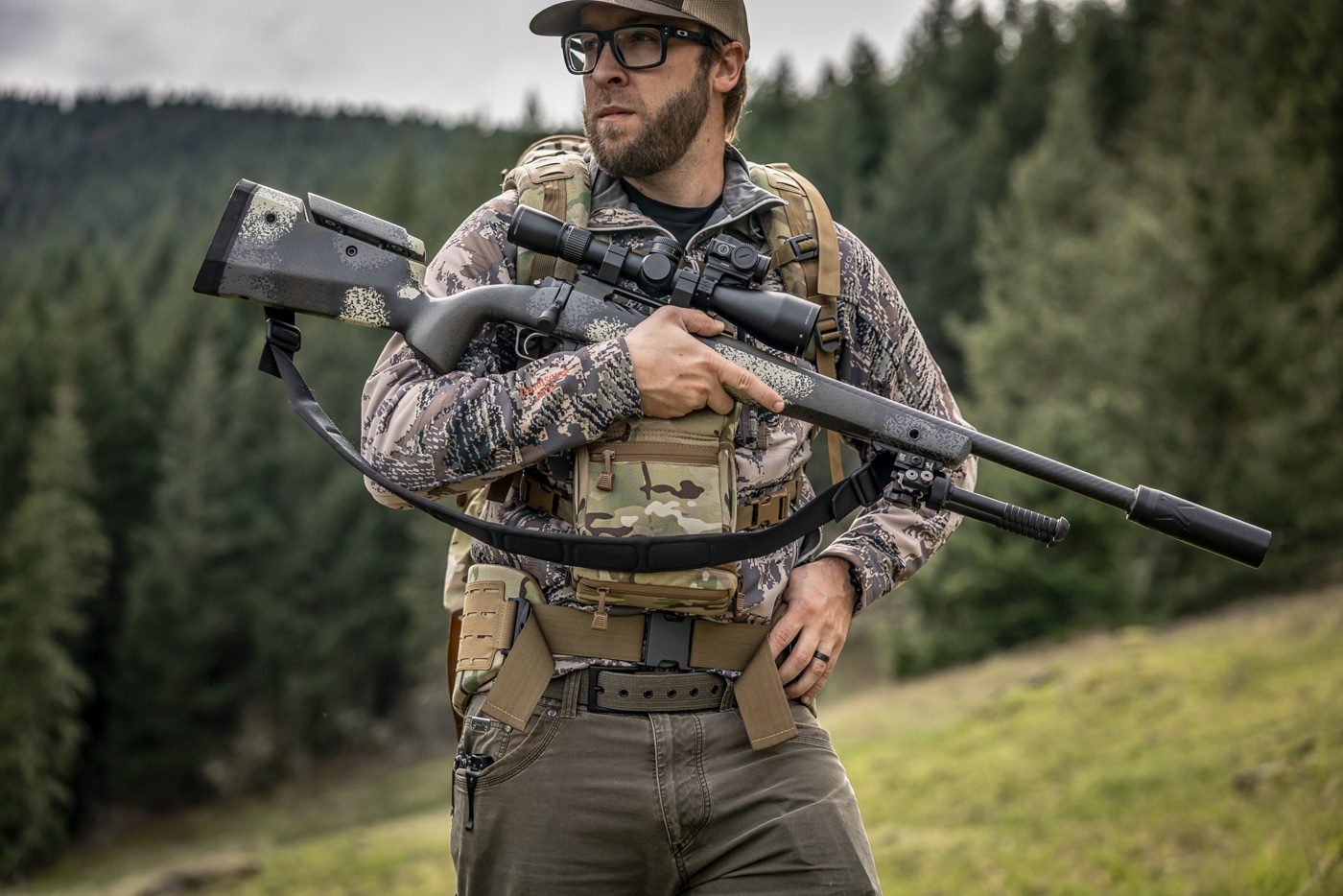
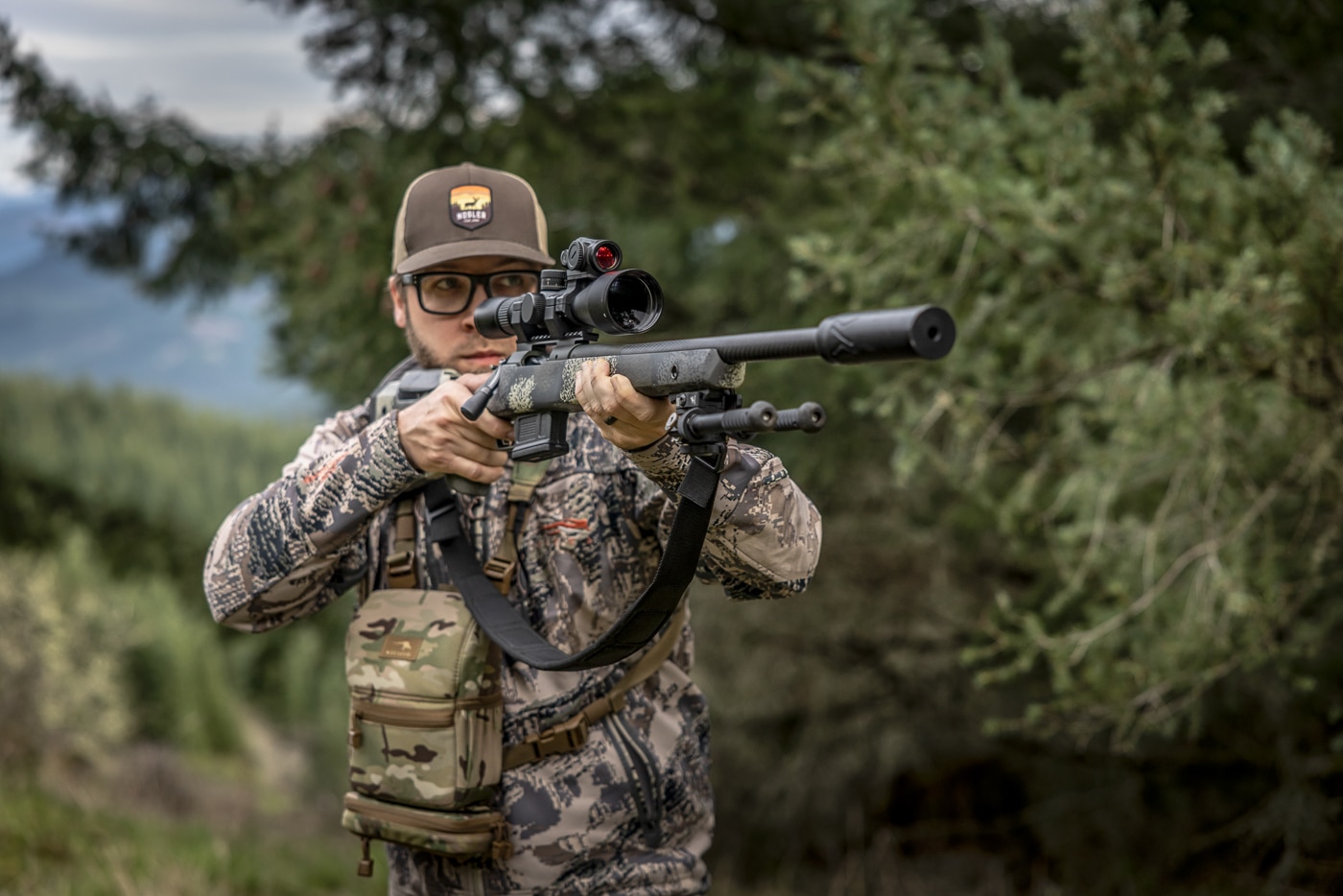
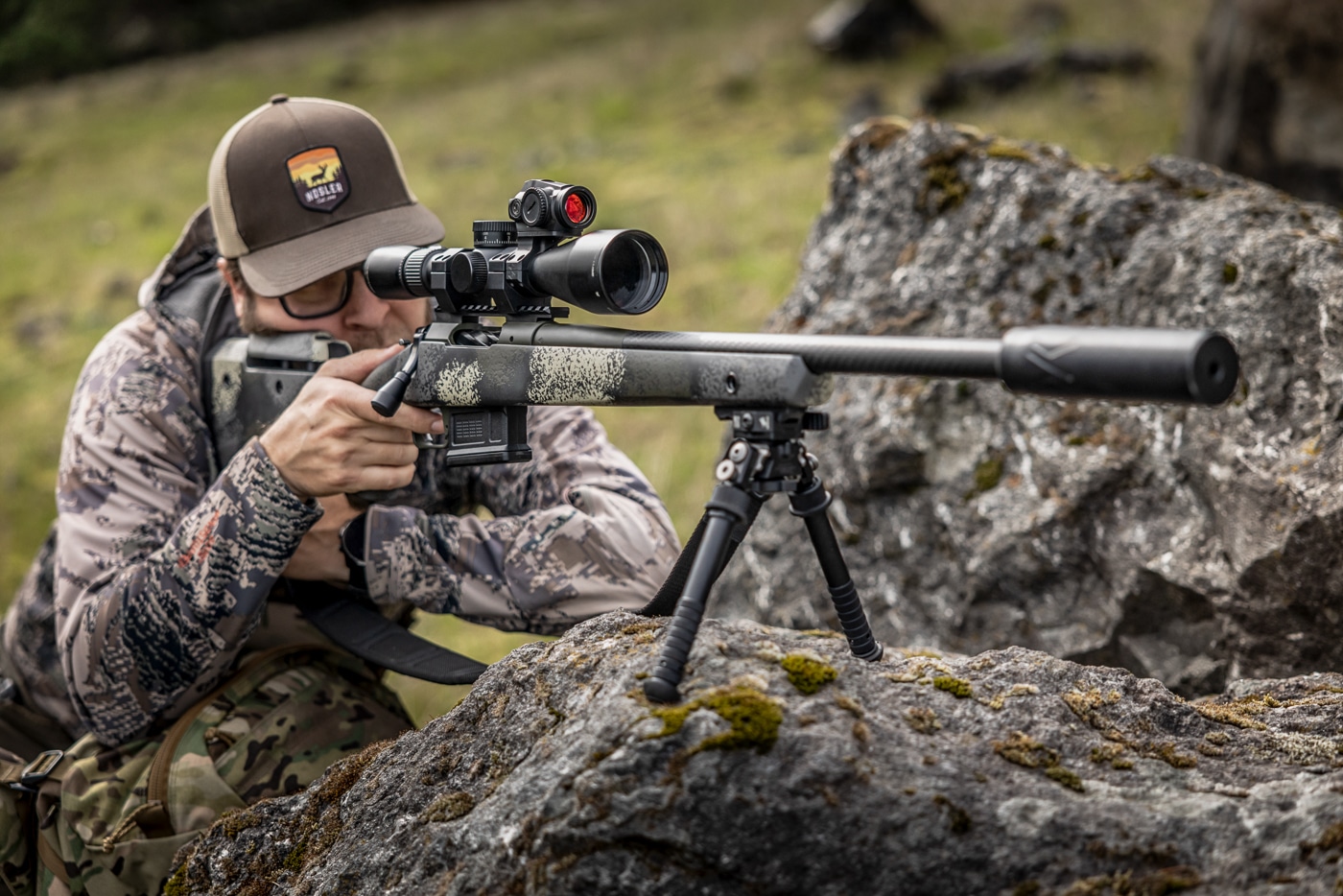
Running a 12 o’clock–mounted red dot on top of your primary optic is not a new thing. It’s something you see a lot on tactical rifle setups—and even see on competition bolt guns pretty frequently. Where you don’t see 12 o’clock–mounted red dots is on hunting rifles, and I think it’s time to change that.
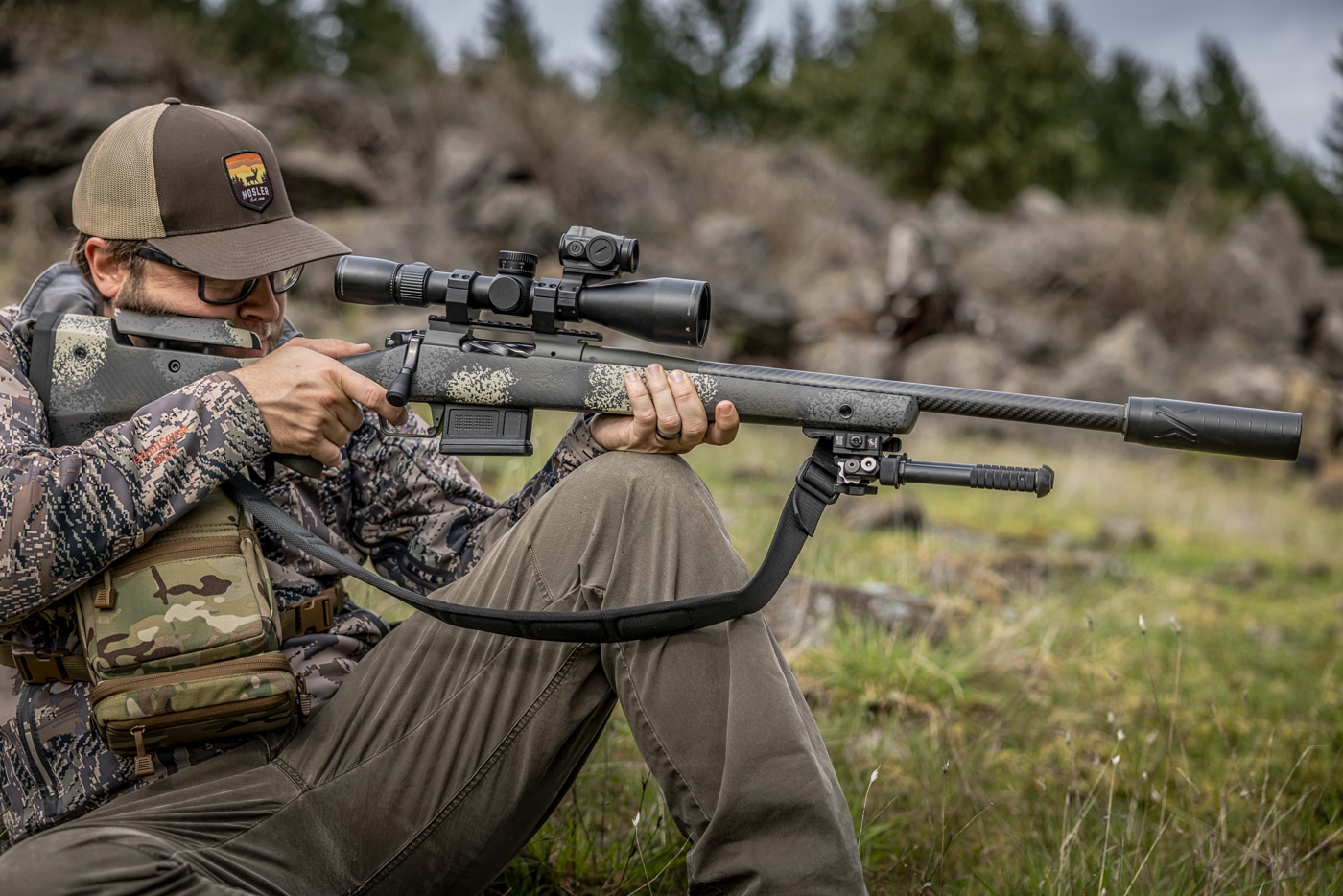
In most cases, I don’t really like top–mounted red dots on tactical setups because the mechanical offset is a problem at close range—and close-range shooting is what a lot of guys are using a 12 o’clock red dot for. The problem with this is it is easy to have 4-plus inches of mechanical offset between your optic and your center of bore, so using that dot inside of 25 yards isn’t ideal. You are either going to need to hold over your intended point of impact, which is difficult under stress—or zero the dot for 25 yards, which presents other issues and makes it less useful at farther distances.
If you are using night vision, then a 12 o’clock dot might be your only option because you need the optic high enough to get your night vision tube down behind it. In that case, you will just have to deal with the mechanical offset and train through it. But generally, I don’t like a 12 o’clock–mounted red dot on a tactical rifle.
So why do I think it is a good option for hunters?
Advantages for Hunters
A top–mounted dot on your primary optic offers several distinct advantages for hunters:
1. Works as a Target Finder
If your main optic is turned up on a high power while hiking, it is easy to use the red dot to get on target—and then just drop your head down into your primary scope. This makes it very quick to get on target when you don’t need any magnification to see the game animal.
2. Expedites Long-Range Targeting
If your target is farther away and you can’t visually see it with the naked eye, the red dot can still help you get on target faster. For instance, let’s say you or your hunting partner spots a bedded deer at 530 yards under a pine tree with binoculars. You can use the red dot to find the tree and get you close—and then drop into your main optic to find the deer. The dot should help you expedite the process of target finding and increase your odds of success when time is limited.
3. Useful for Unexpected Game
When moving through timber or small drainages, it is common to jump animals that you did not know were there. It can be much easier to take a shot in these situations with a 12 o’clock dot—especially if the animal is walking or running.

Live The Armory Life. The latest content straight to your inbox plus an automatic entry to each of our monthly gun giveaways!
I have read and agree to the terms & conditions.In a hunting scenario, mechanical offset is much less of a concern because most hunters are not going to be taking shots closer than 50 yards. Let’s say your red dot is 4 inches above your center of bore and zeroed at 100 yards, which is what I would suggest. Then, at 50 yards, your point of impact should be around 2 inches low. This is a negligible issue on a deer whose vital zone is on average between an 8- to 10-inch circle. Anywhere between 50 to 150 yards, a 12 o’clock–mounted red dot can be a deadly asset. Beyond that range, I would probably be using my main optic to take the shot.
My Setup and Experience
Since I started hunting with this optic setup, I have harvested multiple animals including elk, antelope, and coyotes. I have been very happy with how effective it is.
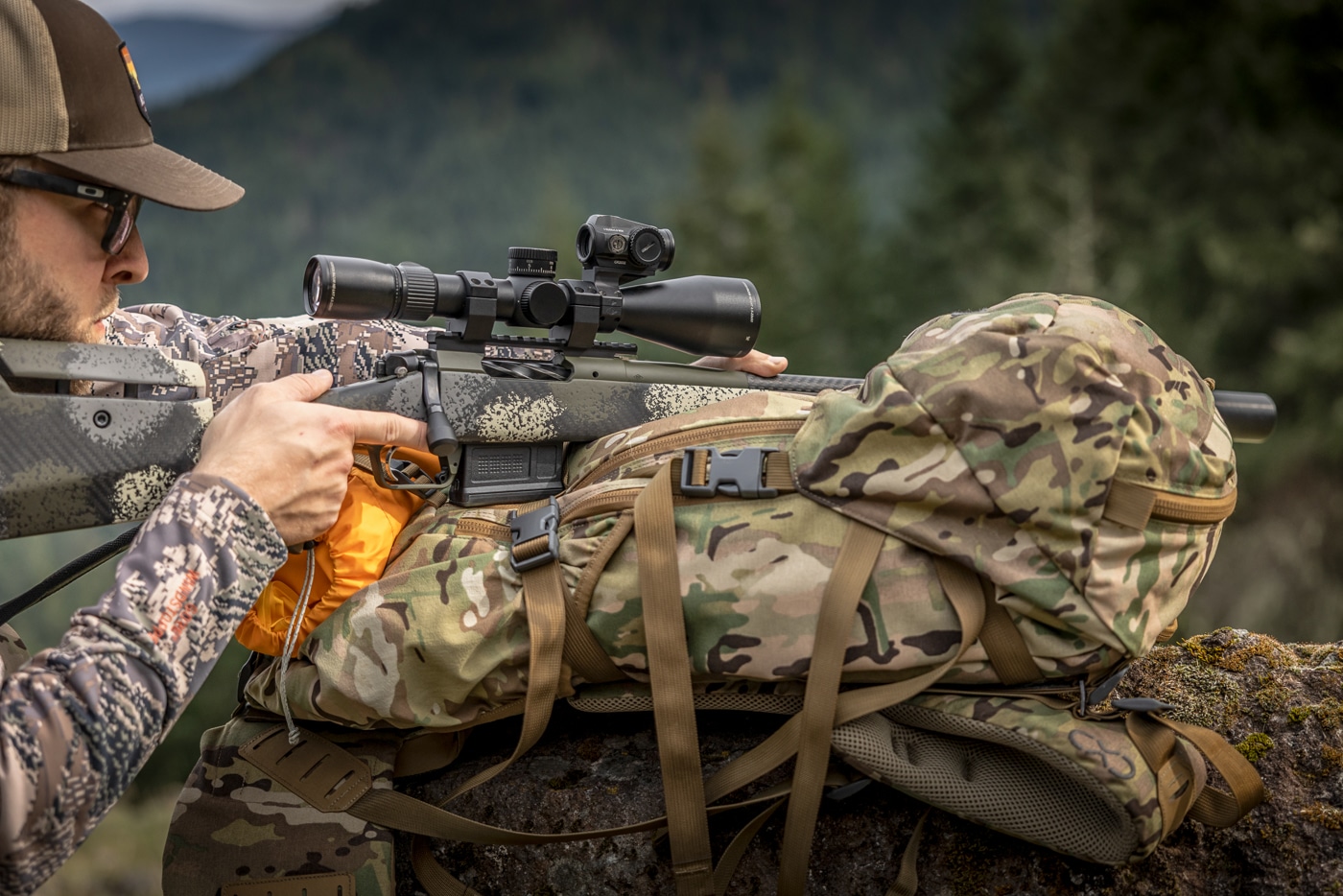
As my main optic, I am running the Vortex Razor HD LHT 4.5–22×50. This is currently my go-to hunting optic, as I think it finds a good balance between being lightweight, durable, and feature-rich. The glass clarity and light gathering are excellent. The reticle is a nice blend of tactical and simple. It gives you enough holds and a simple tree without being too busy, in my opinion. I have it mounted using a pair of Vortex Precision Matched 30mm rings.
The Vortex Sparc Solar red dot has been solid and is mounted using a Reptilia 30mm ROF-SAR mount. Reptilia makes the ROF-SAR mount in both 30mm and 34mm currently and offers it in Aimpoint T-2, Deltapoint Pro, and RMR footprints depending on what red dot you may want to run. Personally, I would recommend some kind of enclosed red dot since this is a hunting setup and you will likely have to deal with rain, snow, or dirt trying to get in the emitter.
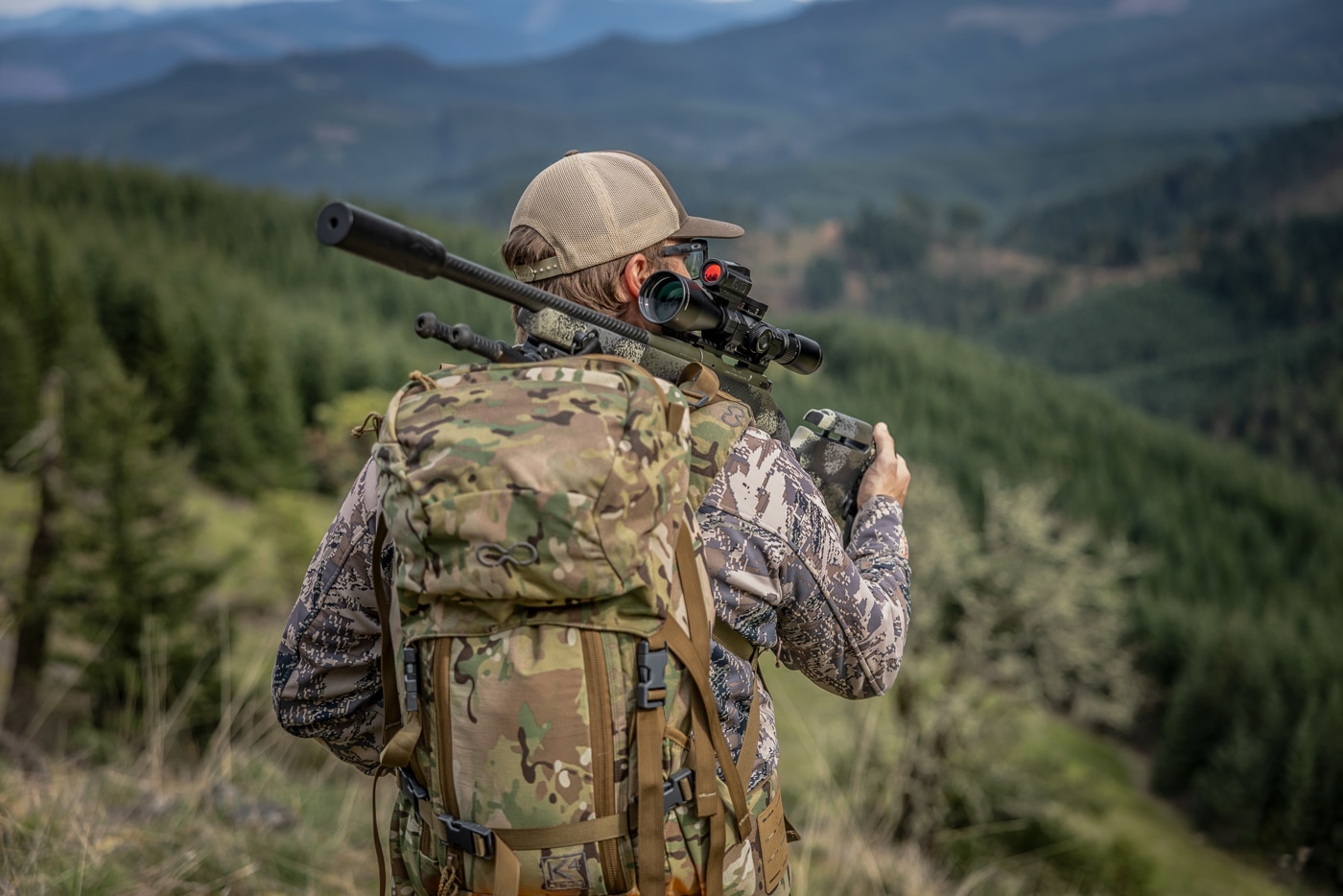
I have a few years of use with this optic setup, and it has been moved between multiple guns. So far, it has been bombproof.
Conclusion
Modern hunting optics provide incredible capability, but they also create a trap. If hunters hike around with the magnification turned up too high and an animal appears suddenly or closer than expected, high magnification can result in not getting a shot.
No matter what optics you choose, I think you can see the potential advantages of running a red dot on top of your primary hunting scope. A 12 o’clock–mounted red dot isn’t traditional in the hunting world—but neither was dialing turrets at one time. For hunters who want every possible advantage when seconds matter, it may be one of the most practical upgrades available.
Editor’s Note: Please be sure to check out The Armory Life Forum, where you can comment about our daily articles, as well as just talk guns and gear. Click the “Go To Forum Thread” link below to jump in and discuss this article and much more!
Featured in this article
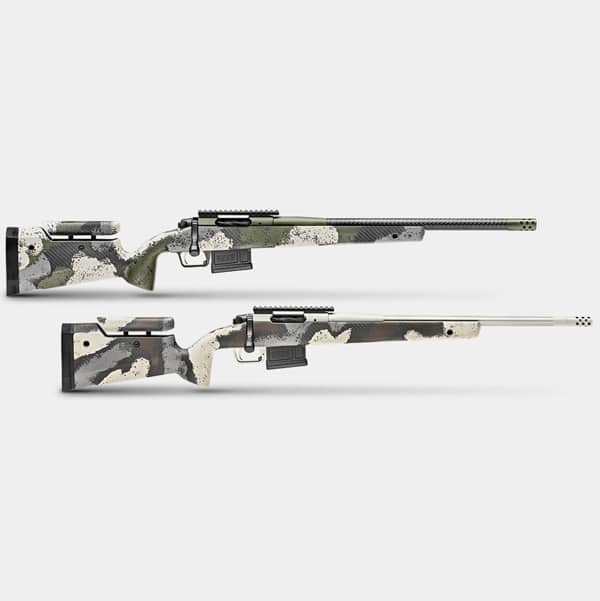
Model 2020 Waypoint Series
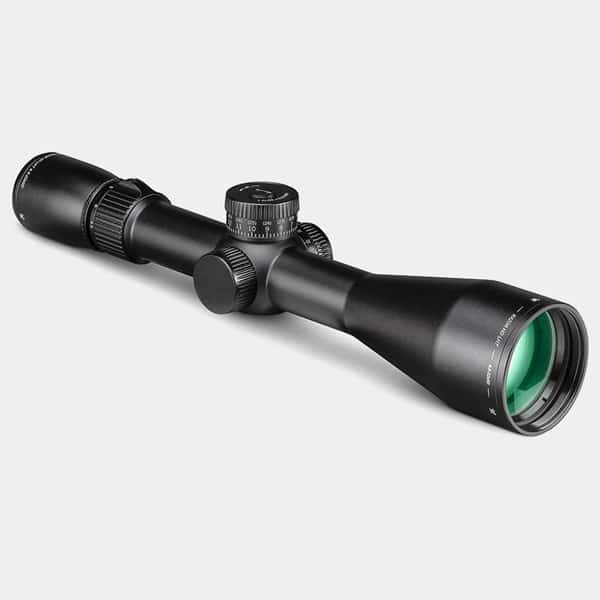
Vortex Razor HD LHT 4.5-22x50 FFP
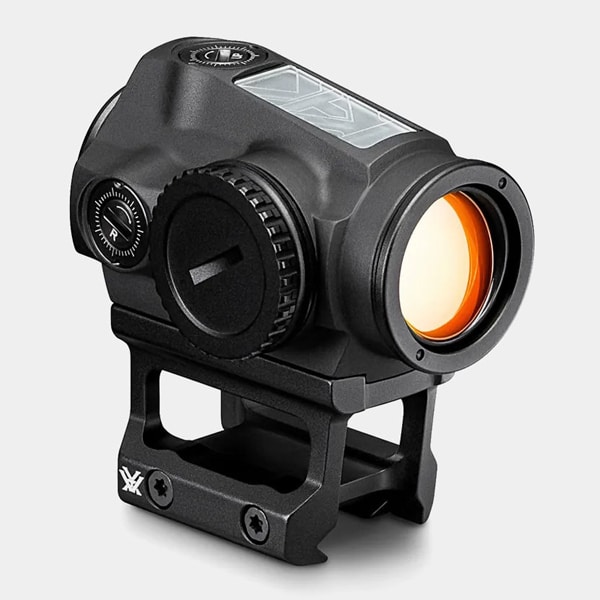
Vortex SPARC SOLAR
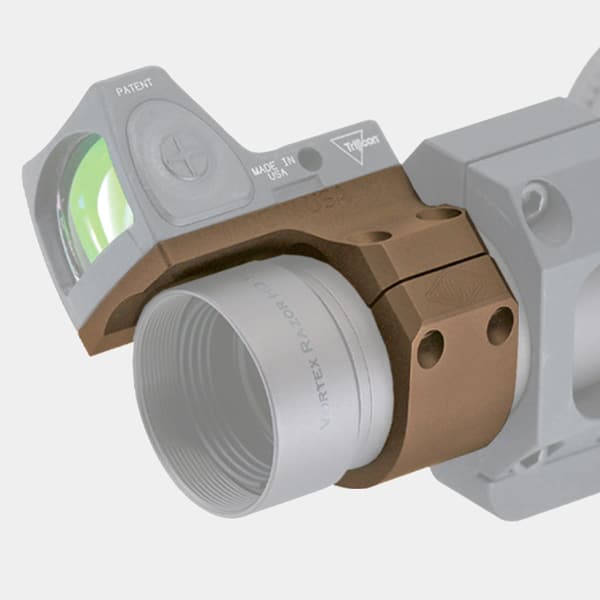
Reptilia ROF SAR for Trijicon RMR & SRO
The post Should You Use Tactical-Style Optics for Hunting? appeared first on The Armory Life.