Good afternoon, everyone, and welcome back to TFB’s Silencer Saturday, brought to you by Yankee Hill Machine, manufacturer of the new Victra 20-gauge shotgun suppressor. I have spent a lot of time this summer shooting mid-bore rifles for reviews. My range sessions have involved a lot of .35 Whelen, .375 H&H, and .338 Lapua ammo, which has been both fun and expensive. While those pursuits have all been supersonic, my newfound supply of reloading supplies in those bore diameters got me looking at a few options. One of those is the 375 Raptor, which is a truly interesting cartridge for silencer aficionados.
Silencer Saturday @ TFB:
- Silencer Saturday #453: NFA Sea Change In Wake Of ATF Guidance Letter
- Silencer Saturday #452: Silent But Deadly Subsonic Rifle Match
- Silencer Saturday #451: Return of the LVAW
- Silencer Saturday #450: 4473 vs. Form 4 Transfers
- Silencer Saturday #449: A One-Of-A-Kind Ruger American
Subsonic ammunition is the double-edged sword of silencer use. When anyone thinks of a silencer and what its performance is like in the general public, they are picturing a functional suppressor with subsonic ammunition and that whisper-hissing sound of the gun firing. In reality, much shooting is done with supersonic rounds, and silencers take out the worst of the pain and noise but hardly make guns as quiet as we may imagine them to be with a suppressor.
Subsonic ammunition entails compromises in rifle calibers and frequently fails to cycle semi-automatic guns. In a cartridge like a .223 Remington, which is most commonly shot with a 55- or 62-grain bullet, moving to a subsonic 75-grain or 80-grain load simply does not generate enough gas pressure to cycle the action. At best, this renders the gun a straight pull action. At worst, it creates a jam machine.
The solution is specialized cartridges for suppressed rifle use. The most famous of these is doubtlessly the 300 Blackout. It has achieved a level of commercial success that is orders of magnitude higher than any other dedicated silencer cartridge. The 300 Blackout has a very simple premise: cut off the shoulder and neck of a 223 Remington case and neck the resulting straight-wall case to 30 caliber. This still fits the bolt and magazine of an AR-15 but allows for much heavier 30-caliber bullets. Those 200- or 220-grain subsonic bullets will usually cycle a properly tuned AR-15.
This cartridge's use is not limited to subsonics alone. Swap in a 120- or 135-grain bullet and the 300 Blackout offers performance in the ballpark of the 7.62x39. This is a great combo. You can have it both ways: when silence is in order, there is a nice heavy bullet available, but when it's time to go loud, the supers put up a very respectable performance.
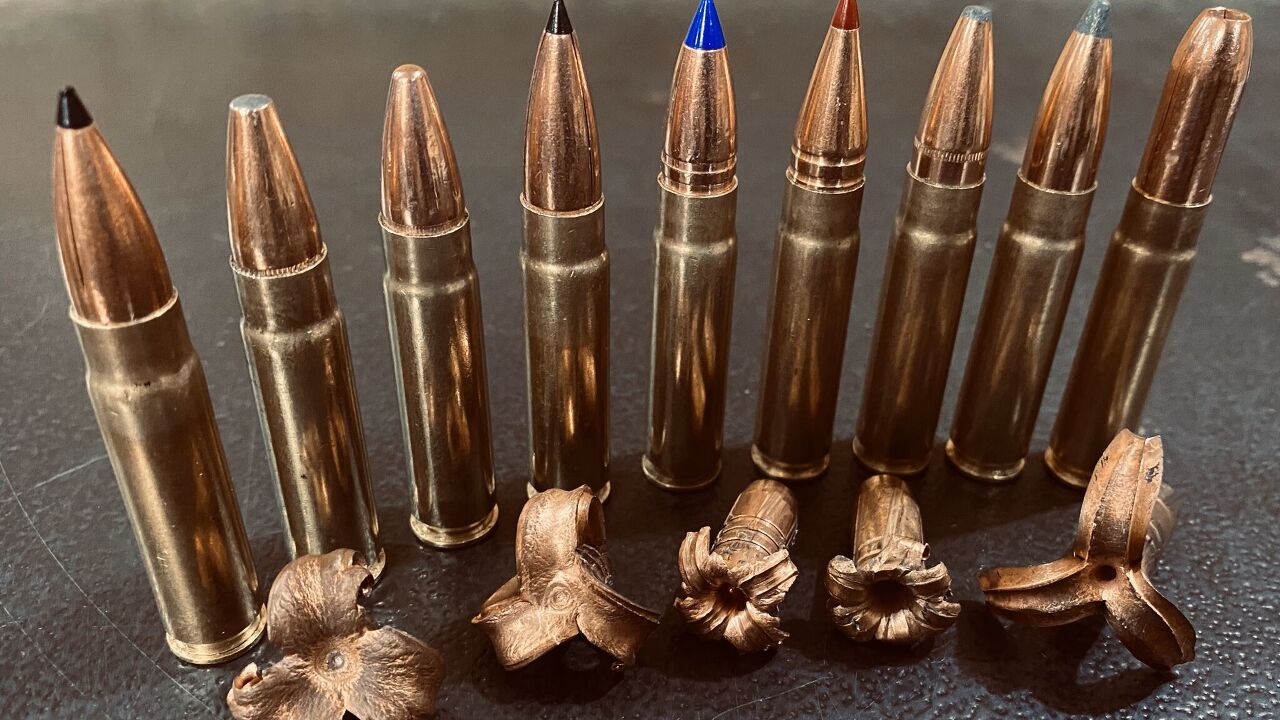
But what if you want more? The next step up that most silencer fans will be familiar with is the 8.6 Blackout. It takes the same theory as the 300 Blackout and scales it up for short actions, as opposed to the AR length of the 300 Black. The 8.6 is optimized for suppressed use with very heavy bullets in the 300-grain-and-up range. Many of these are solid copper designs with features like large petals that expand even at low velocities for improved terminal performance but like its 30-caliber cousin, the 8.6 Black can also run supersonic. With its 0.338 bullet diameter and 3.08 parent case, supersonic performance is somewhere in the ballpark of a light 338 Federal due to reduced case capacity. The 8.6 has done well and has a cult following among its users. It was also the cartridge that took home first place in the first subsonic suppressed precision rifle match that we talked about last week.
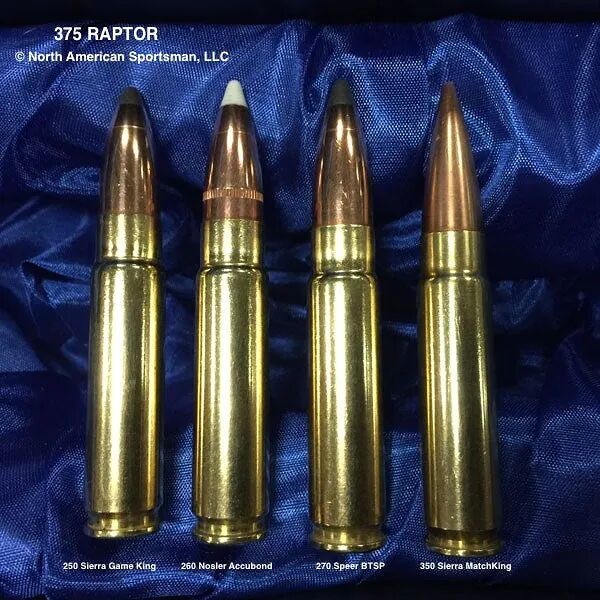
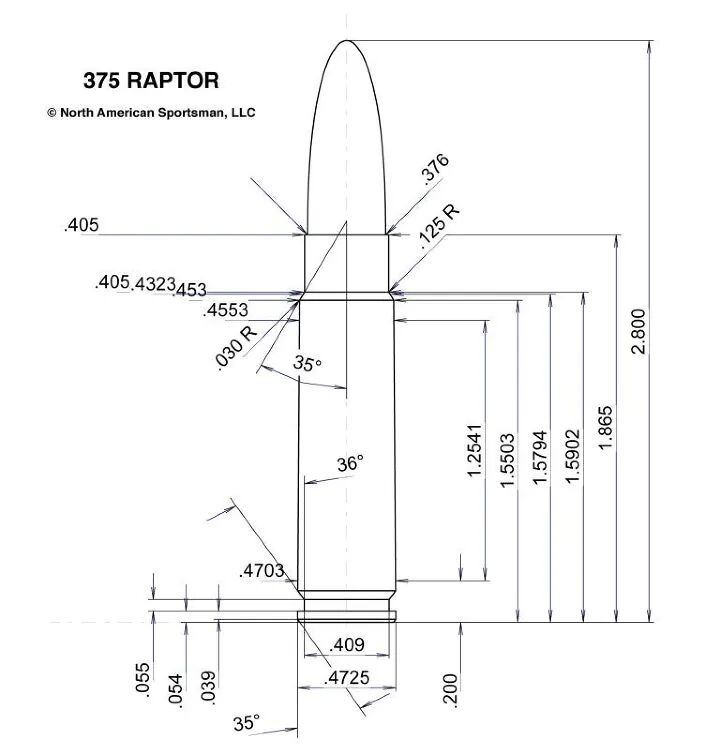
But again, what if you want even more? That's where a cartridge like the 375 Raptor comes in. Once again we are necking up the 308 to take a larger, heavier bullet, but where the 8.6 went to .338 diameter, the Raptor goes up to .375 of an inch. Thanks to the enduring popularity of the 375 H&H cartridge and newcomers like the 376 Steyr and 375 Ruger, there are a plethora of .375-inch bullets on the market. None of them are truly inexpensive, but many options exist. If you really hate having money, bullets designed for use in cartridges like the 375 Cheytac are also on the table.
The 375 Raptor fires subsonic loads up to around 400 grains. With subsonic cartridges, there is a speed limit. None of them can exceed the speed of sound, which limits them all to around 1,500 or 1,100 ft/s depending on elevation. If the bullet can't go any faster, the only way to increase energy is to add mass. These 350- or 400-grain bullets in the 375 Raptor pack a lot of oomph.
As with the other cartridges we have discussed, there are also supersonic options in the 375 Raptor bullet weights, ranging all the way from 300 grains at the top end down to 180 grains. One that looks especially interesting to me is the 235-grain load pushed to around 2,400 ft/s. That is almost identical to a reduced-recoil 375 H&H load. While that should not be a load that you take to Africa to pursue animals that can and will kill you, it would absolutely handle just about anything in North America. Thanks to the 308 parent case it will fit in any short-action option, rather than resorting to the specialized magnum-length action needed for the 375 H&H.
So what does it take to set up a 375 Raptor? You need:
- a short action receiver
- a barrel chambered for the cartridge
- 308 brass
- reloading dies
That's it. TFB writer emeritus Nathan profiled the cartridge briefly back in 2016. Here are some of the pictures from that article: