Springfield Echelon VIS: The Smartest Optic Mount Going
Mounting an optic to a gun has always been a bit of a convoluted nightmare. Over the last five years or so we've seen more standardization on smaller micro-compact guns, most of them landing on the RMSc/K footprint, but the larger guns are still all over the place.
Most manufacturers have their own “proprietary” optic cut, which in my opinion exists to maximize how many optics you can bolt on with the help of an adapter plate. So basically you picked the gun, picked the optic, and then bought the plate to marry the two together.
But nobody likes adapter plates. They cost real money, they raise the optic higher off the bore axis, and they pile on another chance for the mount to fail and the optic to shake loose.
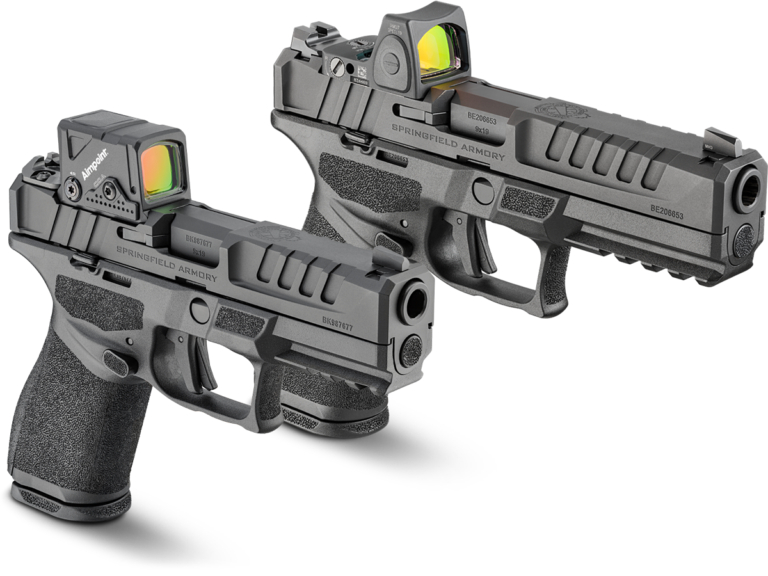
So over the last few years a handful of optic makers started building optics, or whole series of optics, cut for one specific manufacturer's slide. Think the Holosun SCS line, with versions available for models like the HK VP9, the Walther PDP, and the S&W M&P. C&H Precision's Direct Mount optics are available for many of the same. It shrinks the menu of optics that direct-mount to your gun, but hey, it beats running a plate.
Then came the Variable Interface System (VIS), which I'll admit I didn't pay much attention to at first. First because I'm an HK guy, not a Springfield guy. Second because I've grown tired of the optic-footprint-innovation sales pitch.
The more I learned about the VIS, though, the more I had to admit it's pretty dang clever.
What the Variable Interface System Actually Does
Strip away the marketing and the Springfield Echelon VIS is really just a pin system. Pull the cover plate off the Echelon's slide and you find a grid of threaded holes plus a set of self-locking pins.
You configure those pins to match the footprint of your optic, set the optic straight onto the slide, and torque it down. No plate. The optic bolts directly to the steel.
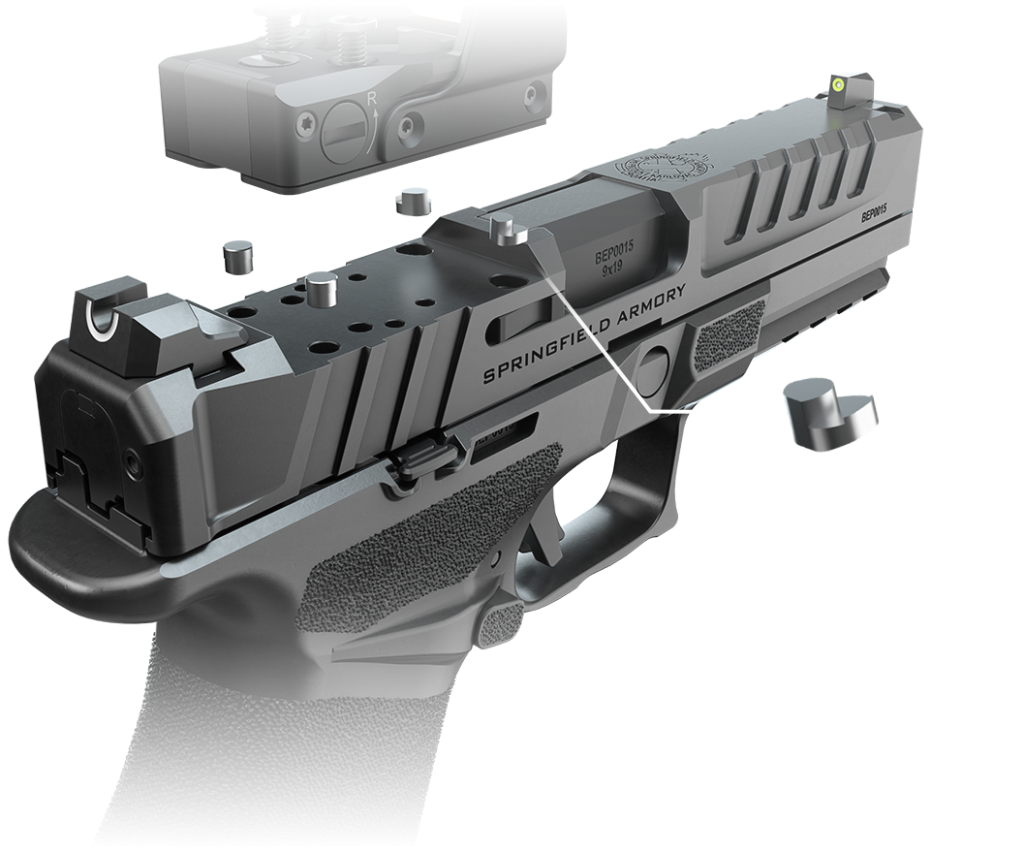
Springfield ships the Echelon with three pin sets covering three of the most common footprints in the carry world: the Trijicon RMR, the Leupold DeltaPoint Pro, and the Shield RMS. Between those three families, Springfield's own compatibility material lists over 30 optics that mount directly, no plate required.
But the main innovation here isn't just having pins that allow so many direct mount options, it is what happens with the pins as you tighten down the optic. The forward pins have a “rocker” geometry that as you torque the mounting screws, the optic presses down the outer corners of the pins causing the pins to press laterally and tighten against the inside of the optic's mounting index holes. That sideways pressure squeezes out the left-to-right and front-to-back play that plates are famous for. You get a tighter lockup than a plate gives you, and you get it with fewer parts in the stack.
Why I Think It's the Best Approach on the Market
I don't hand out “best” lightly, so let me actually make the case.
It removes a failure point
An adapter plate is a layer of parts held on by screws, and every screw is a chance for something to walk loose. A plate sits between the slide and the optic, with one set of screws holding the plate down and sometimes another holding the optic to the plate.
The VIS deletes that middle layer entirely. Fewer parts, fewer screws, fewer ways for your zero to wander.
It sits the optic lower
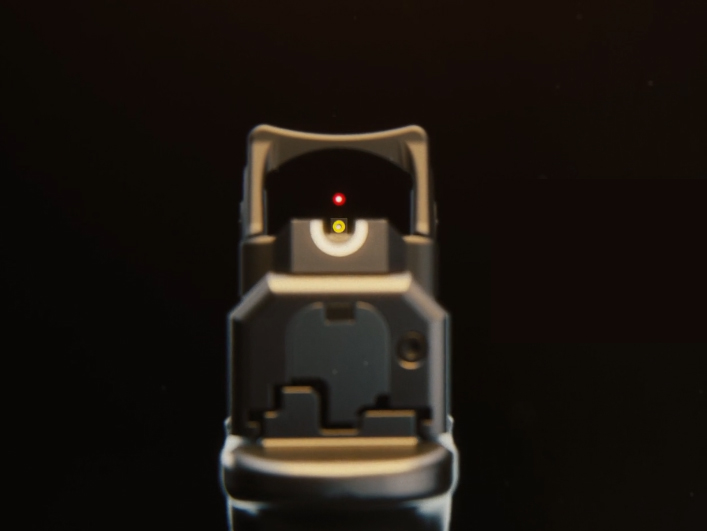
With the plate gone, the optic drops closer to the bore. A lower optic gives you a more natural sight picture and a far better shot at co-witnessing your iron sights through the window.
If your optic ever dies on you, that lower glass is the difference between still having a usable backup and squinting over the top of a dead screen.
It doesn't lock you into one optic
Buy a plate-based gun and you've quietly committed to chasing the correct plate every time you change optics.
The VIS lets you reconfigure the pins for a different footprint family whenever you want. Your slide is not married to one optic for the life of the gun.
Where You Might Still Need a Plate (and Why It's Still Better)
I'm not going to pretend the system direct-mounts the entire universe of optics. It covers three of the most popular footprints out of the box, the Trijicon RMR, the Shield RMS, and the Leupold DeltaPoint Pro, and through those it handles the large majority of what people actually carry. Run a less common footprint and you may still need an adapter plate.
Here's the good news, though. Even on the plate route, the Echelon comes out ahead. Springfield has some adapter plates available that accommodate a lot of other optics and you still benefit from that lateral pressure that locks it in better than alternative options. That said, I can't imagine justifying using a plate when you have all the RMR, RMS, and DeltaPoint Pro optics on the market to direct mount.
The Best Holster for Your Optic Ready Echelon
So you've got an Echelon, you've mounted whatever optic you like, and the VIS made it painless. Now you have to carry the thing.
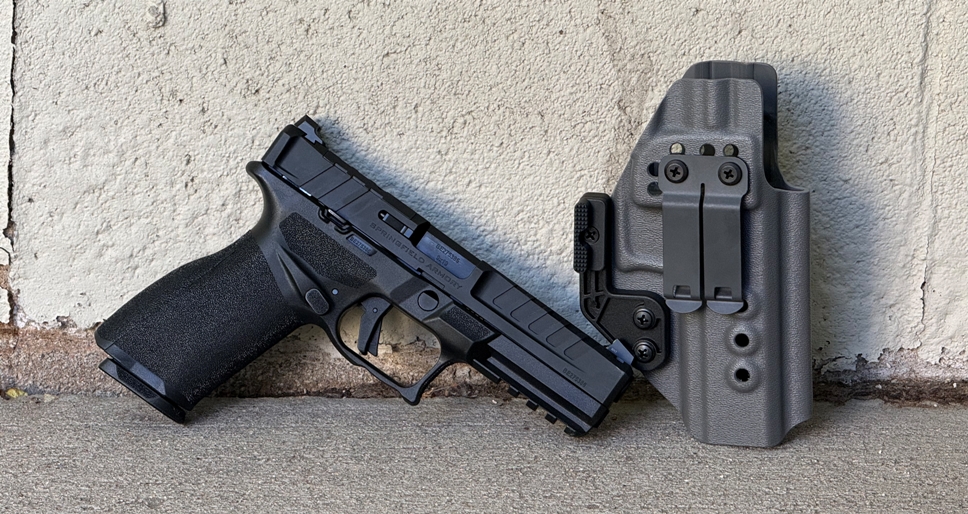
A pistol that accepts almost any optic is only useful if your holster clears almost any optic. Plenty of holsters are molded for the bare slide, or cut for one specific sight, and the moment you swap optics you're back to shopping.
You did not buy a modular optic platform just to get boxed in by your holster.
Two Holsters Built for the Echelon, Optic and All
If I can be so bold as to share a biased but educated opinion, our sister brand, KSG Armory, makes two holsters I'd carry an Echelon in without a second thought, and both come optic cut by default.
Before you write off “optic cut” as marketing fluff, understand how KSG builds these. A core component of the design is to cut the holster is such a way that nothing from the holster is in a position to interfere with ANY optic mounted to the rear of the slide. And that has to be done in a way that doesn't compromise the strength and durability of the holster.
Further, the fit needs to be exact and an issue we often see is that a lot of holster companies mold over a blue gun or a dummy that's “roughly the same size.” Blue guns are not perfect replicas. KSG folds every holster over the actual firearm you order it for. Your Echelon holster is shaped on a real Echelon, not a stand-in.
They're made to order, so there's a short lead time. The trade you get for it is a holster fit to your exact gun instead of a one-size-fits-most guess.
The Lexington (IWB and AIWB)
The Lexington is KSG's flagship inside-the-waistband holster, and it's the one I point most carriers to first. It's optics ready out of the box, with a sight channel generous enough to clear suppressor-height irons, so whatever you've mounted on that VIS slide is going to fit.
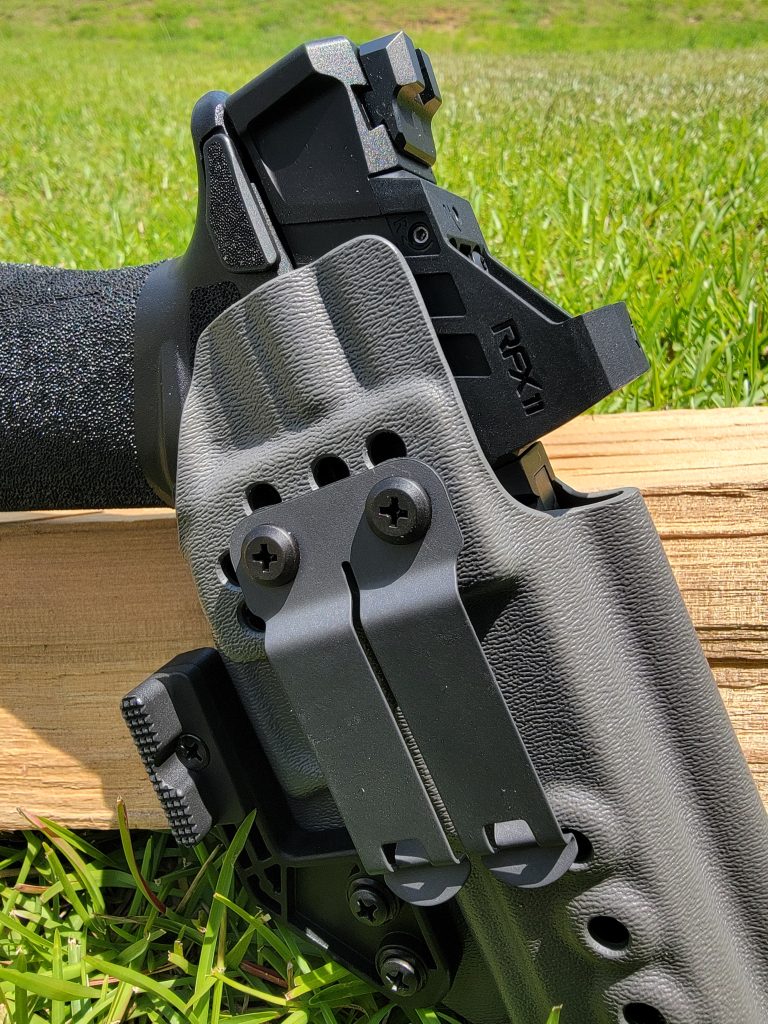
It's ambidextrous by design and runs the DCC Monoblock clip with adjustable ride height and cant. It ships with a ModWing and foam wedge for appendix carry, plus threadlocker so your hardware stays where you put it.
It's made to order for your specific Echelon. Take a look at the KSG Lexington here.
The Trenton (OWB)
If you carry outside the waistband, the Trenton is the one. It started life as Dave Spaulding's Enhanced Handgun Combatives EDC holster, and it carries his design philosophy: a rig that wraps to your body so an OWB holster actually conceals instead of printing like a brick under your shirt.
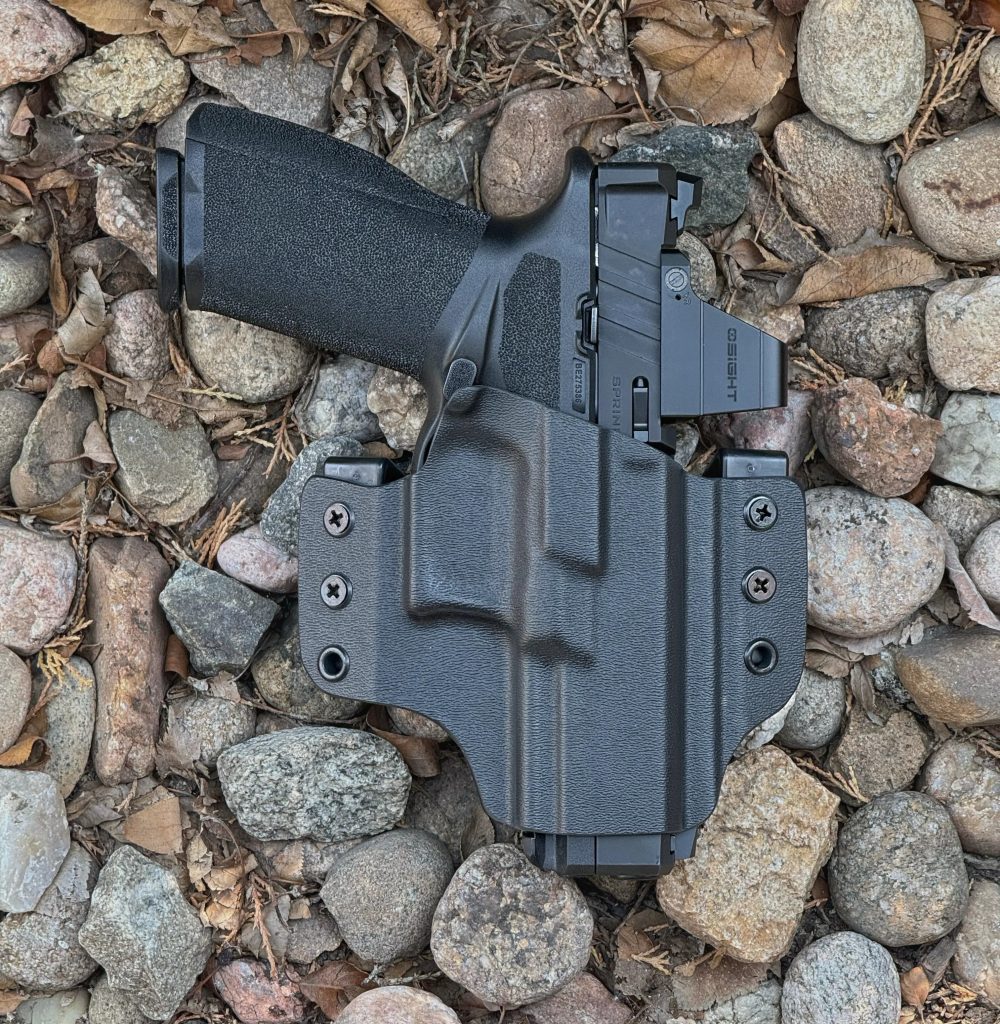
Like all KSG holsters, it's vacuum-formed on CNC molds from .080-inch Boltaron, which runs about 25 percent thicker than the kydex a lot of companies use and shrugs off both summer heat and winter cold. It's optics-ready, same as the Lexington, and it's backed by a 60-day satisfaction guarantee.
Carry an Echelon outside the waistband? Look at the KSG Trenton here.
The Bottom Line
The VIS is the rare case of a manufacturer making your life simpler instead of selling you another accessory. It mounts most carry optics directly to the slide, sits them low, and lets you change your mind later without buying new parts.
Pair that with a holster built around the Echelon and its optic, and you've got a carry setup with no weak link in it.
If you're running an Echelon, do two things. Mount your optic on the VIS the way Springfield tells you to, torque included. Then carry it in a holster that was folded over a real Echelon, the Lexington for inside the waistband or the Trenton for outside it.
Your gun earned a real holster. Give it one.