Supreme Court AR-15 Case May Put Magazine Bans in the Crosshairs
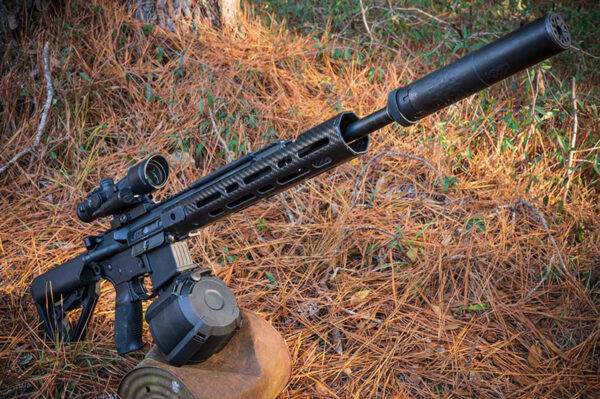
As the 2025 session came to an end, the Supreme Court gave us a lovely parting gift: It agreed to review Grant v. Higgins* (25-566), Connecticut’s assault weapons ban, and Cutberto Viramontes v. Cook County (25-238), Cook County, Illinois’ version. In its grant of certiorari, the court rolled Grant into Viramontes with arguments to be scheduled for the Fall 2026 Term.
While there are lots of issues raised by Grant and Viramontes, the Supreme Court limited consideration to a single question: “Whether the Second and Fourteenth Amendments guarantee the right to possess AR-15 platform and similar semiautomatic rifles.”
Presumably, the court’s benchmark will be the Heller standard: In common use for lawful purposes, a test the AR-15 will easily pass with flying colors.
Gun rights and Second Amendment advocates were delighted the court, after years of kicking this particular can to a future term. However, there was a lot of disappointment because the court punted magazine bans again.
The Magazine Ban Question SCOTUS Didn’t Take
This is frustrating; Duncan v. Bonta was originally filed in 2017, and this is the second time it has been before the Supreme Court. The court GVR’d the case in 2022, and it went through the entire Ninth Circuit appellate process for a second time.
But this time, there’s a twist that could resolve the issue sooner rather than later.
Connecticut General Statute § 53-202a extends well beyond evil black rifles. It also includes the state’s ban on standard capacity magazines.
The Heller standard could be applied here, as well, but it isn’t needed. If AR-15s and other semiautomatic firearms are covered by the Second Amendment, so are their parts – including magazines.
Magazines Are Not Optional Accessories
One of the silliest debates in gun control is whether detachable magazines are optional accessories or necessary components. Accessory adherents stake their argument on the ability use magazines of different capacities without otherwise affecting the gun. The design of the AR-15 platform rebuts this claim because the user can easily change the rifle’s caliber from .223 Remington to the slightly more powerful .300 AAC Blackout by exchanging the barrel.
Haven’t seen anyone claim the barrel is an accessory.
Since the Kalthoff Repeater was developed in 1630, repeating firearms have always required a magazine, cylinder, or similar mechanism. This is just as true for a bolt-action, lever-action, or pump-action rifle as it is for an automatic or semiautomatic rifle.
Even the most ignorant, diehard gun-grabber will have to admit a repeating firearm isn’t really a repeater if there’s not a fresh cartridge on hand. This means a magazine is a critical component for a repeating firearm to operate as intended by the manufacturer.
The objection that a rifle could be manually loaded with one shot at a time is frivolous. It misses the point. A repeating firearm was designed and manufactured to fire multiple shots without reloading and was purchased by the consumer at least in part for that reason.
What sets automatic and semiautomatic firearms apart is the fact they are self-loading. They require no mechanical action by the user. A round is fired and the gun utilizes recoil or the gases created by the burning powder to eject the spent cartridge, strip a fresh round from the magazine, and reload the chamber.
Remington’s first semi-auto long gun was the 1906 Autoloading Rifle, which debuted a year after the Winchester Model 1905, the first semiautomatic rifle with a detachable magazine. The Winchester Model 1907 was the first to offer a magazine holding more than ten rounds.
The first ban on ‘large-capacity magazines’ was enacted in New Jersey in 1990, 83 years after the Winchester Model 1907 was introduced.
How does all of this work to justify adding magazine restrictions to the Supreme Court’s consideration of Viramontes? By recognizing magazines as necessary parts of a firearm, they automatically become weapons for Second Amendment purposes.
The AR-15, M1 Carbine, and Standard-Capacity Magazines
The Colt AR-15 Sporter went on sale in 1964. The standard (and original) magazine held 20 rounds. Colt did offer an insertable spacer that reduced capacity to five rounds to comply with state hunting laws.
The first AK-47 variant in the U.S. was the Valmet M62/S imported by Interarms beginning in 1969. Its sole magazine held 30 rounds.
Of course, there was always the World War II M1 Carbine sold as surplus in the hundreds of thousands by the U.S. government beginning around 1960. There was a choice of two magazines holding either 15 or 30 cartridges.
It’s important to remember both the Colt AR-15 and the Valmet M62/S were intended for sales into the civilian market.
So there is a solid link between what the ban fans call assault rifles and magazines holding more than ten rounds.
The Rifle Case May Reach Further Than Rifle Bans
There has never been a verifiable reason for a ten-round limit. It’s been justified as based on an estimate the number of rounds fired in a citizen engagement. Using the same standard, police should be limited to carrying a total of 32 rounds instead of the 45 to 51 carried by uniformed patrol officers.
Former U.S. District Judge Roger T. Benitez questioned the ten-round limit’s provenance when he heard Duncan v. Bonta for the second time in September 2023. In his ruling, he found California’s defense “unpersuasive.”
It may seem like I took a long, roundabout way to get here but it’s the details underlying the reasoning. And it could reshape Duncan and Gator’s, or give the Court a reason to send them back for reconsideration.
*Originally filed as Grant v. Rovella
About Bill Cawthon
Bill Cawthon first became a gun owner 55 years ago. He has been an active advocate for Americans’ civil liberties for more than a decade. He is the information director for the Second Amendment Society of Texas.