Supreme Court’s Wolford Decision Could Blow A Hole In New Jersey’s AR-15 Ban Defense
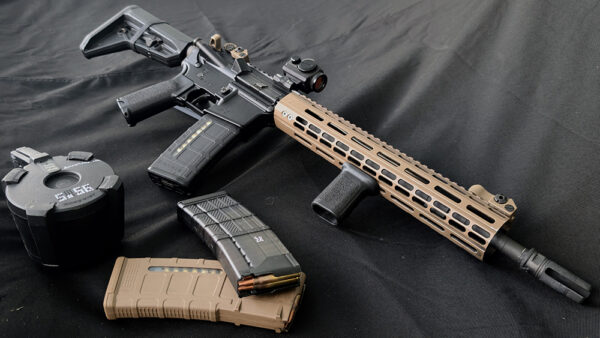
The Supreme Court’s decision in Wolford v. Lopez was about Hawaii’s attempt to turn most private property open to the public into gun-free zones by default. But the ruling may have just handed gun owners in New Jersey a powerful new weapon in the fight against the state’s ban on so-called “assault firearms.”
On June 26, attorneys for the Cheeseman plaintiffs in Association of New Jersey Rifle and Pistol Clubs v. Attorney General notified the Third Circuit that Wolford directly affects the pending challenge to New Jersey’s semiautomatic firearm ban.
Their point is simple: New Jersey cannot force gun owners to prove at the starting line that banned firearms are “in common use” before the Second Amendment even applies. Under Wolford, the first question is much more basic.
Does the law regulate “Arms”? If yes, the Constitution is already in play.
We just filed this letter with the Third Circuit in our lawsuit challenging New Jersey’s “assault weapon” ban, where we argue that yesterday’s Wolford decision strengthens our case: https://t.co/XrjnZkKX5L pic.twitter.com/LGzUorELot
— Firearms Policy Coalition (@gunpolicy) June 26, 2026
Wolford Reaffirms The Plain Text Test
Justice Samuel Alito, writing for the Court in Wolford, explained that Bruen’s first step asks whether the law falls within the Second Amendment’s plain text. That includes whether the law concerns “Arms,” meaning weapons “customarily used for offensive or defensive purposes,” according to the Court.
Phrasing matters. The Second Amendment does not protect only whatever gun a state lawyer is willing to admit is useful for home defense. It does not protect only handguns. It does not protect only muskets. It protects “Arms.” And Wolford confirms that the category includes weapons customarily used for offensive or defensive purposes. That is a problem for New Jersey.
That matters in Cheeseman because New Jersey’s ban plainly regulates firearms. Not accessories. Not conduct divorced from arms. Firearms.
The Cheeseman letter seizes on that language, telling the Third Circuit that “the only predicate question” is whether the law concerns “Arms.” The plaintiffs argue that the answer is “beyond dispute,” meaning the Second Amendment presumptively protects possession of the banned firearms. From there, the burden shifts to New Jersey.
That is the part anti-gun states hate. They want gun owners trapped in a never-ending preliminary debate over whether AR-15s, modern semiautomatic rifles, and similar arms are common enough, useful enough, or favored enough by judges to count. Wolford makes that harder.
New Jersey’s Common-Use Argument Takes A Hit
New Jersey has argued that “common use” belongs at the threshold stage of the case. In other words, the state wants courts to ask whether the banned arms are common before deciding whether the Second Amendment applies.
The Cheeseman plaintiffs say Wolford rejects that exact move.
Quoting Wolford, the letter notes that such considerations are “out of place at Bruen’s first step.” At that stage, the Court said, the question is whether the law falls within the Second Amendment’s “plain text.” That distinction is critical.
Common use still matters, but not the way New Jersey wants it to matter. Under Heller and Bruen, the government may try to defend a ban by proving the arms are “dangerous and unusual.” But that is the government’s burden. It is not supposed to be a precondition gun owners must satisfy before their rights are recognized.
New Jersey does not get to say, “Prove your guns are protected before we have to justify banning them.” Wolford says the plain text comes first.
Barrett’s Concurrence Makes The Point Even Sharper
Justice Amy Coney Barrett’s concurrence is also important for Cheeseman. She warned against letting governments “smuggle additional limits” into the plain-text stage of Second Amendment analysis.
That is exactly what New Jersey appears to be trying to do. If a state can redefine Bruen step one by importing parts of the historical analysis into the threshold question, then the government can water down the Second Amendment before the real test even begins.
That gives the Cheeseman plaintiffs a clean response. The Second Amendment protects “the right of the people to keep and bear Arms.” Once a ban targets arms and restricts possession, the state has to justify the restriction through history and tradition.
Jackson’s Dissent Helps Clarify The Fight
Interestingly, the Cheeseman letter also points to Justice Ketanji Brown Jackson’s dissent. Jackson disagreed with the majority’s application of Bruen, but she described the majority’s rule as requiring courts to look only to the Second Amendment’s “plain text” at step one.
That matters because even the dissent understood what the majority had done. Wolford separates the plain-text inquiry from the historical-analogue inquiry. The plaintiffs in Cheeseman are now telling the Third Circuit to apply that separation to New Jersey’s rifle ban.
The End of Assault Weapon Bans?
Wolford was not an “assault weapon” case, and it did not directly decide whether bans on AR-15s are unconstitutional. But Supreme Court decisions often reshape pending cases by clarifying the test lower courts must use.
Here, the clarification is bad news for New Jersey.
Modern semiautomatic rifles are unquestionably “Arms.” They are weapons. They are owned by millions of Americans. They are used for lawful purposes, including self-defense, training, competition, and home protection. Under Wolford, that should be enough to trigger Second Amendment protection at the plain-text stage.
Then New Jersey must prove its ban fits the nation’s historical tradition of firearm regulation. That is where these bans have always been weakest. There is no founding-era tradition of banning an entire class of commonly owned firearms because politicians dislike their appearance, features, or popularity.
The Third Circuit now has fresh Supreme Court guidance sitting directly in front of it.
For New Jersey gun owners, Wolford may not be the final shot in Cheeseman. But it may have just made the state’s job a whole lot harder.
About Duncan Johnson:
Duncan Johnson is a lifelong firearms enthusiast and unwavering defender of the Second Amendment—where “shall not be infringed” means exactly what it says. A graduate of George Mason University, he enjoys competing in local USPSA and multi-gun competitions whenever he’s not covering the latest in gun rights and firearm policy. Duncan is a regular contributor to AmmoLand News and serves as part of the editorial team responsible for AmmoLand’s daily gun-rights reporting and industry coverage.