The Best Elk Hunting Cartridges in 2026
For more than a hundred years, hunters have sought out the optimal cartridge for taking elk efficiently and effectively. Our choices have evolved as rifle, optic, and bullet technologies have improved, and we have a lot of excellent options to choose from. Picking the best elk cartridge will depend on what will work best for you, how you hunt, and your own strengths and limitations. Thankfully, we aren’t pigeon-holed into just a few choices.
In this story, Spomer does an excellent job of breaking down some of his top choices for elk and explains why these time-proven classics work so well. If you’re already slaying elk with one of them, you don’t need any convincing about their effectiveness — or need to change anything. But if you’re looking for the best options today, there are several modern cartridges our staff has been fielding that are quite appealing when compared to the old breed.
Best Modern Elk Cartridges
- 7mm PRC
- 7mm Backcountry
- 6.5 PRC
- 6.5 Creedmoor
- 6mm Creedmoor
Best Classic Elk Cartridges
- .338 Winchester Magnum
- .300 Winchester Magnum
- 7mm Remington Magnum
7mm PRC
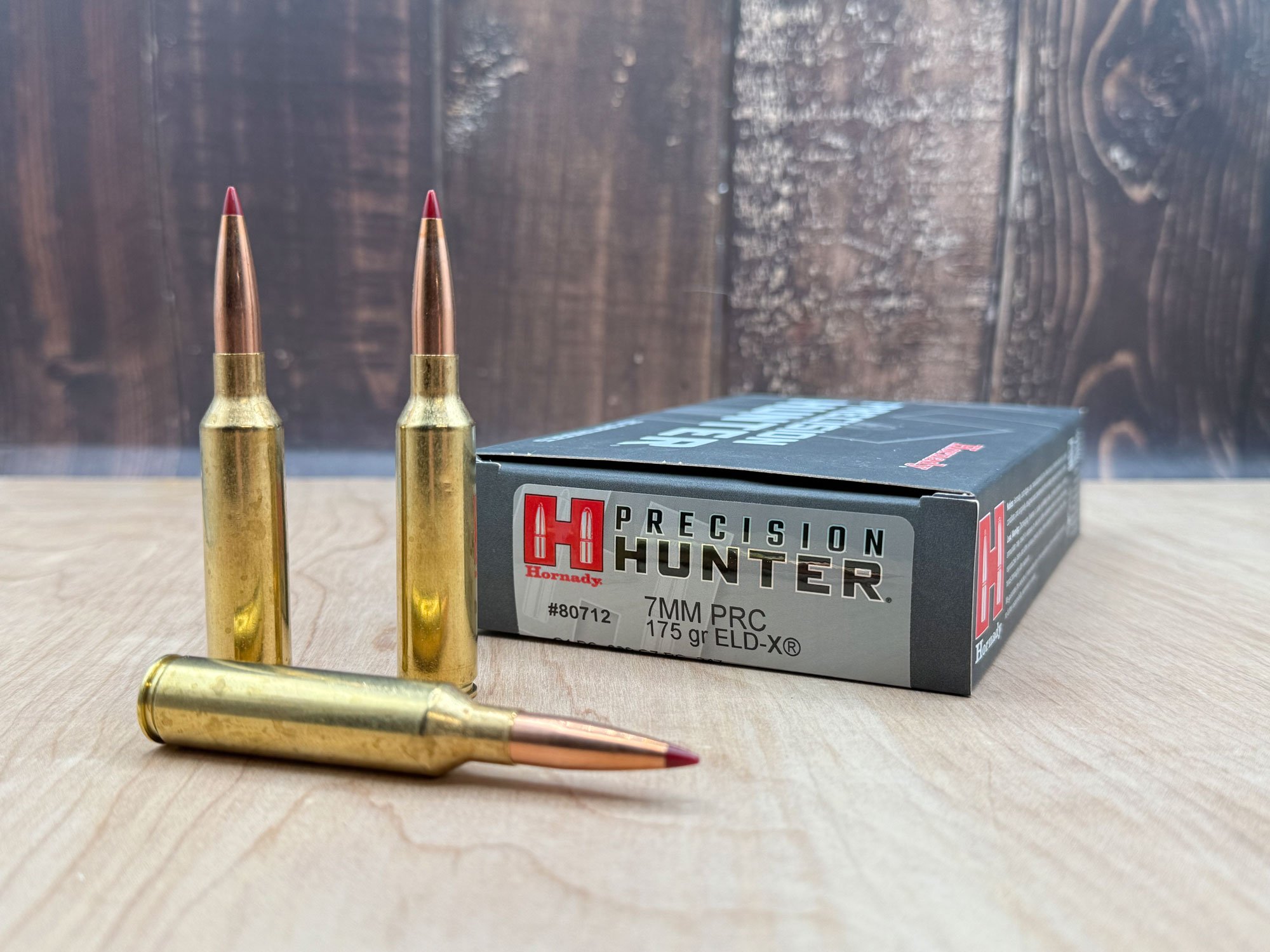
There isn’t a more popular modern elk cartridge than the 7mm PRC, and that’s for good reason. It’s designed specifically to deliver efficient, heavy-for-caliber 7mm bullets that maintain usable velocity at nearly any practical distance an elk hunter might shoot. The generous head height of the 7 PRC, like other modern cartridge design cartridges, lets it handle these without impinging on the powder column, and we get an efficient package that isn’t too heavy on recoil, bucks the wind like crazy, and delivers excellent terminal performance.
In factory offerings, you’ll commonly see bullets in the 165- to 195-grain range, depending on their construction, with monolithic copper bullets at the lighter end of the spectrum. Hornady’s 175-grain ELD-X is a staple hunting load for the 7 PRC and you should expect to see around 2,900 fps from a 24-inch barrel and close to 2,750 fps from a 20-inch tube. If we consider both those longer and shorter-barreled options, at 7,000 feet of elevation, they give us roughly 900- and 750-yard windows where our velocity remains above 2,000 fps.

The biggest complaint, from many shooters, is that most current 7mm PRC offerings don’t quite live up to their velocity potential. That’s because Reloader 26 is a key ingredient in maximizing performance, and it’s simply not widely available. Even so, the 7mm PRC is an extremely capable and accurate elk cartridge, and many find it to be the ideal balance between the large magnums and smaller options.
7mm Backcountry
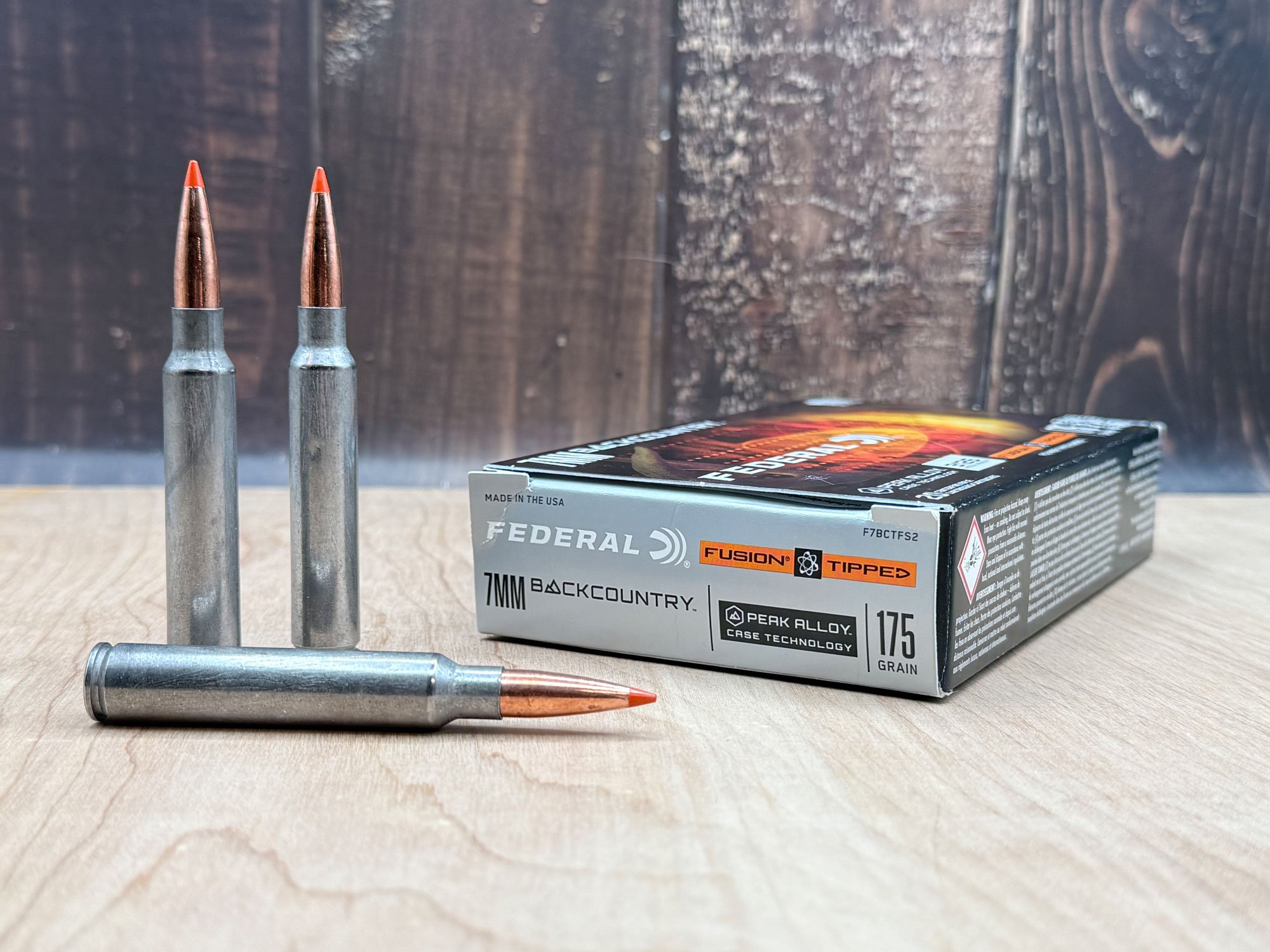
The 7mm Backcountry, recently introduced by Federal, is unique in that it’s the first high-pressure big-game-specific cartridges pushed out to the masses. While Sig’s .277 Fury, featuring a bi-metal case, would also be appropriate, the 7mm Backcountry was rolled out with the specific intent of driving heavy-for-caliber slugs at unmatched speeds. Specifically, the 80,000 psi cartridge sends these bullets from a 20-inch barrel at the same, or better, speeds, than many 7mm PRC loads using 24-inch barrels.
The Backcountry, which roughly resembles a .280 Remington cartridge, uses a Peak steel alloy case to accomplish this. The steel case acts as a containment vessel, so that the rifle only experiences the effects of the pressures it would endure with brass cases. This results in very real gains. The Outdoor Life team fired more 7mm BC rifles and ammo than any other publication upon its introduction, and Federal delivered on its velocity promises.
In my testing, Federal’s flagship 170-grain Terminal Ascent load produced average velocities of 3,105 fps from two different 20-inch barrels and 2,955 fps from a 16-inch barrel. Shooting Editor John Snow took a nice bull elk at 540 yards, with the 175-grain Fusion Tipped ammo, which averaged 2,995 fps and 2,850 fps from 20-inch and 16-inch barrels respectively. This added velocity, compared to the 7 PRC and 7mm Rem. Mag. likely doesn’t make too much difference at closer ranges, but effectively extends the distance at which the bullet will work properly.

Recoil is comparable to that of the 7 PRC and, because cartridges are smaller in diameter, most magazines can hold four or five rounds. The downside is that the promises of reloadability have fallen a little flat. The cartridge can be reloaded, but we are finding out that it’s quite a different animal than reloading traditional brass cases. Fortunately, factory ammo is available and, in our testing, we’ve found it shoots on par with factory ammo using traditional brass casings.
6.5 PRC
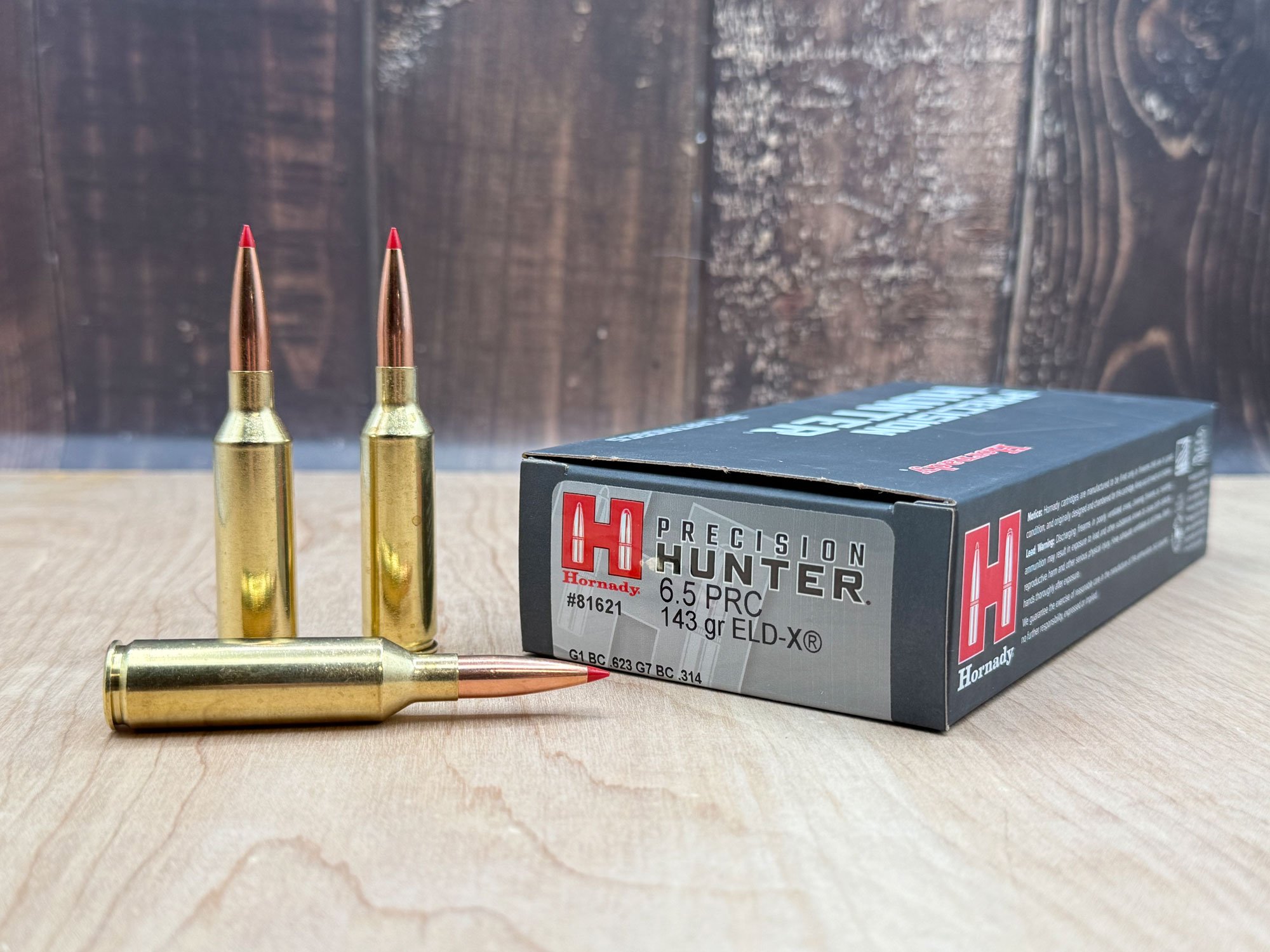
The 6.5 PRC is one of the most versatile modern hunting cartridges we have. Like the 7mm PRC, it features modern case geometry, tight chamber tolerances, and is built for both accuracy and efficiency. It will fire a 140-grain bullet at about 2,950 fps from a 24-inch barrel, and roughly 2,800 fps from a 20-inch. Hunters who choose the 6.5 PRC have lots of quality bullets to choose from. Whether you prefer bonded, cup-and-core, or monolithic, many of these 6.5 bullets will buck the wind better than traditional .270, 7mm, and .30-caliber options — while producing less recoil than most of those.

A factory load like Hornady’s Precision Hunter, using a 143-grain ELD-X will stay above 2,000 fps for approximately 800 and 700 yards with 24- and 20-inch barrels respectively, at 7,000 feet of elevation. While many bullets will expand reliably below 2,000 fps, It’s a relatively safe demarcation at which you can expect consistent results. For most elk hunters, a shot that long isn’t realistic and the 6.5 PRC delivers plenty of performance at shorter distances too. In fact, that standard 143-grain Factory load from a 20-inch barrel maintains better impact velocity beyond 350 yards than many excellent factory .300 Win. Mag. loads fired from 24-inch barrels.
6.5 Creedmoor
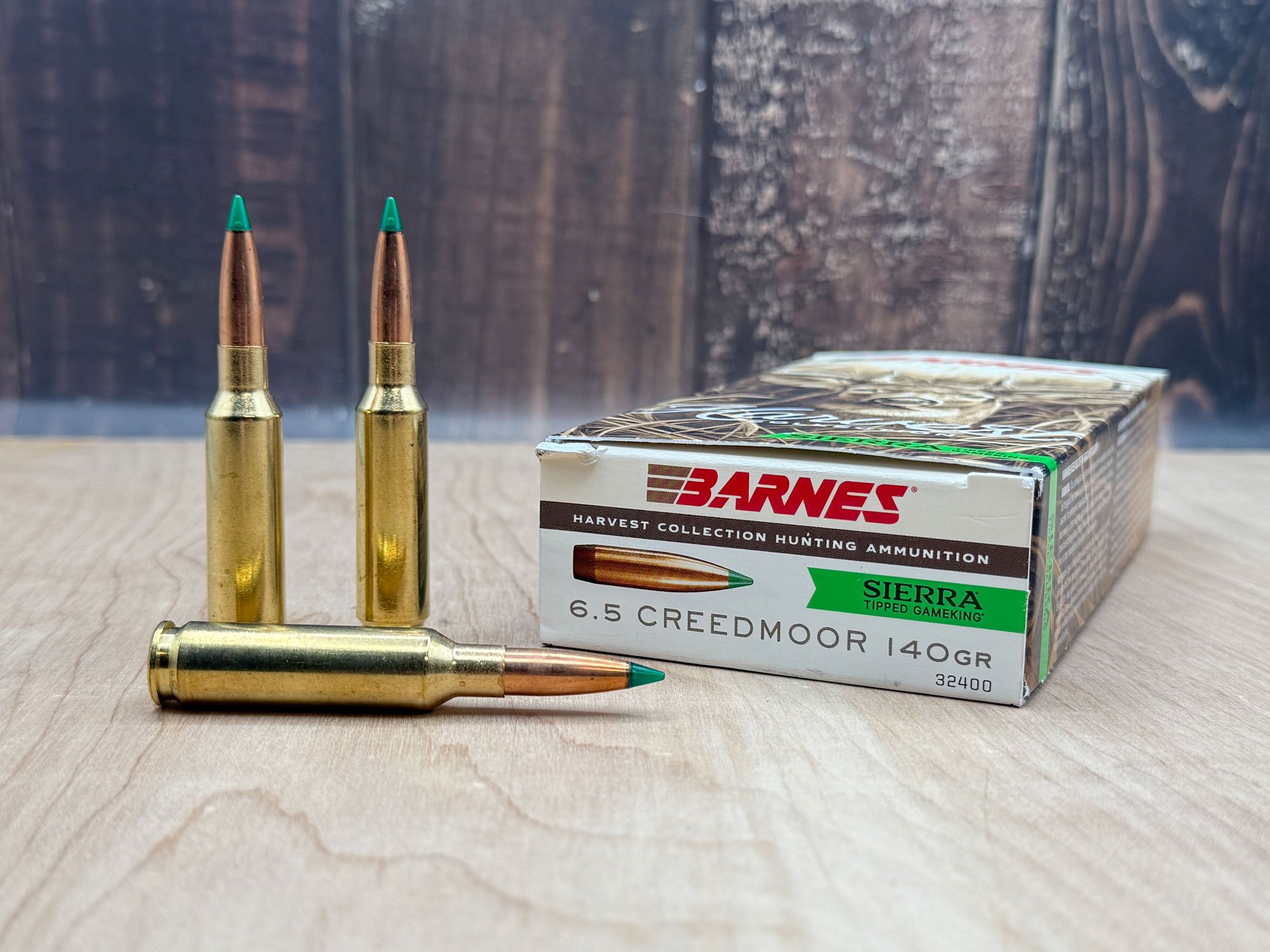
The 6.5 Creedmoor, which was designed for across-the-course high power competition, was just done right. Rather than a passing, overhyped fad, its rise was a slow burn, building for more than a decade to become the most prolific centerfire hunting cartridge in our nation — and across a lot of the world. There are few, except perhaps the .270 Winchester, that can rival the contentiousness it has produced too.
The Creed is a relatively mild-mannered short-action cartridge that fires the same heavy-for-caliber bullets as the 6.5 PRC. It has slightly lower powder capacity and, on average, lags behind the PRC by about 250 fps from 24-inch barrels. Most factory 140-grain offerings are around 2,700 to 2,750 fps. That gap narrows as barrels drop to 20-inches, but those standard 140-grain loads are typically in the 2,550 to 2,600 fps range. This results in a useful velocity window of around 550 to 650 yards with 20-, and 24-inch barrels respectively, at an elk-hunting elevation of 7,000 feet. Beyond that, velocities drop below 2,000 fps. Because it’s an easy and effective cartridge to shoot steel with at extended distances, hunters can make the mistake of not accounting for their impact velocity, which will produce poor results.
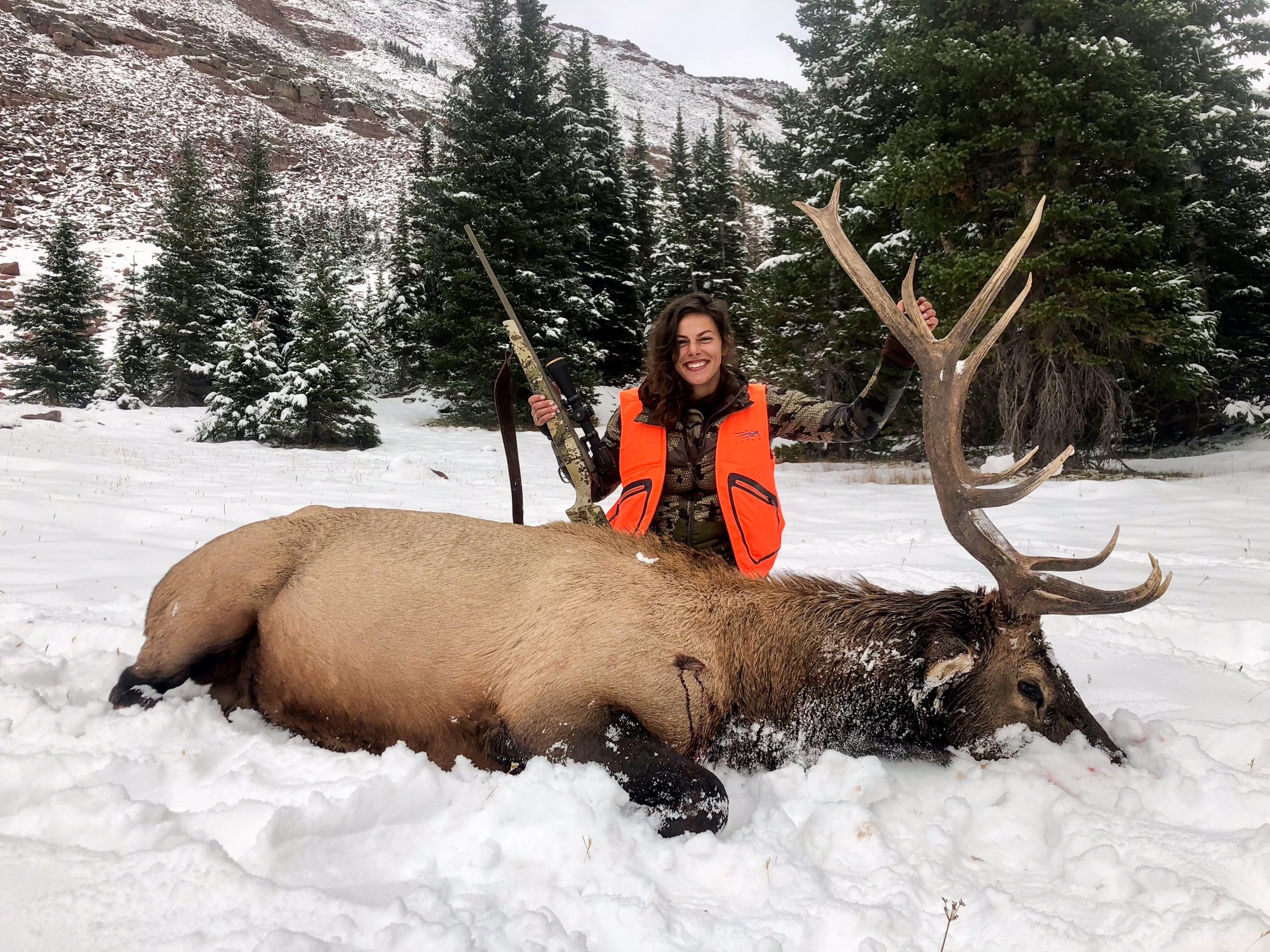
The Creed’s strengths are its inherent accuracy and ability to leverage efficient bullets that do well in the wind within its effective range. More importantly, it’s easy to shoot. Its low recoil, when coupled with good shooting positions and practices, can allow hunters to spot their own impacts and make quicker follow-up shots when necessary. Hunters also have the option to choose between many different brands and bullet styles in factory ammo. Magnum shooters often snub their nose at the 6.5 Creedmoor, but elk hunters who pick a good bullet and know the working limits of their system don’t seem to have a problem killing big bulls.
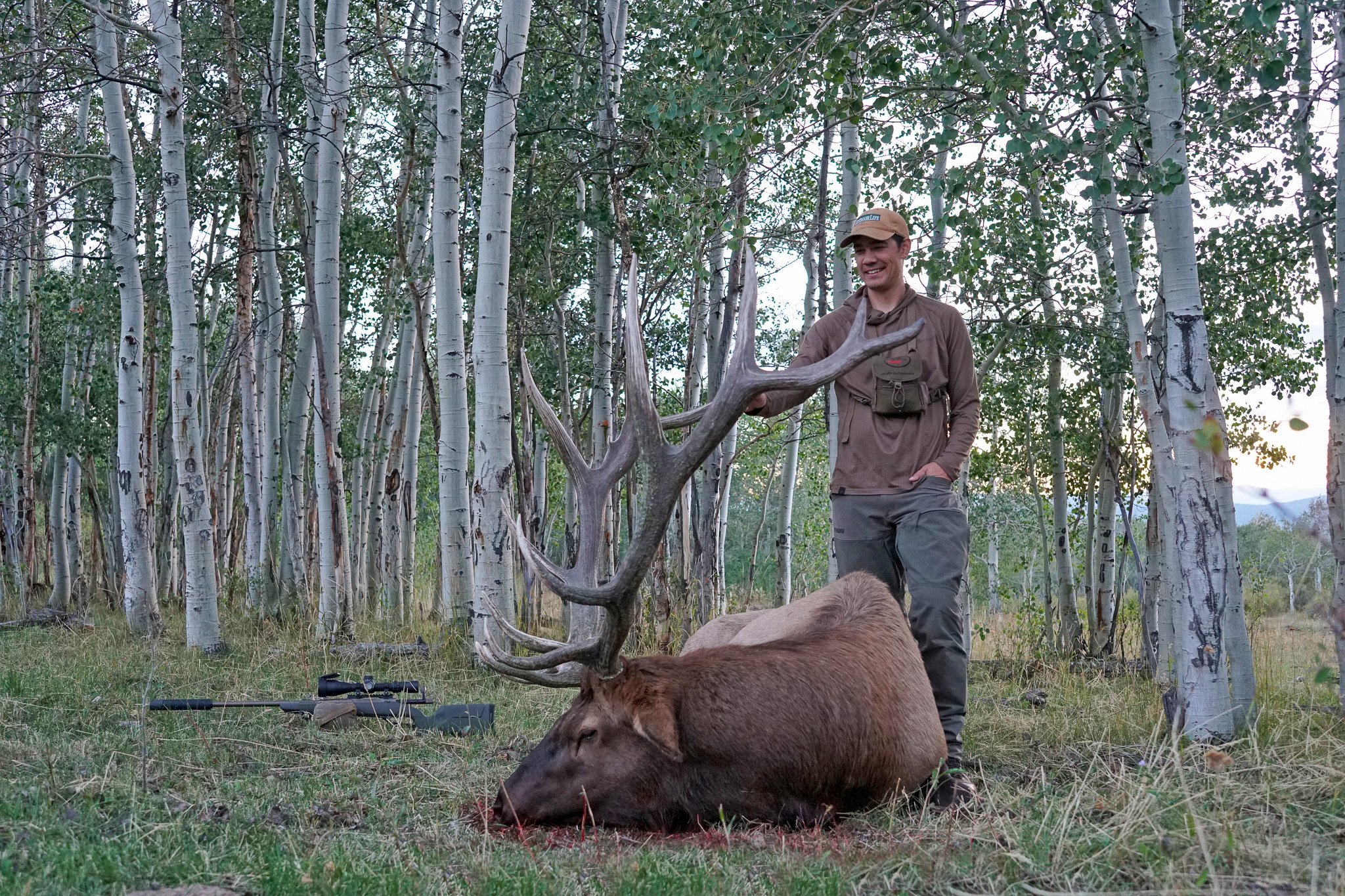
Something that makes the 6.5 Creed even more useful is the incorporation of the Peak steel alloy used in the 7mm Backcountry’s design. Labeled Plus Peak, this new line from Federal is high-pressure ammo that’s designed for standard 6.5 Creedmoor chambers. It’s supposed to meet or exceed the performance of the 6.5 PRC in barrels of equal length and, while we’ve found that results will vary slightly, it’s a big bump in velocity for the 6.5 Creedmoor, giving it a longer effective distance compared to standard offerings. The nice thing about this is that you can still use the plentiful brass-cased offerings for your 6.5, but have the option of using the Plus Peak ammo. The steel cases are also reloadable, but come with some caveats and quirks that we will cover after we finish our testing.
Read Next: Federal Plus Peak 6.5 Creedmoor Ammunition Just Killed the 6.5 PRC
6mm Creedmoor
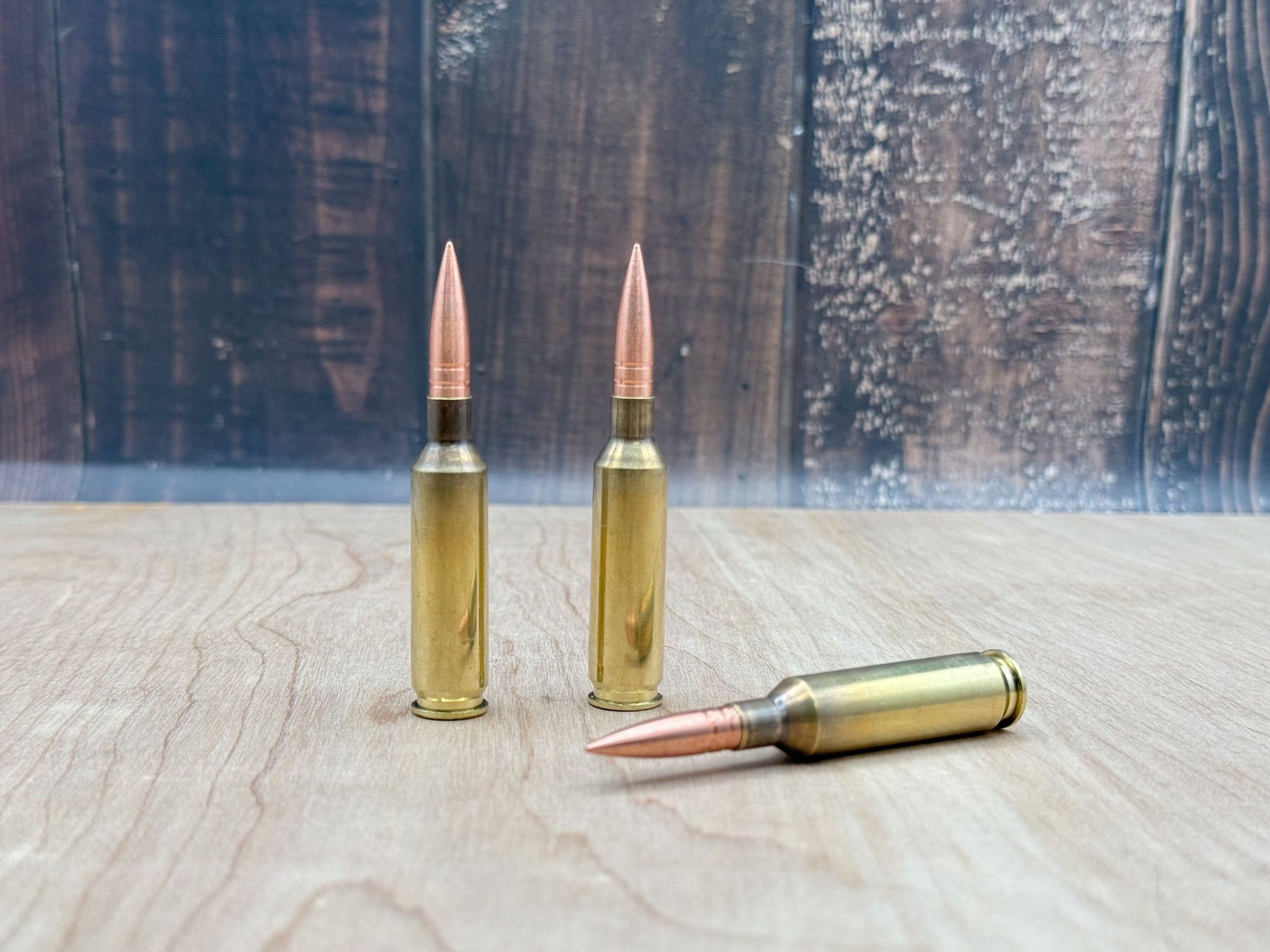
The 6mm Creedmoor is a wildcat rolled out as a collaboration between Hornady and OL shooting editor John Snow. A competition-minded cartridge like the 6.5, the 6mm Creedmoor has also been killing elk quite effectively. The 6 Creed fires .243-caliber bullets, but is designed with a 1:7.5-inch twist rate to handle heavy-for-caliber bullets in the 103- to 115-grain range, and it can work well with newer 116- to 120-grain options. It produces similar velocities as the classic .243 Win., but with more efficient bullets that maintain their downrange speeds better.
There are lots of elk hunters who will tell you that they haven’t seen much difference in the killing ability between .30-cal magnums and the 6mm using bullets like the 108-grain ELD-Match and the Sierra 116-grain Tipped MatchKing, and there are numerous hunting-specific bullets that work very well too. Proponents of the 6 Creed as an elk cartridge will point out that it produces better muzzle velocities than the 6.5 — about 2,900 fps with a 108-grain bullet from a 20-inch barrel — and maintain a longer usable distance than a similar rifle in 6.5 Creedmoor. The logic is that a 140-grain 6.5 bullet and 108-grain 6mm bullet of the same construction will produce pretty similar results at the same velocity — which lines up well with the gel testing results I have observed — so the 6 CM can effectively give the hunter a potentially longer effective distance than the 6.5 CM, with less recoil and better control.
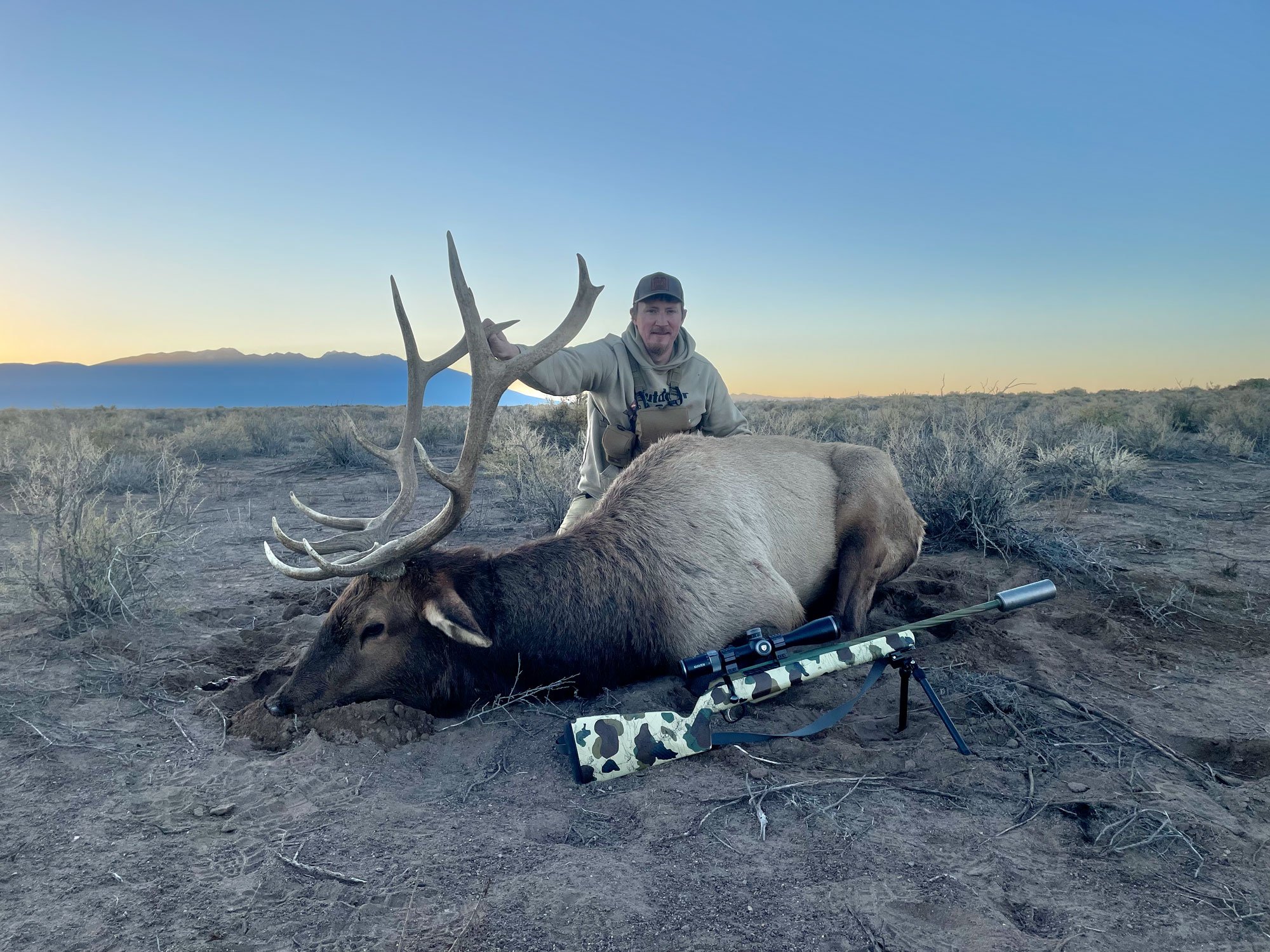
Many elk hunters will always think of the 6 CM as a gopher cartridge, but it’s proven to be quite effective and, depending on you and your hunting circumstances, can be a pretty ideal option. I recently took my 6 Creed to Colorado and filled two list B bull tags, and my buddy killed an additional bull, using 93-grain McGuire Ballistics Copper Rose bullets leaving the muzzle of my 20-inch barrel at 3,050 fps. Shots ranged from 150 to 370 yards and killed the bulls decisively.
Best of the Classics
By Ron Spomer
.338 Winchester Magnum
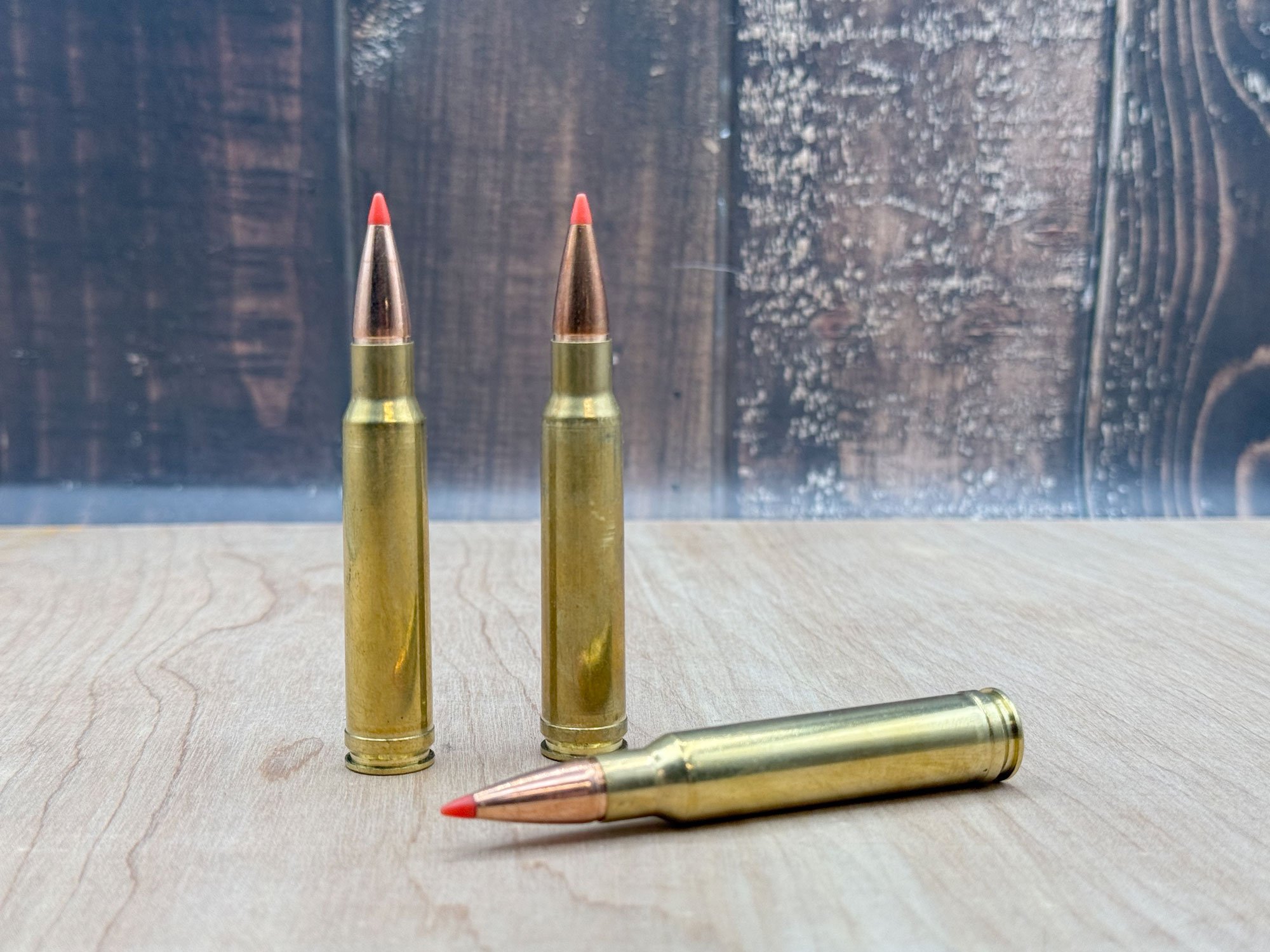
The general consensus is that this old, belted magnum is the best caliber for elk hunting. That is, the best of the best for terminating elk without beating up shooters. It has a near perfect balance of length, width, power, and recoil. With the right bullets, it can actually hit harder than the 375 H&H Magnum at longer ranges.
The .338 Win. Mag. arrived in 1958 as a short magnum derived from the .375 H&H belted magnum case. “Short” in the Elvis era meant standard or 30/06 length: 3.340-inches overall cartridge length, down from the 3.6-inches of the parent cartridge. This meant the .338 Win. Mag. could be chambered in the standard Model 70 rifles of the day and eventually most other standard length bolt action rifles. Think Remington M700s, Savage M110s, Ruger M77s, and even the Browning Autoloading Rifle. Any rifle strong enough to contain the 7mm Rem. Mag. or .264 Win. Mag. will handle the .338 Win. Mag. because maximum average chamber pressure is 64,000 psi. That’s 1,000 psi less than the little .22/250 Remington.
Winchester’s original loadings included a 200-grain bullet rated 3,000 fps, a 250-grain at 2,700 fps, and a heavy 300-grain at 2,450 fps from 24-inch barrels. Today most ammo makers also offer 225-grain bullets in a variety of controlled expansion configurations that retain mass well enough to penetrate better than the original 250-grain cup/core styles while delivering equal, sometimes more muzzle energy thanks to higher muzzle velocity. Most 225-grain factory loads are rated 2,750 to 2,800 fps, enough velocity to put about 3,900 ft-lb of energy into that little bullet. In comparison a 250-grain slug at 2,600 fps will churn up just 3,750 ft-lb.
With good form, a boat tail 225-grain .338 slug should rate a B.C. in the mid .4s to low .5s, good enough to provide maximum point blank range of 320 to 340 yards on a 10-inch target zone. At 300 yards that bullet should still carry nearly 2,700 ft-lb energy, which is close to what a 180-grain .308 Winchester coughs up at the muzzle. Elk don’t like any of this.
But elk stopping performance typically comes with a price: recoil. The 225-grain load in an eight-pound rifle should generate about 40.8 ft-lb of recoil energy. Heft up to a 10-pound rifle and kick will calm to just 32.7 ft-lb.
Handloaders report optimum performance with a sleek, high B.C., 225-grain bullet pushed to an impressive 2,882 fps from a 24-inch barrel. Zeroed 3.3 inches high at 100 yards, that projectile will drop just two inches at 300 yards, deflect just five inches in a 10 mph right angle wind, and cling to 2,866 ft-lb energy. You’ll appreciate that kind of performance if you can handle the recoil.
.300 Winchester Magnum
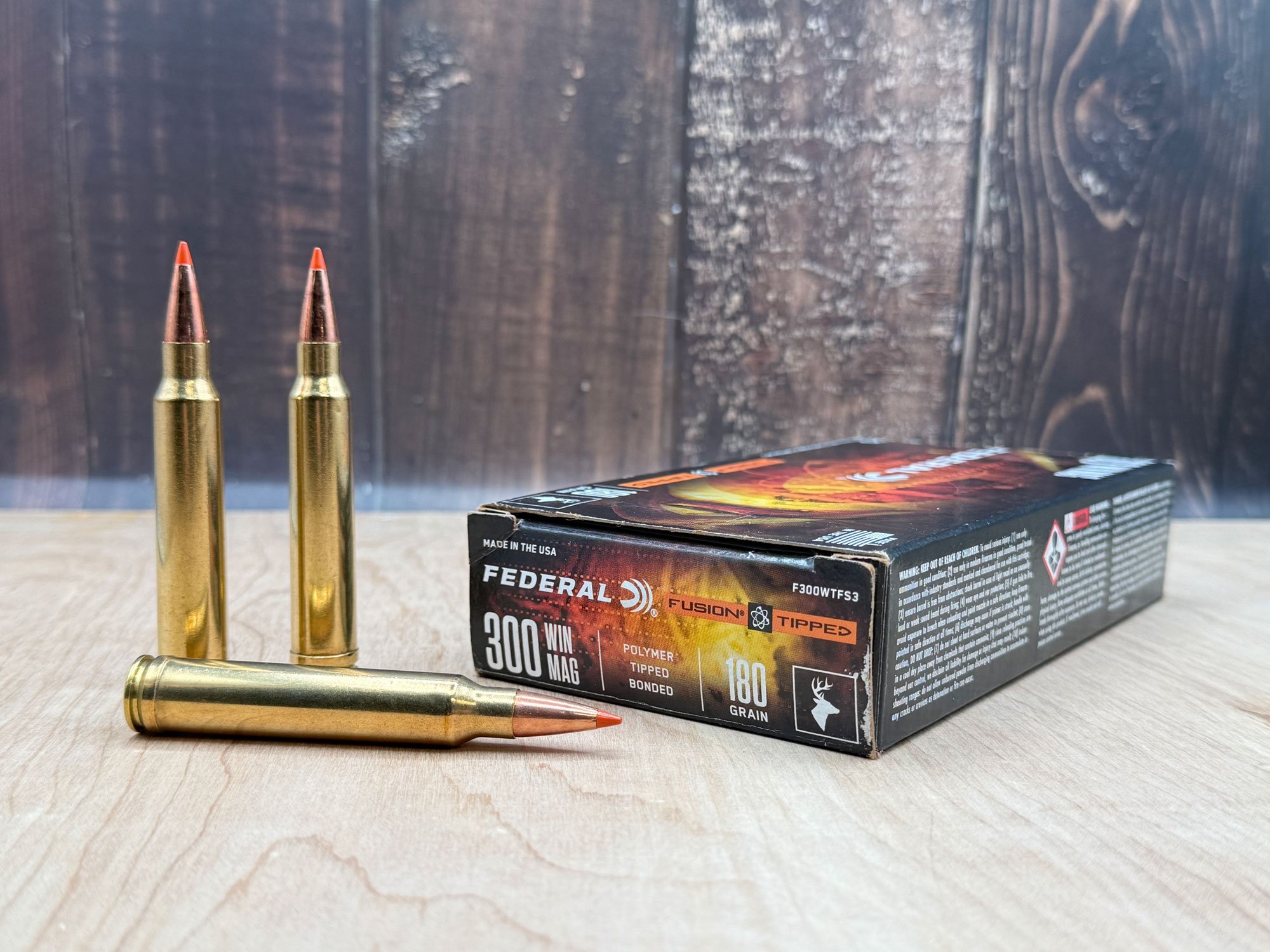
This little brother to the .338 Win. Mag. hatched five years later and gave big brother a real run for his money. Weatherby’s .300 magnum had been dazzling magnum fans since the mid 1940s, but it was a full-length magnum caliber available only in expensive custom or Weatherby Rifles. Winchester borrowed the same basic belted magnum case, blew out the walls, pushed the 25-degree shoulder forward, shortened overall length to .30/06 standard, and created a powder reservoir holding about 90 grains of water. It’s a 3.34-inch magnum cartridge that fits the same standard-length action rifles as the .338 Win. Mag. but doesn’t kick as hard. Sales bloomed immediately when it released.
In 1963, everyone knew the all-American .30/06, so they had a benchmark against which to judge this belted magnum throwing the same familiar bullets 200 fps faster. No rough-and-tough manly man in the 1960s was going to admit he couldn’t handle that. And he could get it in affordable rifles from several manufacturers.
This was and is one key to the .300 Win. Mag’s. worldwide popularity. Because Winchester didn’t insist on the caliber being proprietary, anyone could load and chamber for it. It was and still is Everyman’s (and woman’s) 30 magnum. It hits harder than the .30/06 and even the old .300 H&H Magnum without as much recoil as the .338. What’s not to like? Well, bullet weight, perhaps?
Many an elk hunter has suggested the .300 Win. Mag. cannot measure up to the .338 Win. Mag. because the latter rolls out those wide, .338-inch diameter 250-grain bullets. True. But .300 Win. Mag. bullets, weight to weight, have a higher SD for potentially better penetration. And while most heavy .300 Win. Mag. loads top out with 200-grain bullets, 210-, 220-, and 230-grain options are available. In the past, you had to handload to get these, but long-range shooters have created sufficient demand that many ammo makers now offer factory ammo featuring bullets heavier than 200-grains. Nevertheless, the 180-grain has long been the standard with elk hunters. Most factory loads from a 24-inch barrel are rated 2,960 fps. That’s good enough for 3,500 ft-lb muzzle punch. A high B.C. bullet like the Swift Scirocco will retain 2,350 ft-lb at 400 yards, 1,500 ft-lb clear out at 600 yards. If zeroed three inches high at 100 yards, that slug should drop just 1.7 inches at 300 yards and deflect just 5.7 inches in a 10 mph right angle wind.
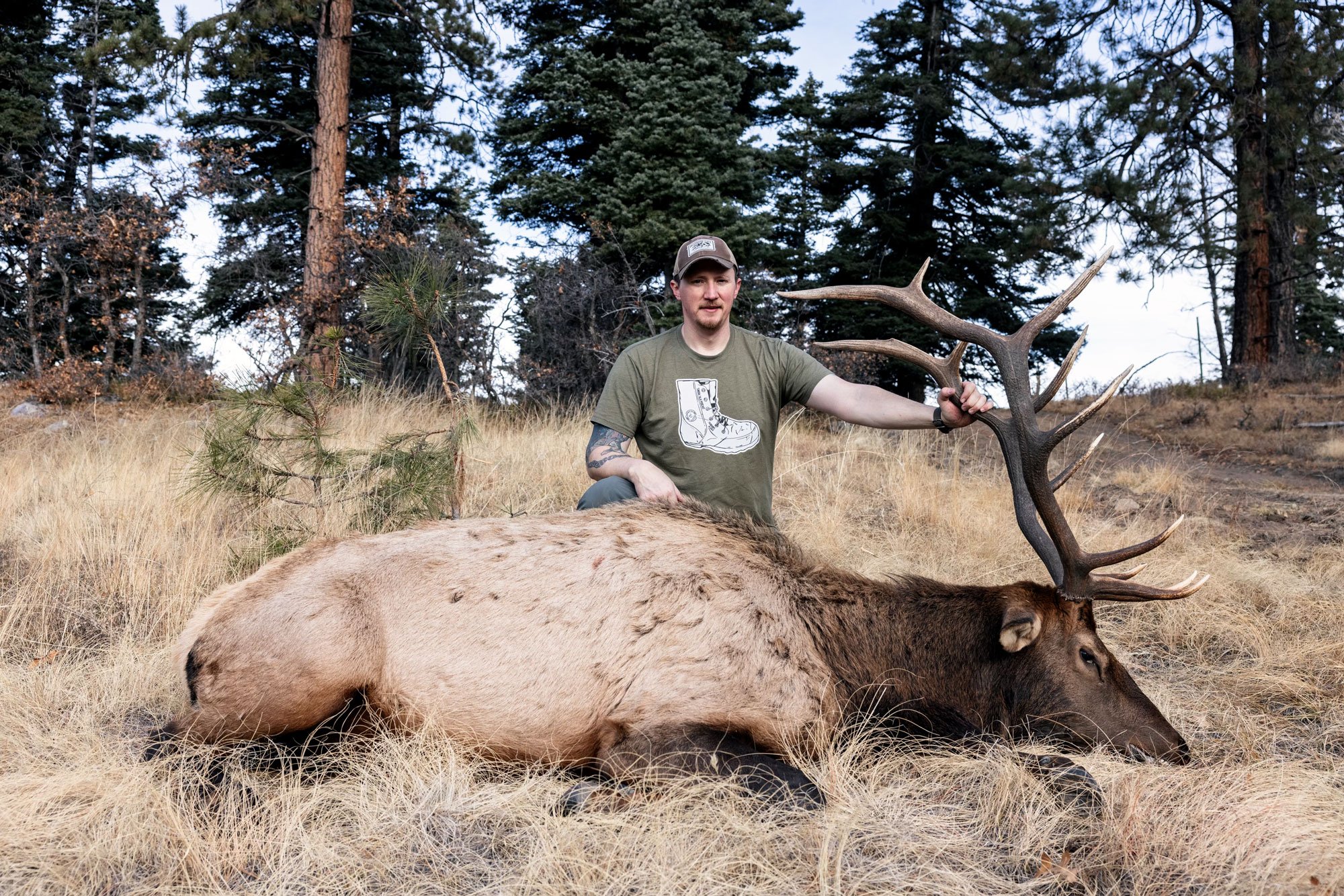
Slide up to some of the new 190-gr. bullets with B.C. numbers hitting .590 or so, keep velocities at 3,000 fps with carefully built handloads, and 300-yard drop is only 2.3 inches, wind deflection 4.7 inches, retained energy 2,700 ft-lb. Those are better trajectory numbers than many .338 Win. Mag. loads. Add in the lighter recoil of the .300 Win. Mag., and you understand why it’s not just the most popular .300 magnum of all time, but one of the best all-round elk calibers of all time.
Other .30-Caliber Options
There are plenty of other .30-calibers for hire. Start with the .30/30 Winchester and climb until your nose bleeds. Thirty-calibers have been sending elk to the table for more than 125 years. As with any caliber, the lighter the bullet and lower the muzzle velocity, the easier the rifle is to handle and the closer you should get before taking your shot. With the right bullet and .308 hunting rifle, the ubiquitous .308 Winchester is more than adequate out to 300 yards where a high B.C. 180-gr. launched 2,600 fps will still be churning some 1,800 ft-lb energy. The right .30/06 load should add 100 fps velocity and 100 ft-lb energy.
After those stalwarts comes a blizzard of .30-calibers that claw their way up the power scale. Choosing one of them comes down to personal preference and the kinds of rifles one likes to carry. Some .30-calibers work best in lever actions, some in short actions, some in full magnum actions. Some come in ultralight rifles for easy mountain hunting, some in extra heavy platforms for stand hunting or longer range shooting. A few more calibers throwing those famous .308 bullets include the .300 Ruger Compact Magnum, .300 SAUM, .300 WSM, .30/308 Norma Mag., .300 H&H, 30 Nosler, .300 Wby. Mag., .300 RUM, and .30-378 Wby. Mag. Your taste in rifle weight, mass, and recoil will color your choices. Elk won’t care one way or the other so long as you use a suitable bullet and park it properly.
7mm Remington Magnum
If the .338s are the best caliber on the upper end for elk, the 7mms are the best at the lower end. Certainly the .270s and 6.5mms can and do take elk annually, but one would be hard pressed to recommend them as optimum. The smaller the bullet, the higher its quality and the more precise its deposit must be. Many argue this about the .28-calibers, too, but the old 7mm Remington Magnum remains, since its inception in 1962, the most popular and effective 7mm elk caliber in the mountains. Believe it or not, with the right bullet, it can hang right with the .300 Win Mag without the recoil. For example:
Fire a Nosler 168-gr. AccuBond Long Range or a comparable bullet with its high B.C. of .616 from a 24-inch barrel 3,000 fps and a 190-gr. high B.C. slug from the .300 Win. Mag. at 3,000 fps. Zero both three inches high at 100 yards and at 400 yards they both drop 11.3 inches and deflect about 8.5 inches in that 10 mph breeze. The 190-gr. bullet will carry about 250 ft-lb more energy. By 600 yards that energy advantage will have dropped to just 180 ft-lb. Given that 1,500 ft-lb is considered “elk power,” both projectiles are golden. This takes us back to the launch. In eight-pound rifles, the 7mm Rem. Mag. will kick with 29.3 ft-lb, and the 300 will slap you with 37 ft-lb.
Lighter recoil matched to .300 Win. Mag. trajectory may explain how the 7mm Rem. Mag. buried one Winchester magnum and created another. When it first came out in 1962, it sent the then four-year-old .264 Winchester Magnum into a tailspin. Here was the same basic belted magnum case, but the 7mm threw bullets as heavy as 175 grains. The .264 topped out at 140-grains. It worked fine for long range deer hunting, but elk hunters wanted more bullet. The immediate success of the 7mm Rem. Mag. may have inspired Winchester to bring out its marvelous .300 magnum the very next year.
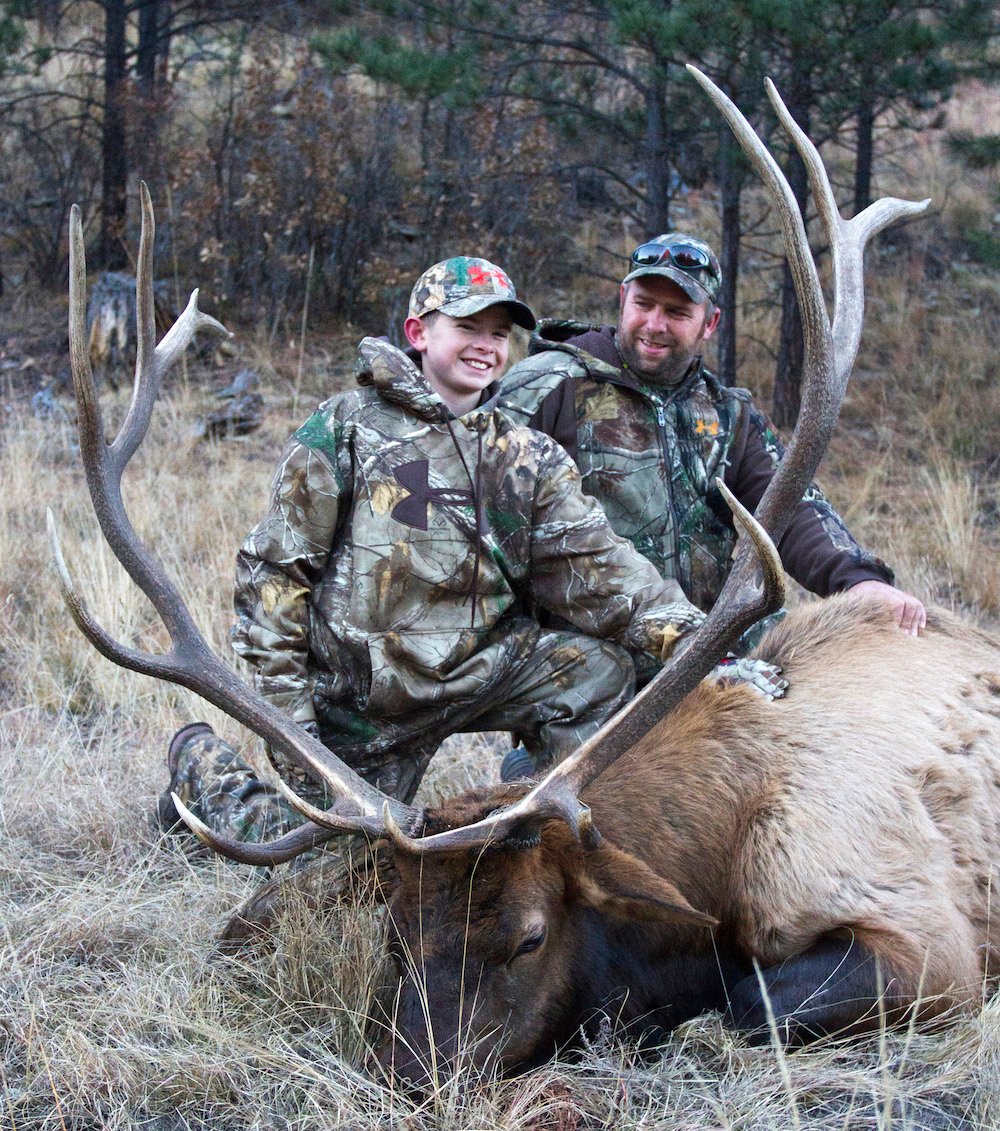
There is a persistent myth flying about that the 7mm Rem Mag shoots “too fast.” Many claim its bullets don’t have time to open. Nonsense. I’ve just shown that it’s no faster than the .300 Win. Mag., and no one howls about that being too fast. Any real or perceived failure of the 7mm Rem. Mag. can be laid at the feet of the shooter or the bullet used. Bullets engineered to expand at 7mm terminal velocities are the ticket, and there are plenty of them. Hit an elk with a 175-gr. .284-inch bullet or a 180-gr. .308-inch diameter bullet carrying 1,500 ft-lb energy and I doubt they’ll notice any difference.
Other 7mms
The 7mm family hatched around 1892 with the 7x57mm Mauser and has since grown to fifteen or more. The old 7×57 is itself a proven elk getter. After all, this was the round Bell used to collect 800 elephants and untold numbers of Cape buffalo. The right bullet in the right place. So match your 7mm elk dreams to your recoil tolerance and select among this big family. The .280 Ackley Improved is hot these days, flying about 100 fps behind the 7mm Rem. Mag. The 28 Nosler and Remington Ultra Magnum adds about 250 fps to the Rem. Mag. The 7 WSM and 7 SAUM just about match it in handier short action rifles. We have an embarrassment of choices in 7mms, and elk don’t like any.
Read Next: The Best Elk Hunting Rifles
Final Thoughts on the Best Elk Hunting Cartridges
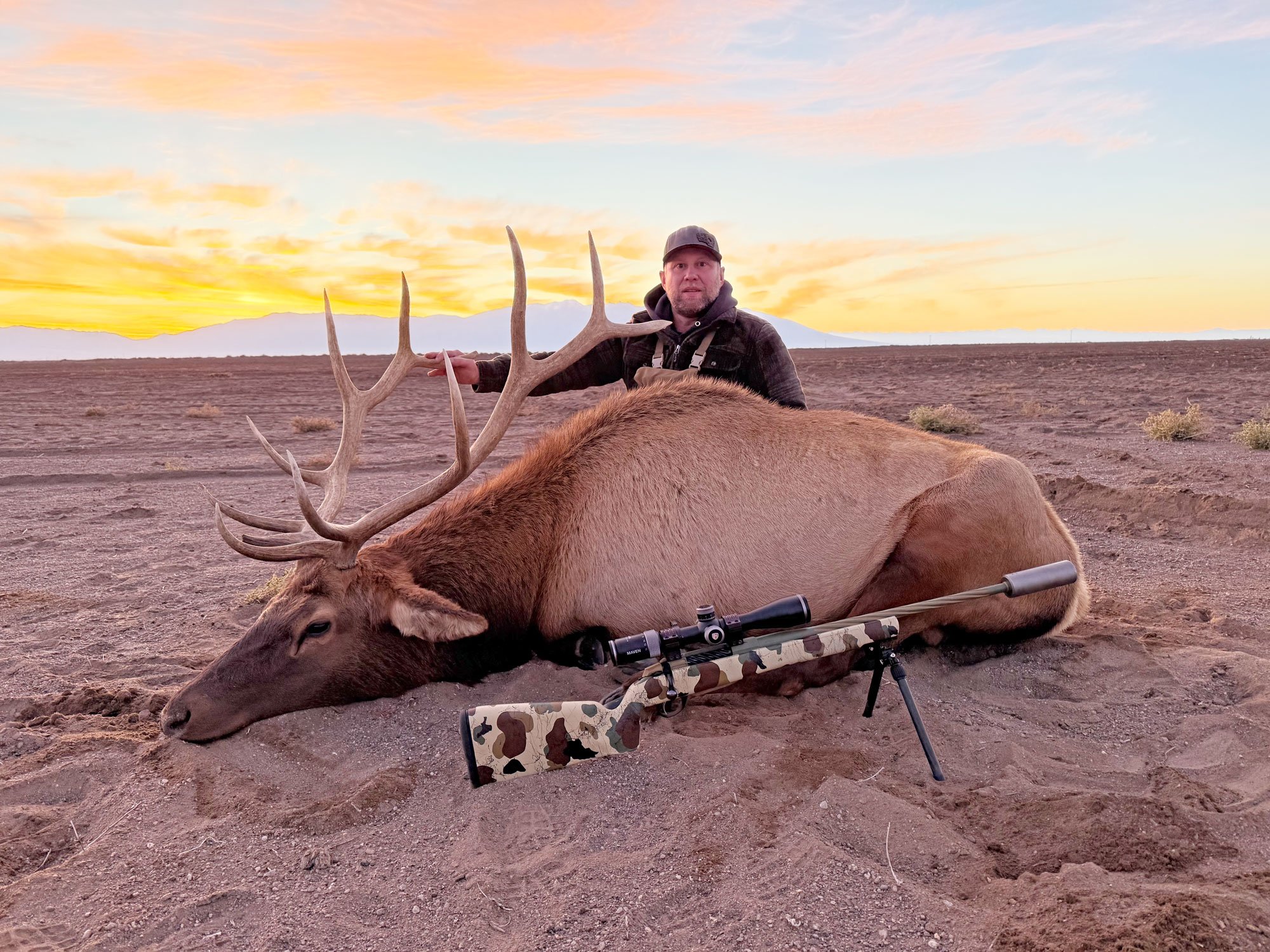
When we get down to brass tacks, the cartridge you pick to hunt elk is one of the least important considerations. Nearly any decent centerfire minted after 1900 will work, and there are older ones that work well too. The keys to finding an elk cartridge that will be best for you are to pick one that you can already shoot well — or that you’re willing to invest the time to master. If you can’t shoot worth a shit, you’re cooked any way you cut it. Pick from any number of proven hunting bullets, learn what your impact velocities will be in the conditions you will be hunting, and practice. Participating in competition like NRL Hunter can give you valuable reps in simulating the exciting situations when a shot is imminent. Learn to use the gear you’ll have with you, and practice deploying it under pressure. We all love to hash out the strengths and shortcomings of cartridges, but being able to keep your head, build a good position, and execute a good shot is what’s important. Pick a cartridge that allows you to do that, and you’ll have no complaints.
The post The Best Elk Hunting Cartridges in 2026 appeared first on Outdoor Life.