The Deadly Fraud of Forced Helplessness: Why “Gun-Free” Zones are a Gift to Killers
When I first sat down to write this, my intent was to present a clinical analysis of John Lott’s research and the statistical failure of the gun-free zone. But as the words hit the page, the data gave way to memories, and this piece transformed into something much more personal. It became a testament to why we founded FASTER Saves Lives (Faculty/Administrator Safety Training and Emergency Response)—a movement born out of a refusal to accept the status quo, but then thrust upon us by the horrific events of Sandy Hook.
I spent years traveling to dozens of late-night school board meetings, advocating for a solution to the “gun-free” death traps our children are forced to inhabit. I have sat in those sterile school boardrooms, looking into the eyes of policymakers, pleading for the “FASTER answer” to the helpless murder of our children. I remember looking into the eyes of a determined FASTER observer who, after witnessing the program’s impact, made the life-changing decision to take FASTER back to her own state to protect her own community. My direct involvement in those early training sessions is now a distant memory, but the impact remains etched in my mind.
I watched, firsthand, the profound transformation of our educators. I saw teachers who previously only had the “option” of saving their students by absorbing bullets meant for their children—dying as martyrs in a hallway—be transformed into empowered defenders of their defenseless pupils. I assisted at FASTER training sessions where the look of mandated helplessness was replaced by the quiet confidence of a protector.
Today, I am reminded of what FASTER accomplishes and what the gun-free zone fallacy fails to do every time I see a school bus, drive past an elementary school, or hear the roar of the crowd at a high school football game. I don’t just see a “zone”; I see the faces of children who deserve a teacher, a protector, who is actually equipped to save them should the unthinkable occur.
The Deadly Fraud of “Safety”
Gun-free zones are often promoted as a “commonsense” way to keep people safe. As a veteran attorney who has spent a career at the frontline of our legal system, I am here to tell you that claim is a deadly fraud. How could any sane person think it is acceptable to deny a victim of violent crime their only chance for survival? My perspective is shaped by a sobering reality: I have spent decades in the courtroom observing the dark mechanics of the criminal mind. I never saw a perpetrator who was looking for a fair fight. Every criminal I encountered in the justice system shared a common trait—they were looking for an advantage. They planned their lawlessness around the certainty of zero resistance, specifically targeting those they knew were defenseless because they, too, wanted to ensure they went home at the end of the day.
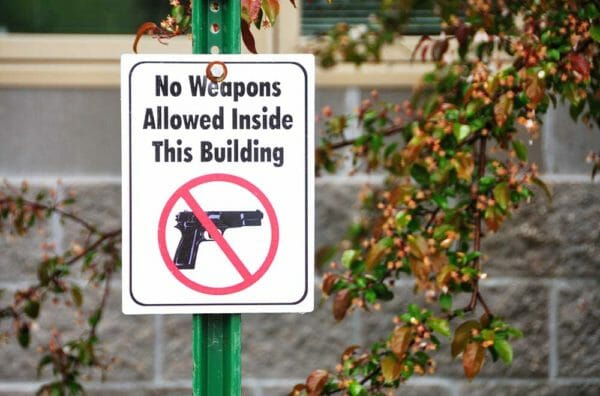
When a school board or a business mandates a gun-free zone, they aren’t voting for safety; they are signaling to the most predatory among us that their targets have been stripped of their means of survival. They aren’t legislating peace; they are mandating helplessness and, ultimately, inviting funerals.
The Evidence: Lott’s Research and the “Magnet Effect”
The research from John Lott and the Crime Prevention Research Center (CPRC) is unequivocal: Since 1950, over 98% of U.S. mass public shootings have occurred in gun-free zones. Through 2025, the data remains steady: 97.8% of incidents took place where civilian carry is banned.
To a predatory killer, a “Gun-Free Zone” sign isn’t a deterrent; it’s an invitation. It signals a high-density area of defenseless targets. This is the Magnet Effect: the statistical reality that mass shooters bypass harder targets in favor of “soft targets” where they know the law-abiding have been forced to disarm. Criminals act rationally. They deliberately select locations where they can maximize casualties with minimal resistance, even when the planned intent of their final shot is their own suicide. They aren’t afraid of the police arriving in ten minutes; they are afraid of the defender who is already in the room.
The Information Gap: Suppression of the Truth
The FBI’s reporting on active shooters is a systematic act of narrative-building. While their “official” reports claim armed citizens rarely intervene, John Lott and the CPRC have documented the Bureau “omitting” dozens of successful defensive gun uses (DGUs). When the FBI reports a low intervention rate, they are lying by omission. In reality, in areas where citizens are allowed to carry, they stop the threat over 50% of the time.
The Human Cost of the “Gap”
Consider the agonizing reality of “forced helplessness.” Imagine you are in a crowded venue—a church, a theater, or a school hallway. You hear the first shot. You are a trained, responsible carry permit holder, but because of a sign on the door, your firearm is inaccessible, locked in your car out in the parking lot.
Pulse Nightclub (2016)
For three hours, victims were trapped inside while the police staged outside. Three hours of text messages to parents saying goodbye. Three hours of hiding in bathroom stalls while a killer methodically hunted the defenseless. If just one responsible citizen in that room had been armed, the narrative of that night would have changed from a “massacre” to a “stopped threat.” Instead, the law-abiding were forced to wait for a rescue that arrived three hours—and dozens of lives—too late.
The Borderline Bar & Grill Massacre (2018)
In Thousand Oaks, California, a gunman entered a crowded country music bar. Among the patrons were several young men who had survived the Las Vegas shooting just a year prior. These were individuals who understood the threat and possessed the will to act. However, because California law and the establishment’s status made it a gun-free zone, they were unarmed. As the killer moved through the room, veterans and off-duty law enforcement officers were forced to throw barstools and dive in front of friends. They were tactical men rendered tactically useless by a “No Guns” policy. They were forced to engage a semi-automatic weapon with wooden chairs, resulting in 12 deaths while the “official” response was still minutes away.
The Luby’s Cafeteria Massacre (1991)
This remains one of the most haunting examples of “locked in the car.” Suzanna Hupp was dining with her parents when a gunman crashed his truck through the window and began a slow, methodical execution of the patrons. Suzanna was a licensed gun owner, but she had left her .38 revolver in her vehicle to comply with the state laws of the time. She reached for her purse out of habit, only to realize her “equalizer” was sitting in a parking lot while her mother and father were murdered in front of her. She later testified that she wanted the tool she had already bought, trained with, and owned—the tool the law forced her to leave behind.
The Robb Elementary Standoff (2022)
Uvalde, Texas, provides the ultimate indictment of the “Wait for Police” doctrine. For 77 minutes, children were trapped in a classroom with a killer while hundreds of heavily armed officers waited in the hallway. Parents outside were handcuffed and tackled by police for trying to rush in to save their own children. This wasn’t a failure of “resources”; it was a failure of access. The system mandated that the teachers and parents remain helpless while the “professionals” waited for a key and a tactical plan. In those 77 minutes, 19 children and two teachers were sacrificed to a “safety protocol” that valued procedure over immediate intervention.
The Solution: FASTER Saves Lives
We cannot wait for the police when seconds count. Most active shooter incidents conclude within five minutes, yet police response can often take fifteen minutes or longer. The first ten minutes are the deadliest.
The Fatal Delay: Reevaluating Campus School Security
The presence of a School Resource Officer (SRO) at Arapahoe High School in Centennial, Colorado, remains a haunting reminder that a badge is not a magic shield. On that December day, the SRO was a hollow promise of safety, a reactive presence that arrived only after the damage was done.
This tragedy exposed a fatal systemic delay, proving that even a trained professional cannot stop a bullet that has already been fired. For Claire Davis, murdered in the school library, the “security” on campus was quite literally a failure of geography. The reality is that a predator knows exactly where the SRO is stationed. They do not start their rampage in front of a badge; they start where they know the response is minutes—and several hallways—away. To truly bridge those lethal seconds, the focus must shift from delayed reaction to immediate intervention. It is a shameful dereliction of duty to mandate helplessness for those who have the greatest will to protect our children.
Dismantling the “Gun-Free Zone” Fallacy
I have seen firsthand that opponents of arming teachers often rely on a series of scripted objections, yet each one crumbles when measured against the reality of these tragedies.
- The “More Guns, More Danger” Myth: Critics argue that adding firearms increases risk. However, this ignores the lethal certainty of an unopposed shooter. In a gun-free zone, the only person with a weapon is the one intent on mass murder.
- The “Teachers Aren’t Soldiers” Argument: This is an insult to educators who already use their own bodies as human shields. We must stop teaching educators the “Run, Hide, Fight” protocol—which, in a gun-free zone, is actually “Run, Hide, Die.” It is the height of ridiculousness to ask a teacher to charge a rifle with a fire extinguisher.
- The “Crossfire” Concern: Opponents worry about a teacher engaging a threat. Yet they remain silent on the guaranteed carnage of a shooter given minutes of uncontested access. The risk of a tactical complication pales in comparison to the absolute failure of a system that leaves a student to die with zero defense.
The Martyrdom of a Hero Denied a Choice
One of the most agonizing examples of this fallacy occurred during the 2018 massacre at Marjory Stoneman Douglas High School in Parkland, Florida. It is the story of Scott Beigel, a geography teacher who pulled fleeing students into his classroom. He was in the middle of locking the door when he was shot and killed.
Because the system had mandated his unarmed helplessness, Beigel died without firing a shot. Had Scott Beigel been armed, the evil threat would have been neutralized the moment it darkened his doorway. Instead, the shooter was able to fire over Beigel’s fallen body, murdering Nicholas Dworet and Helena Ramsay while wounding several others. Beigel gave his life to protect those children, but the system ensured he would fail the very mission he died for.
Call to Action
Tragically, this system will fail again. We must choose: Do we value the ideological purity of a gun-free sign, or do we value the lives of the children standing behind it?
- Demand Accountability: Hold your local school board accountable for the “forced helplessness” they mandate. Challenge them on their own consistency: If a school board believes so strongly in the “safety” of a gun-free zone, they should be willing to conduct their own meetings without the armed guards they use to protect themselves while leaving our children defenseless.
- Support the Leaders: Stand with programs like FASTER; push for them to be created in your local school district. Save the children in your communities—give them a chance.
- End the Victim Zones: The Second Amendment isn’t just a right; it’s the only insurance policy that pays out when seconds count.
The FASTER you stop the killing, the more lives that will be saved.
The FASTER you stop the bleeding, the more victims that will survive.
The FASTER we end the “Gun-Free” lie, the safer our children become.
FASTER SAVES LIVES.
Featured Resources
- FASTER Colorado w/Laura Carno
- FASTER Saves Lives Introduction
- Dr. John Lott, Jr.: 94% of Mass Public Shootings Occur in Places Where Guns Are Banned
Related Resources
- Ohio: https://fastersaveslives.org/
- Colorado: https://fastercolorado.org/
- Utah: fasterutah.org
- Ohio: tdiohio.com
About Sean Maloney.
Sean Maloney is a criminal defense attorney, co-founder of Second Call Defense, and an NRA-certified firearms instructor. He is a nationally recognized speaker on critical topics including the Second Amendment, self-defense, the use of lethal force, and concealed carry. Sean has worked on numerous use-of-force and self-defense cases and has personally trained hundreds of civilians to respond safely and legally to life-threatening situations. He is a passionate advocate for restoring the cultural legitimacy of the Second Amendment and promoting personal responsibility in self-defense.