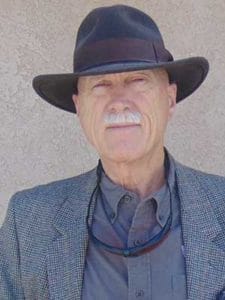
Victor Davis Hanson Says a 1987 Threat Made the Second Amendment Personal
Victor Davis Hanson’s defense of the Second Amendment is not merely academic. In a Dec. 6, 2025 episode of Victor Davis Hanson: In His Own Words, the historian and Hoover Institution senior fellow recalled a late-night confrontation at his family farm that he says permanently shaped his view of armed self-defense. The episode was published under the title “Why Alvin Bragg Refuses To Recognize the Awesome Power of the Second Amendment.”
Hanson is best known as a classicist, military historian, and conservative public intellectual. The Hoover Institution has described him as the author or editor of 24 books and hundreds of articles, editorials, and book reviews. But in the episode, Hanson’s argument for the right to keep and bear arms turned on something more personal than scholarship: a night in 1987 when, according to Hanson, three men threatened him and his family.
In the video, Hanson explains why the authorities in the criminal justice system in “blue” states do not want people to be able to protect themselves.
If people can protect themselves, they are less dependent on the state criminal justice system. If people can protect themselves, it is not as important if the criminal justice system decides who is worthy of protection and who is not. People have a chance to protect themselves. In short, Hanson tells us that more power in the hands of individuals means less power in the hands of the State. He admonishes Alvin Bragg and pointedly tells him this is the purpose of the Second Amendment.
From the video:
“… because as long as you are allowed to defend yourself, everything else falls in place. You have no control over people if they have Second Amendment rights.”
Hanson discusses the murder of Iryna Zarutska. He says no one was willing to get involved, probably because they see examples where prosecutors go after individuals who stop crimes, such as Daniel Penny in New York. Then he reveals a story this correspondent had not heard before.
At about 17:30 into the video, he relates how he used his great-grandfather’s 16-gauge pump shotgun to stop an attack on his family in 1987 or 1988. He describes the shotgun as a Winchester pump in 16 gauge with an exposed hammer. This is probably a Winchester 1897 shotgun, because the earlier 1893 Winchester was not made in 16 gauge. He calls it an “1892”. On well used shotguns, the 1897 can look like 1892. Later models of Winchester pump shotguns did not have exposed hammers.
Victor was sitting in his farm house, the same house he grew up in, in 1987. At 2 a.m. his eight year old son came down stairs and said someone was throwing rocks at his window and yelling.
Outside Victor found three individuals who were armed and threatened him. Fortunately Victor was armed with his shotgun.
When confronted, one armed gangbanger fell to his knees and started praying. Victor forced them to take him to their car. He took their keys, and had them push the car about a quarter mile down the road. He threw the keys into a vineyard and told them the police were on their way.
More than 30 minutes later, the police showed up. Officially they said he should not have done what he did. Unofficially, they told him he did the right thing. Later the police department contacted him, informed him one of the three had just been released from prison, but they could not prosecute because the three denied doing anything, and they did not find any firearm.
From that day on, Victor Davis Hanson had a strong, personal understanding of the importance of the Second Amendment. The story finishes about 20:50 on the video.
An old joke says: A conservative is a liberal who has been mugged. Once a person uses rights protected by the Second Amendment to protect themselves and their loved ones, respect for the Second Amendment becomes personal.
About Dean Weingarten:
Dean Weingarten has been a peace officer, a military officer, was on the University of Wisconsin Pistol Team for four years, and was first certified to teach firearms safety in 1973. He taught the Arizona concealed carry course for fifteen years until the goal of Constitutional Carry was attained. He has degrees in meteorology and mining engineering, and retired from the Department of Defense after a 30 year career in Army Research, Development, Testing, and Evaluation.