What to do About Mexican Drug Cartels: Letters of Marque
The United States Congress still retains full authority to issue Letters of Marque, although none have been issued for more than a hundred years.
A Letter of Marque was actually a simple concept. They allowed private citizens in private warships to attack enemy vessels during wartime. These privateers could then take ownership of whatever plunder they seized—gold, weapons or the captured ships—after an admiralty court ruled in their favor and took a percentage of the profits.
Letters of Marque were used for hundreds of years across the globe, because they allowed a country to enlarge the size of their navy very quickly and cheaply.
The authority to issue Letters of Marque can still be found in Article 1, Section 8, Clause 11 of the United States Constitution: “The Congress shall have Power … to declare War, grant Letters of Marque and Reprisal, and make Rules concerning Captures on Land and Water.”
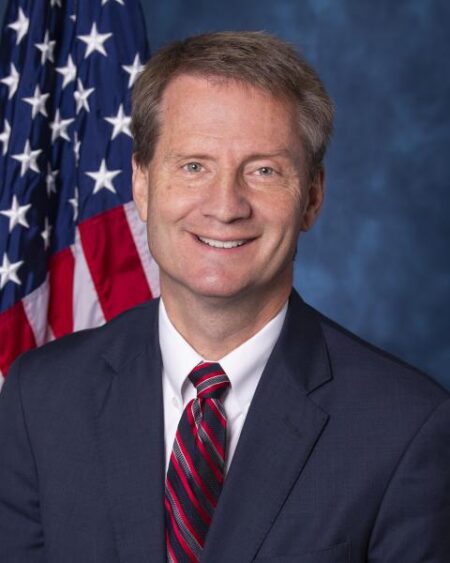
Congressman Tim Burchett, a Republican from Tennessee, and Senator Mike Lee, a Republican of Utah, who both have extremely solid Second-Amendment credentials, have drafted bills that would revitalize the Letters of Marque, in order to target Mexican drug cartels.
Congressman Burchett described the bill in a phone call Monday morning:
“It allows the president to contract out to privateers and go after the cartels,” he said. “These would be top-tier operators, SEALs, Special Forces, Marine Raiders and commando types. Some are still working as private operators. It allows private citizens to act against the cartels. In President Trump’s first term, when he got [Former Iranian Quds Force Commander Qasem] Soleimani, the Democrats just berated our military leaders because they didn’t ask for their permission. If the Democrats still want us to ask for their permission, we got some real problems. This is constitutionally provided and has been done before. We went after the Barbary pirates. It’s constitutionally provided and within the law. In this day and age, we need it. The constitution grants congress the power to grant these letters.”
Senator Lee’s bill is titled “S. 3567: Cartel Marque and Reprisal Authorization Act of 2025.”
Described as: “A bill to authorize the President of the United States to issue letters of marque and reprisal with respect to acts of aggression against the United States by a member of a cartel, or a member of a cartel-linked organization, or any conspirator associated with a cartel, and for other purposes.”
It was introduced before the latest outbreak of cartel violence, which has targeted American tourists in Mexico.
It specifies that cartels “present an unusual and extraordinary threat to national security and foreign policy of the United States.”
Senator Lee’s bill would allow “privately armed and equipped persons” to use “all means reasonably necessary” to operate outside our borders and seize any individual and their property who the President has determined to be a member of a drug cartel, or a member of a cartel-linked organization, “who is responsible for an act of aggression against the United States.”
Congressman Burchett was asked if he has discussed his bill with President Trump.
“I have not yet, but I put it out there,” he said. “It is constitutionally sound. We live in dangerous times, and we’ve got American people who need it.”
This story is presented by the Second Amendment Foundation’s Investigative Journalism Project and wouldn’t be possible without you. Please click here to make a tax-deductible donation to support more pro-gun stories like this.
About Lee Williams
Lee Williams, who is also known as “The Gun Writer,” is the chief editor of the Second Amendment Foundation’s Investigative Journalism Project. Until recently, he was also an editor for a daily newspaper in Florida. Before becoming an editor, Lee was an investigative reporter at newspapers in three states and a U.S. Territory. Before becoming a journalist, he worked as a police officer. Before becoming a cop, Lee served in the Army. He’s earned more than a dozen national journalism awards as a reporter, and three medals of valor as a cop. Lee is an avid tactical shooter.